Desserts
Oatmeal Raisin Cookies Recipe
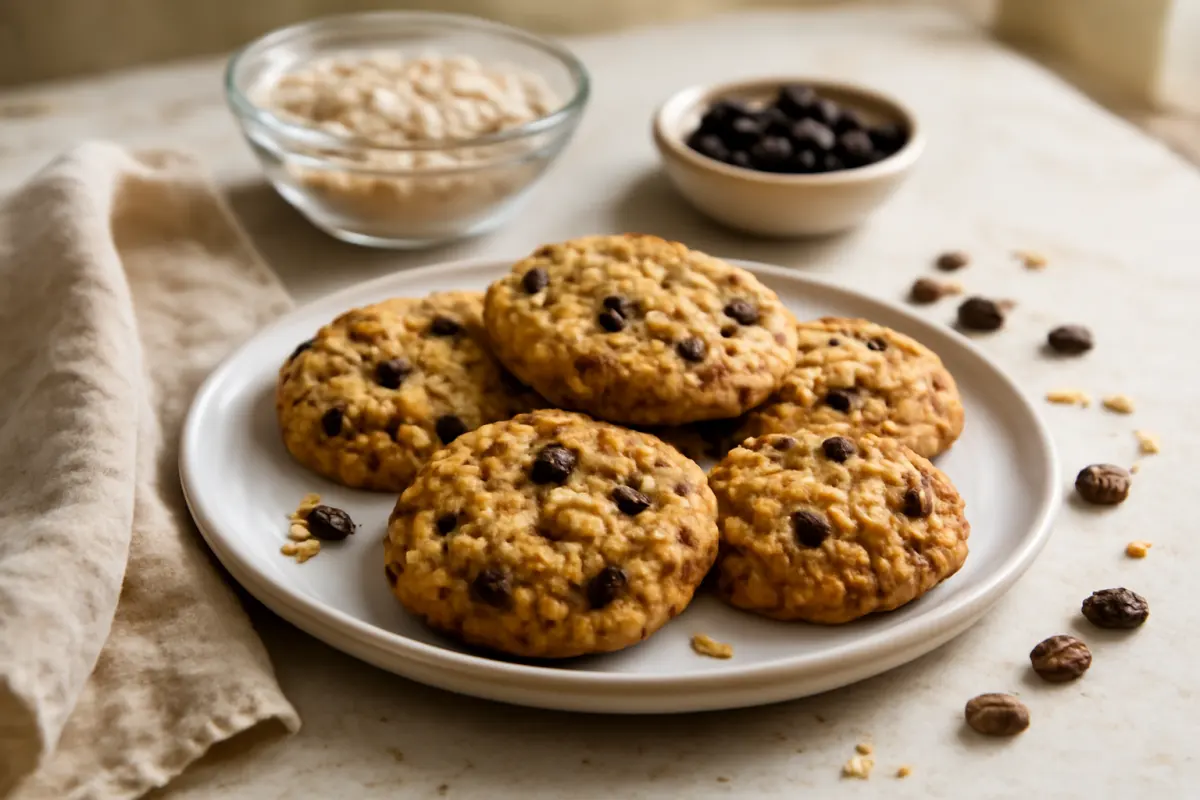
These oatmeal raisin cookies have chewy centers, lightly crisp edges, warm cinnamon flavor, and juicy raisins in every bite. The dough is simple to mix and can be chilled when you want thicker cookies.
Overview
These oatmeal raisin cookies are soft and chewy in the center with lightly crisp edges. Brown sugar adds a rich, caramel-like flavor, while cinnamon and a small amount of nutmeg give the cookies a warm, classic taste.
Use old-fashioned rolled oats for the best texture. The cookies are ready when the edges look set and lightly golden but the centers still appear a little soft; they will finish setting on the baking sheet as they cool.
Ingredients
- 1 cup (226 g) unsalted butter, softened to room temperature
- 1 cup (200 g) packed light brown sugar
- 1/2 cup (100 g) granulated sugar
- 2 large eggs, room temperature
- 2 teaspoons vanilla extract
- 1 1/2 cups (188 g) all-purpose flour
- 1 teaspoon baking soda
- 1/2 teaspoon fine salt
- 1 teaspoon ground cinnamon
- 1/4 teaspoon ground nutmeg, optional
- 3 cups (270 g) old-fashioned rolled oats
- 1 1/2 cups (225 g) raisins
- 1/2 cup (60 g) chopped walnuts or pecans, optional
How to make it
Prepare the oven and pans. Heat the oven to 350°F (175°C). Line two large baking sheets with parchment paper. If your raisins are very dry, place them in a small bowl, cover them with hot water for 10 minutes, then drain and pat them thoroughly dry.
Mix the dry ingredients. In a medium bowl, whisk together the flour, baking soda, salt, cinnamon, and nutmeg. Set the bowl aside.
Cream the butter and sugars. Place the softened butter, brown sugar, and granulated sugar in a large mixing bowl. Beat with an electric mixer on medium speed for 2 to 3 minutes, until the mixture looks lighter and creamy. Scrape down the sides of the bowl as needed.
Add the eggs and vanilla. Beat in the eggs one at a time, mixing until the first is incorporated before adding the second. Mix in the vanilla. The batter may look slightly curdled at this stage, which is fine.
Combine the dough. Add the dry ingredients to the butter mixture in two additions, mixing on low speed just until no dry streaks remain. Stir in the oats, raisins, and optional nuts with a sturdy spoon or spatula. Do not overmix once the flour disappears.
Portion the cookies. Scoop the dough into 2-tablespoon portions, about 40 g each, and place them 2 inches apart on the prepared baking sheets. For thicker cookies, cover and chill the portioned dough for 30 minutes before baking. Keep the remaining dough chilled while the first batch bakes.
Bake. Bake one sheet at a time for 10 to 12 minutes, rotating the sheet front to back halfway through. The edges should be lightly golden and set, while the centers should still look soft and slightly underdone. Avoid waiting for the centers to turn fully brown.
Cool. Leave the cookies on the baking sheet for 5 minutes. They should firm up enough to lift without bending. Transfer them to a wire rack and cool completely. Repeat with the remaining dough.
Expert tips
- Measure flour accurately: Spoon flour into a dry measuring cup and level it, or use a scale. Too much flour makes the cookies thick and dry.
- Soak only very dry raisins: Moist raisins can go straight into the dough. If you soak them, dry them well so extra water does not loosen the dough.
- Use softened, not melted, butter: Soft butter should indent when pressed but still hold its shape. Melted butter can make the cookies spread too much.
- For less spreading: Chill the dough for 30 to 60 minutes, and make sure the baking sheets are cool before adding the next batch.
- For softer cookies: Remove them when the centers still look slightly glossy. They should not look wet, but they should not be fully firm in the oven.
- If the cookies spread too far: The butter may have been too warm, the dough may need more chilling, or the baking sheet may have been hot. Chill the remaining dough and use a cool lined pan.
- If the cookies are dry or cakey: Check that the flour was not packed into the measuring cup, and avoid baking past the point when the edges are lightly golden.
- Substitutions: Use dark brown sugar for a deeper molasses flavor, replace up to 1 cup of the raisins with dried cranberries, or use quick oats for a finer, softer texture. Do not substitute steel-cut oats; they will remain hard.
Serving and storage
Serve the cookies warm after they have cooled for a few minutes, or let them cool completely for a chewier texture. They are especially good with milk, coffee, or tea.
Store cooled cookies in an airtight container at room temperature for up to 5 days. Place parchment between layers if you want to prevent sticking. For longer storage, freeze baked cookies in a sealed freezer container for up to 3 months; thaw them at room temperature. You can also freeze portioned, unbaked dough for up to 3 months and bake it from frozen, adding about 2 to 3 minutes to the baking time.
Frequently asked questions
Can I use quick oats instead of old-fashioned rolled oats?
Yes. Quick oats make a softer, finer-textured cookie and can be used in the same quantity by weight. Avoid steel-cut oats because they do not soften enough during baking.
Why did my oatmeal raisin cookies spread too much?
The butter may have been too warm, the dough may not have had enough flour, or the baking sheet may have been hot. Chill the dough for 30 to 60 minutes and bake on a cool, parchment-lined sheet.
How do I keep oatmeal raisin cookies soft?
Do not overbake them. Remove the cookies when the edges are lightly golden and the centers still look soft, then leave them on the baking sheet for 5 minutes before transferring them to a rack.
Can I make the cookie dough ahead of time?
Yes. Cover the dough and refrigerate it for up to 3 days. Let it sit at room temperature for 10 to 15 minutes if it is too firm to scoop, or portion the dough before chilling for easier baking.