Recipes
Pear and Almond Tart Recipe
This pear and almond tart combines crisp sweet pastry, rich almond frangipane, and tender pear slices. The step-by-step method includes blind-baking guidance and practical fixes for a soggy crust or underbaked filling.
Overview
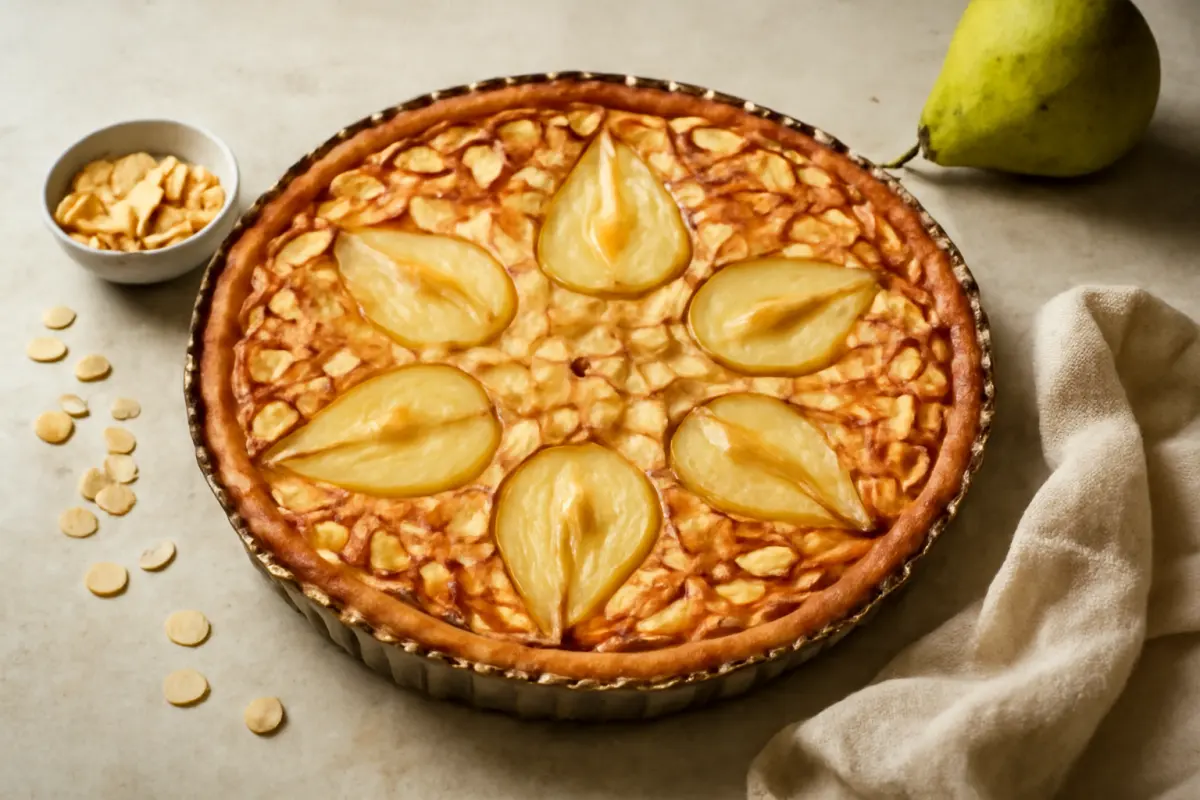
This pear and almond tart has three distinct layers: a crisp sweet pastry shell, a soft almond frangipane filling, and thinly sliced pears that become tender and lightly golden in the oven. The almond filling is rich enough to support the fruit without making the tart heavy.
Use firm-ripe pears so they hold their shape as they bake. A 9-inch (23 cm) tart pan with a removable base gives the cleanest slices, but a standard 9-inch pie dish also works; the finished tart may be slightly deeper and need a few extra minutes in the oven.
Ingredients
For the pastry
- 1 1/4 cups (160 g) all-purpose flour, plus extra for rolling
- 1/4 cup (50 g) granulated sugar
- 1/4 teaspoon fine salt
- 1/2 cup (113 g) cold unsalted butter, cut into small cubes
- 1 large egg yolk
- 2 tablespoons (30 ml) ice-cold water, plus 1 teaspoon more if needed
For the almond filling
- 6 tablespoons (85 g) unsalted butter, softened
- 1/2 cup (100 g) granulated sugar
- 1 cup (100 g) finely ground almond flour
- 1 large egg
- 1 tablespoon (8 g) all-purpose flour
- 1 teaspoon vanilla extract
- 1/4 teaspoon fine salt
For the pears and finish
- 2 medium firm-ripe pears, about 12 ounces (340 g) total
- 1 tablespoon (15 ml) lemon juice
- 1 tablespoon (15 g) apricot jam or apple jelly, warmed
- 1 teaspoon water, to loosen the glaze if needed
- Powdered sugar, optional, for serving
How to make it
Make the pastry dough. Whisk the flour, sugar, and salt in a medium bowl. Add the cold butter and rub it in with your fingertips, or cut it in with a pastry blender, until the mixture resembles coarse crumbs with a few pea-sized pieces of butter remaining. Mix the egg yolk with 2 tablespoons of ice water, pour it into the bowl, and stir just until the dough starts to clump. Squeeze a little dough in your hand; if it holds together, stop mixing. If it remains dry and crumbly, add the extra teaspoon of water.
Chill the dough. Turn the dough onto a work surface and press it into a flat disk rather than kneading it. Wrap and refrigerate for at least 30 minutes, or up to 2 days. Chilling firms the butter and makes the pastry less likely to shrink in the oven.
Prepare the tart shell. Heat the oven to 375°F (190°C). Lightly butter a 9-inch (23 cm) tart pan. On a lightly floured surface, roll the dough into an 11-inch (28 cm) circle, about 1/8 inch (3 mm) thick. Lift it into the pan, pressing it gently into the base and sides without stretching it. Trim the overhang by rolling a rolling pin over the rim, then prick the base all over with a fork.
Blind-bake the shell. Line the pastry with parchment and fill it with pie weights, dried beans, or uncooked rice. Bake for 15 minutes. Carefully remove the parchment and weights, then bake for 5 to 7 minutes more, until the base looks dry and the edges are just beginning to turn pale golden. Set the shell aside while you prepare the filling. It does not need to cool completely.
Make the frangipane. Beat the softened butter and sugar in a bowl until smooth and creamy, about 1 minute. Beat in the almond flour, egg, all-purpose flour, vanilla, and salt until no dry patches remain. The mixture should be thick and spreadable. If your butter was very soft, refrigerate the filling for 10 minutes so it is easier to spread.
Prepare the pears. Peel the pears if desired, cut them in half, and remove the cores. Slice each half lengthwise into pieces about 1/8 inch (3 mm) thick. Keep the slices together as you cut them, then fan them slightly. Toss or brush them with the lemon juice to slow browning.
Assemble the tart. Spread the almond filling evenly in the warm pastry shell, leaving about 1/4 inch (6 mm) of space around the edge. Arrange the pear slices over the filling in overlapping rows or two neat fans. Press them very gently into the frangipane; do not bury them completely, because the filling will puff around the fruit.
Bake. Bake at 375°F (190°C) for 35 to 42 minutes, rotating the pan halfway through. The tart is done when the frangipane is puffed, the center feels set when lightly pressed, and the pears are tender when pierced with a thin knife. The filling should be golden brown around the edges and lightly golden in the middle. If the pastry rim darkens before the center is ready, cover the edge loosely with foil.
Glaze and cool. Warm the apricot jam with the teaspoon of water in a small saucepan or microwave-safe bowl until fluid. Brush it over the warm pears and exposed frangipane. Cool the tart in the pan for at least 30 minutes before removing the sides and slicing. Serve warm or at room temperature, with powdered sugar if you like.
Expert tips
- Choose pears that yield slightly near the stem but are still firm enough to slice cleanly. Very ripe pears release more liquid and can leave the filling wet.
- Do not stretch the pastry while fitting it into the pan. Stretched dough contracts during baking, which can pull the sides down.
- If the pastry puffs during blind baking, press it gently with the back of a spoon as soon as it comes out of the oven. A few small bubbles will not affect the finished tart.
- If the frangipane looks curdled after adding the egg, keep mixing; it will smooth out once the almond flour and flour are incorporated.
- For a nut-free alternative, use a different tart recipe designed without almond flour. Replacing almond flour with an equal amount of wheat flour will not produce the same moist, tender filling.
- For a dairy-free version, use a firm plant-based butter suitable for baking in both the pastry and filling. The texture may be slightly less rich.
- For a quick savory tart instead, see this caramelized onion tart recipe; its pastry and filling method are different, so do not substitute the fillings directly.
Serving and storage
Serve the tart in thin wedges on its own or with lightly whipped cream, vanilla ice cream, or plain yogurt. It is easiest to slice cleanly once it has cooled for at least 30 minutes.
Store the cooled tart covered in the refrigerator for up to 3 days. Bring individual slices to room temperature for about 20 minutes before serving, or warm them in a 300°F (150°C) oven for 8 to 10 minutes. The baked tart can be frozen, well wrapped, for up to 1 month; thaw it overnight in the refrigerator and refresh it in a moderate oven until warm.
Frequently asked questions
Can I make pear and almond tart ahead of time?
Yes. Prepare the pastry up to 2 days ahead and keep it refrigerated, or freeze the unbaked pastry shell for up to 1 month. The fully baked tart can be made 1 day ahead and stored covered in the refrigerator. Let it stand at room temperature or warm it gently before serving.
Why is the bottom of my tart soggy?
The shell may not have been blind-baked long enough, or the pears may have released excess moisture. Bake the shell until the base looks dry before adding the frangipane, use firm-ripe pears, and avoid slicing them much thicker than 1/8 inch. A metal tart pan also helps the base bake more efficiently.
Can I use canned or canned-in-syrup pears?
Yes, but drain them very thoroughly and pat them dry with paper towels before slicing. Canned pears are softer than fresh pears, so arrange them gently and begin checking the tart about 5 minutes earlier.
How do I know when the frangipane is fully baked?
The filling should be puffed and golden, with no wet-looking patch in the center. A gentle press should meet light resistance rather than wobble, and a thin knife inserted into the filling should come out without liquid batter attached.