Recipes
Puri Recipe
This puri recipe makes light, puffed Indian fried breads with a crisp surface and pleasantly chewy center. Learn how to mix a firm dough, roll evenly, and fry puris so they inflate instead of absorbing excess oil.
Overview
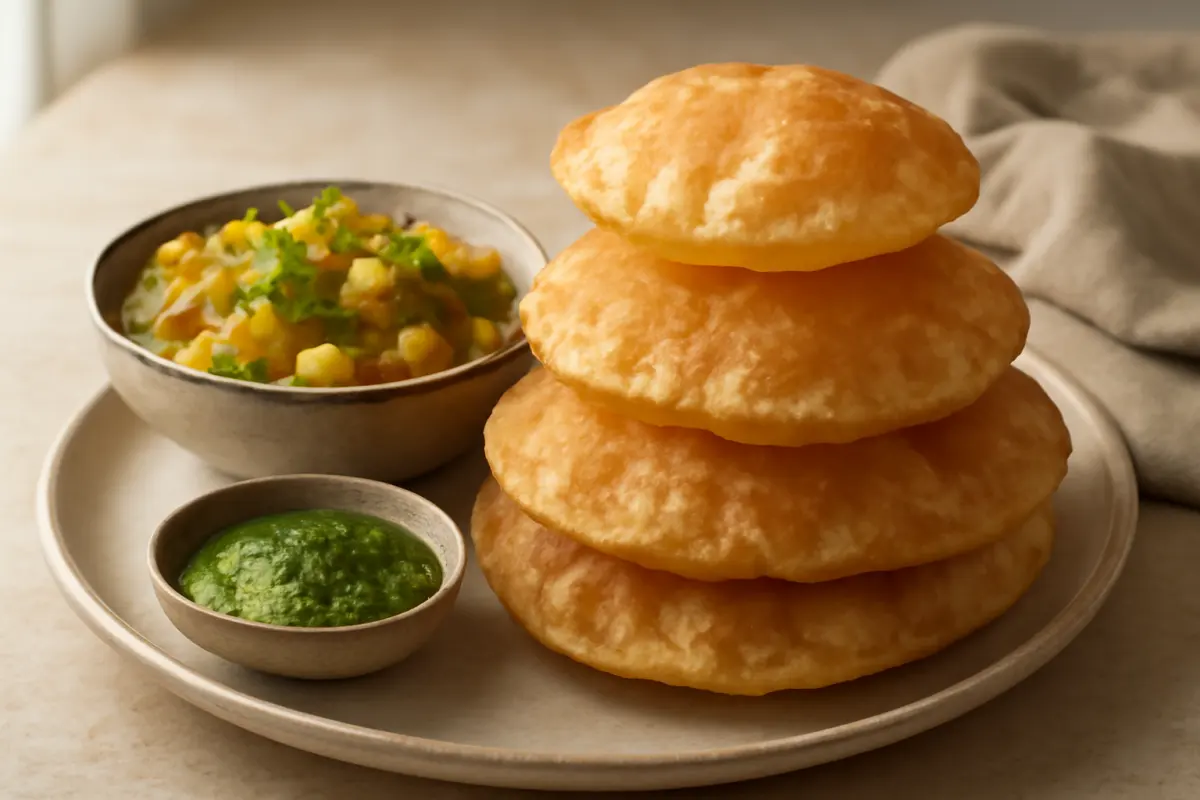
Puri is an unleavened Indian fried bread made from whole-wheat flour, water, salt, and a little oil. When the dough is firm and the oil is hot enough, each rolled round puffs into a golden, airy bread with a crisp outside.
Serve puri immediately while it is warm, especially with potato curry, chutney, or a thick chickpea curry such as this chana masala recipe. The recipe makes about 12 puris and is best cooked in batches so the oil temperature stays steady.
Ingredients
- 2 cups (240 g) whole-wheat flour, plus extra for shaping if needed
- 1/2 teaspoon fine salt
- 1 teaspoon neutral oil, such as sunflower, canola, or vegetable oil
- 3/4 cup (180 ml) warm water, added gradually; you may need 1 to 2 tablespoons more
- 3 cups (720 ml) neutral oil, for deep-frying
How to make it
Mix the dough. Add the flour and salt to a mixing bowl. Pour in 1 teaspoon oil and rub it through the flour with your fingertips. Add the warm water a little at a time, mixing until a firm, slightly stiff dough forms. It should hold together without feeling sticky; avoid making it as soft as a roti dough.
Knead briefly. Transfer the dough to a clean work surface and knead for 5 to 7 minutes, pressing and folding until it looks smooth. If it feels dry or cracks immediately, knead in water 1 teaspoon at a time. If it feels sticky, dust the surface with a small amount of flour rather than adding a large amount at once.
Rest the dough. Cover the dough with a damp cloth or an overturned bowl and let it rest for 15 to 20 minutes. This short rest makes it easier to roll without allowing the dough to become overly soft.
Divide and shape. Knead the dough once or twice, then divide it into 12 equal pieces. Roll each piece into a smooth ball, keeping the remaining pieces covered so they do not dry out. Lightly oil your work surface or rolling pin; using too much dry flour can make the frying oil smoky and dirty.
Roll the puris. Roll one ball into a round about 3 1/2 to 4 inches (9 to 10 cm) wide and roughly 1/8 inch (3 mm) thick. Aim for an even thickness: very thin spots may cook hard before the puri puffs, while thick edges can remain doughy. Roll the remaining pieces, or roll a few at a time while the oil heats, and keep them covered.
Heat the oil. Pour the frying oil into a deep, heavy saucepan and heat it over medium-high heat to about 180°C (350°F). If you do not have a thermometer, drop in a tiny piece of dough. It should rise to the surface immediately and bubble actively without browning at once. If it sinks, the oil is too cool; if it darkens within a few seconds, reduce the heat.
Fry one puri at a time. Carefully slide a rolled puri into the hot oil. It should sink briefly, then rise. Gently press the top with a slotted spoon for a few seconds; this encourages the trapped steam to inflate the bread. Once puffed, fry for about 30 to 45 seconds, turning once, until pale golden with a few deeper golden spots.
Drain and continue. Lift the puri with a slotted spoon, allowing excess oil to drip back into the pan, and transfer it to a paper towel-lined plate or a wire rack. Let the oil return to temperature before adding the next puri. Adjust the heat as needed: the puris should bubble energetically but not scorch.
Serve warm. Serve the puris as soon as possible. They are especially good with spiced potatoes, chickpea curry, yogurt, pickles, or chutney.
Expert tips
- Use a firm dough. Excess water makes puris absorb oil and can make them difficult to roll evenly.
- Oil the rolling surface lightly instead of heavily dusting with flour. Loose flour burns in the frying oil and gives later batches a bitter taste.
- Keep shaped dough and rolled puris covered with a clean cloth. Dry edges can split during frying.
- If the first puri does not puff, check the dough thickness and oil heat first. An unevenly rolled or cool puri is more likely to stay flat.
- Fry in a deep pan with plenty of room. The oil should not fill more than halfway up the sides because it rises and bubbles around each puri.
- For slightly softer puris, replace up to 1/4 cup of the whole-wheat flour with all-purpose flour. For a more traditional whole-wheat flavor, use all whole-wheat flour as written.
Serving and storage
Serve puris warm on the day they are fried. Keep cooked puris loosely covered with a clean kitchen towel for up to 1 hour; sealing them tightly while hot can trap steam and soften the surface.
Cool leftovers completely before refrigerating them in an airtight container for up to 2 days. Reheat them in a dry skillet over medium heat or in a 180°C (350°F) oven until warmed through. They will not be quite as crisp or puffy as freshly fried puris. Do not pour used oil down the sink; cool it, strain it if it is clean enough to reuse, and discard it according to local waste guidance.
Frequently asked questions
Why are my puris not puffing?
The dough may be too soft, the rounds may be rolled unevenly, or the oil may not be hot enough. Use a firm dough, roll each puri evenly to about 3 mm thick, and fry at approximately 180°C (350°F). Press the puri gently with a slotted spoon as it rises to help it inflate.
Why do puris absorb so much oil?
Oil that is too cool is the most common cause. A puri should bubble actively as soon as it enters the pan. Dough that is too soft or puris rolled too thin can also absorb more oil, so keep the dough firm and maintain the frying temperature between batches.
Can I prepare puri dough in advance?
Yes. Cover the kneaded dough tightly and refrigerate it for up to 24 hours. Bring it close to room temperature before dividing and rolling, then knead it briefly if it feels uneven.
Can I use all-purpose flour instead of whole-wheat flour?
You can replace up to 1/4 cup of the whole-wheat flour with all-purpose flour for a softer texture. Using only all-purpose flour produces a different, less wheaty puri and may require slightly less water, so add the water gradually.
How thick should puri be before frying?
Roll each puri to about 3 1/2 to 4 inches wide and 1/8 inch thick. It should be thicker than a very thin flatbread but not so thick that the center remains doughy after the outside browns.