Desserts
Rice Kheer Recipe
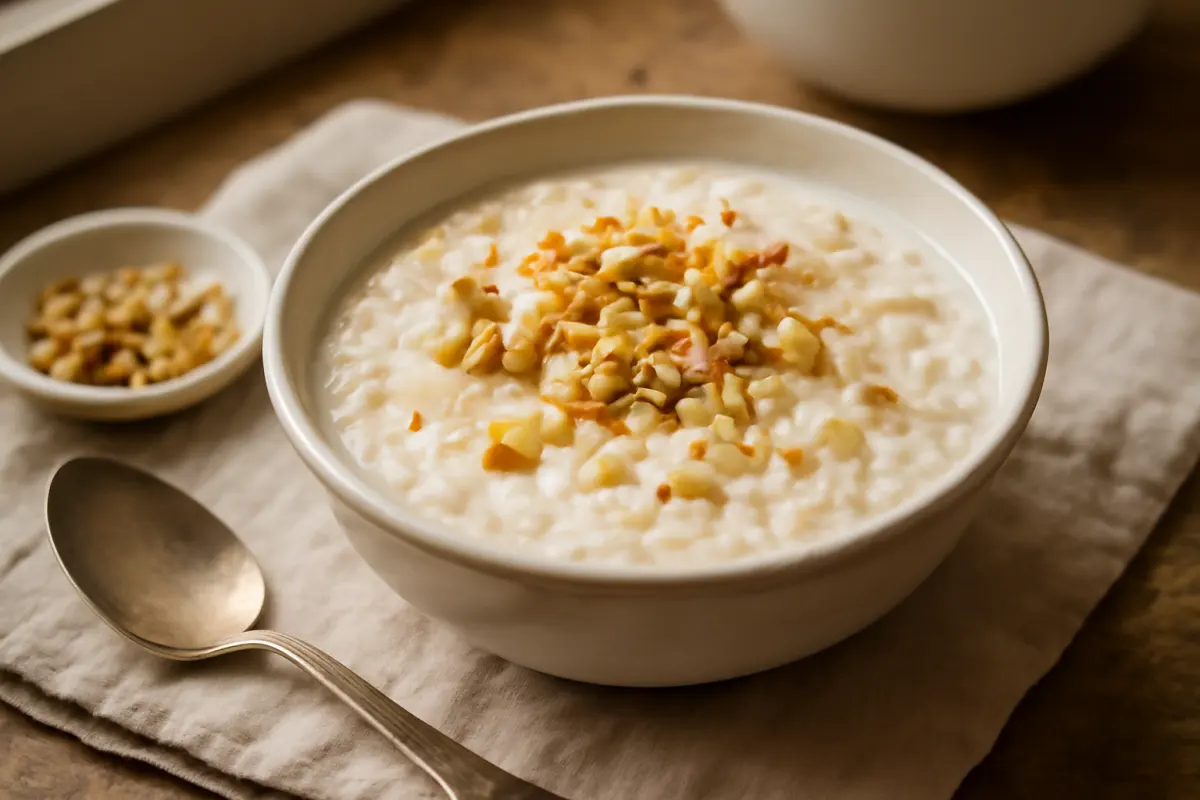
This rice kheer recipe makes a creamy Indian rice pudding with tender grains, fragrant cardamom, and a lightly caramelized milk flavor. Make it on the stovetop with simple ingredients and serve it warm or chilled.
Overview
This rice kheer recipe makes a creamy Indian rice pudding by slowly simmering rice in milk until the grains are tender and the milk has thickened. Cardamom, saffron, raisins, and nuts add fragrance and texture without overpowering the dairy and rice.
Use a wide, heavy-bottomed saucepan and stir regularly, especially along the base and corners. The kheer will continue to thicken as it cools, so stop cooking while it is slightly looser than you want to serve it.
Ingredients
- 1/4 cup (50 g) basmati rice or another long-grain white rice
- 4 cups (960 ml) whole milk
- 1/3 cup (65 g) granulated sugar, plus more to taste
- 4 green cardamom pods, finely crushed, or 1/2 teaspoon ground cardamom
- 1 tablespoon raw or roasted unsalted cashews, chopped
- 1 tablespoon almonds, thinly sliced or slivered
- 1 tablespoon raisins
- 8 to 10 saffron threads, optional
- 1 tablespoon warm milk, for soaking the saffron if using
- 1 teaspoon ghee, optional, for toasting the nuts and raisins
How to make it
Rinse and soak the rice. Put the rice in a bowl and rinse it with cool water three or four times, until the water is less cloudy. Cover with fresh water and soak for 20 minutes. Drain thoroughly. This helps the grains soften evenly and release enough starch to thicken the kheer.
Prepare the saffron, if using. Warm 1 tablespoon of the measured milk until it is comfortably warm, not boiling. Add the saffron threads and set aside for at least 5 minutes.
Warm the milk. Pour the remaining milk into a wide, heavy-bottomed saucepan. Bring it just to a simmer over medium heat, stirring occasionally so a skin does not form and the milk does not catch on the bottom.
Add the rice. Stir the drained rice into the hot milk. Reduce the heat to low or medium-low. Simmer uncovered for 30 to 40 minutes, stirring every 2 to 3 minutes and scraping the bottom and sides of the pan with a heatproof spatula.
Check the rice. The grains should be very soft and easy to mash between your fingers or against the side of the pan. The milk should look creamy and slightly reduced, but still pour easily. If the rice is tender and the mixture is already very thick, continue with the next step rather than reducing it further.
Sweeten and flavor. Stir in the sugar, crushed cardamom, and saffron milk if using. Cook for 5 to 7 minutes, stirring often, until the sugar dissolves and the kheer coats the back of a spoon. The mixture should leave a clear trail when you draw a finger through the coating, but it should not be as thick as a firm custard.
Add the garnishes. If using ghee, warm it in a small skillet over medium-low heat. Add the cashews, almonds, and raisins. Stir for 1 to 2 minutes, until the nuts are lightly golden and the raisins plump. Scrape them, along with any ghee, into the kheer. For a simpler version, stir the nuts and raisins directly into the saucepan.
Rest and serve. Remove the pan from the heat and rest the kheer for 10 minutes. Taste and add another tablespoon of sugar if needed. Serve warm, or transfer it to a serving bowl and chill it for at least 2 hours. Remember that chilled kheer becomes noticeably thicker.
Expert tips
- Prevent scorching: A wide pan gives the milk more surface area to reduce. Keep the heat low once the rice is added and stir across the entire base, not just the center.
- Choose the right consistency: For warm kheer, stop when it resembles a loose porridge. For chilled kheer, stop when it is creamy but still flows from a spoon.
- If it becomes too thick: Stir in warm whole milk, 1 tablespoon at a time, until it loosens. Adjust the sugar afterward if the added milk dulls the sweetness.
- If it remains thin: First confirm that the rice is fully tender. Simmer uncovered for another 5 to 10 minutes, stirring frequently. Do not raise the heat sharply, since the milk can scorch before it reduces.
- For a dairy-free version: Use unsweetened full-fat coconut milk or an unsweetened oat-based milk. Coconut milk gives the kheer a distinct coconut flavor, while oat-based milk produces a milder result. Keep the heat low because plant-based milks can catch or separate when boiled hard.
- Rice substitutions: Short-grain rice makes a softer, thicker kheer. Brown rice requires substantially more cooking and liquid, so it is not a direct substitute for this timing.
- Control the sweetness: Add most of the sugar after the rice is tender. This makes it easier to judge the final sweetness and prevents the milk from reducing around an overly sweet base.
Serving and storage
Serve rice kheer warm in small bowls or chill it until spoonable. Top with extra sliced almonds, pistachios, saffron, or a pinch of cardamom. It works well as a dessert after a festive meal and can be portioned into individual serving bowls before chilling.
Cool leftovers promptly and refrigerate them in a covered container within 2 hours. Use within 3 days. The kheer will thicken in the refrigerator; loosen each portion with a splash of milk and reheat gently on the stovetop or in the microwave, stirring between short intervals. Do not leave cooked kheer at room temperature for extended periods.
Frequently asked questions
Can I make rice kheer without soaking the rice?
Yes, but the rice may take a little longer to soften and the grains may cook less evenly. Rinse the rice well and simmer it gently until it is fully tender before adding the sugar.
Why did my rice kheer become too thick?
Kheer thickens as it cools, especially in the refrigerator. Stir in warm milk one tablespoon at a time until it reaches the consistency you want, then taste and adjust the sugar.
Can I use evaporated milk in rice kheer?
Yes. Replace up to 1 cup of the whole milk with evaporated milk for a richer result, but watch the pan closely because the mixture will thicken more quickly.
Should rice kheer be served hot or cold?
It can be served either way. Warm kheer is softer and more pourable, while chilled kheer is thicker and more set. Let it rest for 10 minutes after cooking before serving warm.
How do I stop milk from burning while making kheer?
Use a heavy-bottomed, wide saucepan, keep the heat at low or medium-low, and stir every few minutes while scraping the base and corners. Do not leave the milk unattended during the reduction stage.