Recipes
Rosemary Garlic Focaccia Recipe
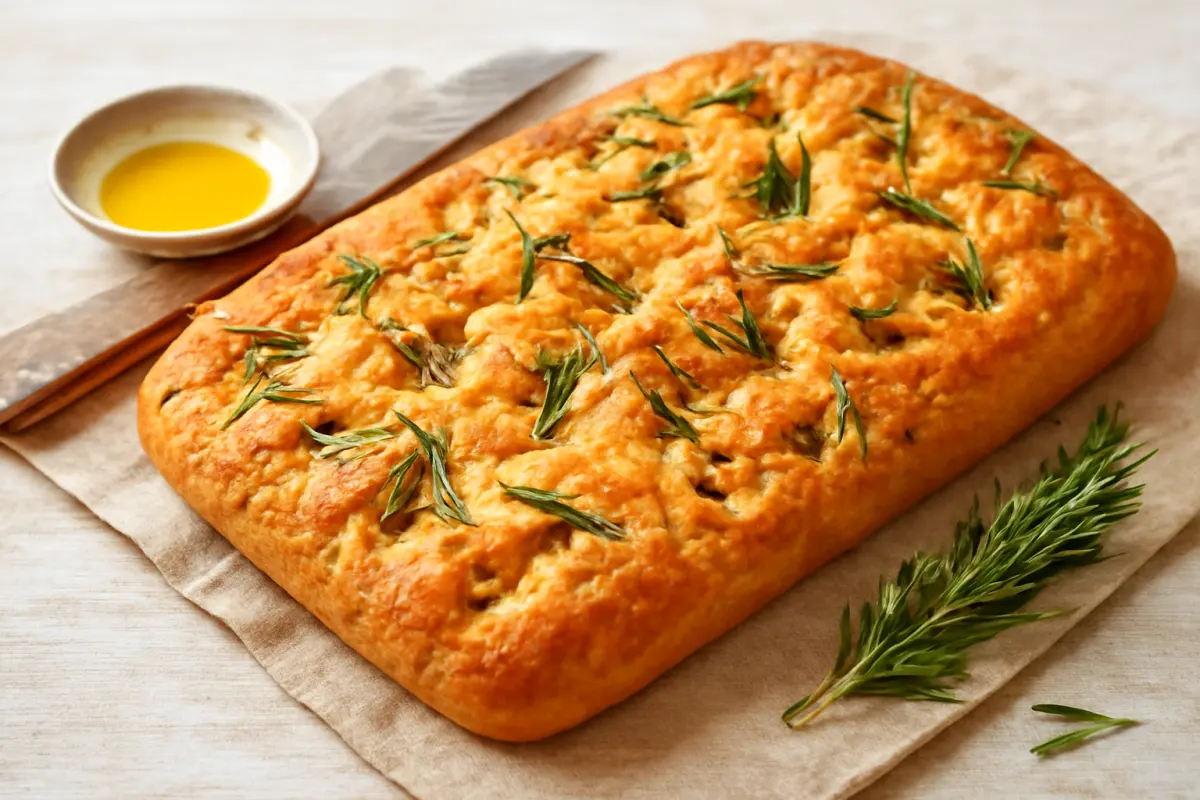
This rosemary garlic focaccia has a deeply golden, olive-oil crisp crust and a soft, airy center. Fresh rosemary and garlic-infused oil flavor every dimpled bite, and the dough needs no special equipment.
Overview
This rosemary garlic focaccia is crisp around the edges, tender in the center, and generously flavored with olive oil, fresh rosemary, and garlic. The dough is wet and sticky by design; that extra moisture helps create the open, soft texture associated with good focaccia.
The recipe fits a 9-by-13-inch metal baking pan and makes about 12 squares. Plan for about 2 hours of rising time, plus 25–30 minutes for baking. Let the dough rise until visibly puffy rather than relying only on the clock, since room temperature affects yeast activity.
Ingredients
- 500 g (4 cups plus 2 tablespoons) bread flour or unbleached all-purpose flour, measured by weight if possible
- 400 g (1 2/3 cups) lukewarm water, about 100–110°F (38–43°C)
- 7 g (2 1/4 teaspoons) instant yeast
- 10 g (1 3/4 teaspoons) fine sea salt
- 60 ml (1/4 cup) extra-virgin olive oil, divided, plus more for the pan
- 4 garlic cloves, very thinly sliced or finely minced
- 2 tablespoons fresh rosemary leaves, finely chopped, plus 1 small sprig for finishing if desired
- 1/2 teaspoon flaky sea salt, for topping
How to make it
Mix the dough. Stir the lukewarm water, yeast, and 2 tablespoons of the olive oil together in a large bowl. Add the flour and fine sea salt. Mix with a sturdy spoon or your hand until no dry flour remains. The dough will look shaggy and feel sticky.
Build some strength. Cover the bowl and rest the dough for 10 minutes. With wet hands, reach under one side of the dough, stretch it upward, and fold it over the center. Turn the bowl and repeat three more times. Cover and rest for another 10 minutes, then repeat the four-fold sequence once more. This takes the place of kneading and gives the dough enough structure to hold its air.
Let the first rise finish. Cover the bowl and leave it at room temperature for 60–90 minutes. The dough should become noticeably puffier and smoother, with bubbles visible around the sides. If your kitchen is cool, it may need the longer end of that range.
Prepare the pan and garlic oil. Pour 2 tablespoons of olive oil into a 9-by-13-inch metal baking pan and tilt the pan to coat the bottom. Warm the remaining 2 tablespoons of olive oil in a small saucepan over low heat with the garlic and chopped rosemary for 2–3 minutes. The garlic should smell fragrant but should not brown. Remove from the heat and set aside to cool slightly. If the garlic starts to color, take it off the heat immediately so it does not become bitter.
Transfer and stretch the dough. Scrape the risen dough into the oiled pan. Turn it once so both sides are coated, then gently stretch it toward the corners. If it springs back, leave it alone for 10 minutes and stretch again. Do not force it; tearing the dough will knock out the air.
Proof in the pan. Cover the pan loosely and let the dough rise for 30–45 minutes, until it looks puffy and gradually spreads toward the corners. Meanwhile, heat the oven to 425°F (220°C), preferably with a rack in the center.
Dimple and season. Drizzle the garlic-rosemary oil over the dough. Press your fingertips straight down through the dough to the pan without dragging them sideways, making deep dimples across the entire surface. Scatter the flaky sea salt and the extra rosemary sprig, if using, over the top. A few small pools of oil in the dimples are exactly what you want.
Bake. Bake for 25–30 minutes, rotating the pan once after 15 minutes. The focaccia is done when the top is deeply golden, the edges are crisp and pulling slightly from the pan, and the underside is browned rather than pale. If the top is coloring quickly but the center still looks soft, loosely cover the pan with foil and continue baking.
Cool before cutting. Run a thin spatula around the edges and transfer the focaccia to a rack. Let it cool for at least 15 minutes before cutting into squares. The crumb should feel springy and moist, not wet or doughy, when you press a cut side gently with your finger.
Expert tips
- Use a metal pan when possible. It helps the bottom brown and crisp. A glass pan may need a few extra minutes, so judge by the golden top and browned underside.
- Sticky dough is normal. Oil or wet your hands instead of adding lots of flour, which can make the focaccia dense.
- For a stronger garlic flavor, use four finely minced cloves in the oil. For a gentler flavor with less risk of browning, use thin slices and remove any pieces that darken.
- If the dough is not rising, move it to a draft-free spot around 75–80°F (24–27°C). Very hot water can damage yeast, so keep the mixing water lukewarm rather than hot.
- If the focaccia is dense, it probably needed more rising time or was handled too firmly during stretching. Wait for visible puffiness and use light, fingertip-only dimpling.
- If the bottom is pale, return the focaccia to the oven for 3–5 minutes directly on a lower rack. Make sure the pan had a generous coating of oil.
- Substitution: dried rosemary can replace fresh at a ratio of 2 teaspoons dried to 2 tablespoons fresh. Rub it between your fingers before adding it to release its aroma.
Serving and storage
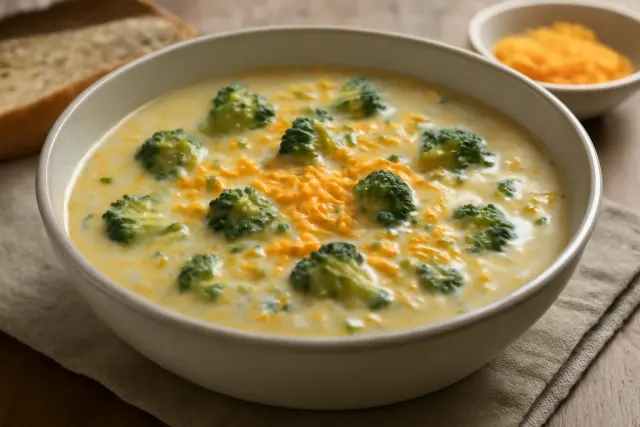
Serve the focaccia warm or at room temperature, cut into squares. It works as a snack, sandwich bread, or a side for soup; try it with this broccoli cheddar soup recipe for dipping and dunking.
Store completely cooled focaccia in an airtight container or tightly wrapped at room temperature for up to 2 days. Reheat pieces in a 350°F (175°C) oven for 5–8 minutes to bring back some crispness. For longer storage, wrap individual pieces well and freeze for up to 2 months. Thaw at room temperature, then warm in the oven before serving.
Frequently asked questions
Can I make rosemary garlic focaccia with all-purpose flour?
Yes. All-purpose flour works in the same quantity, although the dough may be slightly less chewy than dough made with bread flour. Mix until no dry flour remains and avoid adding extra flour while shaping.
Why is my focaccia dough so sticky?
This dough contains a high proportion of water, so stickiness is expected. Use wet or lightly oiled hands for folding and stretching. If it is genuinely liquid rather than stretchy, let it rest for 10 minutes before deciding whether it needs a small sprinkle of flour.
Can I prepare the dough the day before?
Yes. After mixing and the two folding rounds, cover the bowl and refrigerate it overnight. The next day, let it sit at room temperature for about 30 minutes, transfer it to the oiled pan, and allow extra time for the second rise until the dough is puffy before dimpling and baking.
Why did my garlic burn on top?
Garlic exposed on the surface can brown quickly in a hot oven. Cook it gently in the olive oil first, keep the pieces partly in the dough's dimples, and loosely cover the focaccia with foil if the top darkens before the center is baked.
How do I know when focaccia is fully baked?
Look for a deeply golden top, crisp browned edges, and a browned underside. The center should spring back lightly when pressed and should not look glossy or feel wet inside after a short cooling period.