Recipes
Seafood Paella Recipe
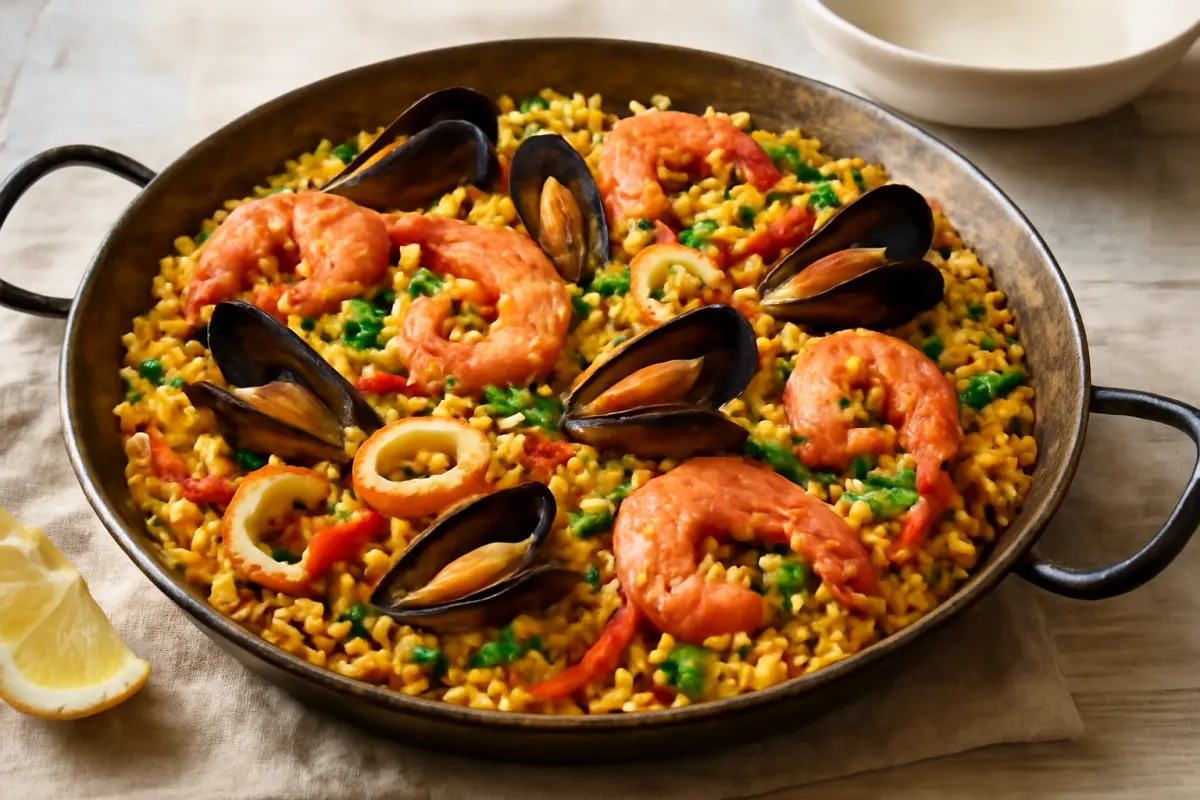
This seafood paella combines saffron-scented rice with shrimp, squid, mussels, and clams in one wide pan. The method keeps the rice distinct and flavorful while giving you clear cues for perfectly cooked seafood and a browned socarrat base.
Overview
This seafood paella recipe makes a generous pan of saffron-scented rice with shrimp, squid, mussels, and clams. The rice cooks in seasoned stock without stirring, allowing the grains to absorb the seafood flavor while the bottom develops a lightly toasted crust.
Use a 13- to 15-inch paella pan if you have one, or choose the widest shallow skillet that fits your stovetop. A wide pan matters more than a deep one because the rice should cook in a fairly thin, even layer.
Ingredients
- 3 tablespoons extra-virgin olive oil
- 1 medium yellow onion, finely diced, about 1 cup
- 1 red bell pepper, finely diced, about 1 cup
- 4 garlic cloves, finely minced
- 1 medium tomato, grated on the large holes of a box grater, or 3/4 cup crushed tomatoes
- 1 teaspoon sweet paprika
- 1/4 teaspoon saffron threads, lightly crushed between your fingers
- 2 cups Spanish short-grain rice, such as bomba or Calasparra
- 5 cups low-sodium seafood stock, warmed
- 1 teaspoon kosher salt, plus more to taste
- 1/4 teaspoon freshly ground black pepper
- 8 ounces cleaned squid, bodies sliced into 1/2-inch rings and tentacles left whole or halved
- 12 large raw shrimp, peeled and deveined, tails left on if desired
- 12 mussels, scrubbed and debearded
- 12 littleneck clams, scrubbed
- 1 lemon, cut into wedges, for serving
- 2 tablespoons chopped fresh parsley, for serving
How to make it
Prepare the seafood and stock. Pat the squid and shrimp dry with paper towels. Check the mussels and clams: discard any with cracked shells, and tap open shells firmly on the counter. If they do not close, discard them. Keep the seafood chilled while you start the rice. Warm the stock in a saucepan over low heat; it should be hot but not boiling.
Build the sofrito. Heat the olive oil in a wide paella pan or skillet over medium heat. Add the onion and bell pepper with a small pinch of the measured salt. Cook for 6 to 8 minutes, stirring occasionally, until softened and glossy but not browned. Add the garlic and cook for 30 seconds.
Cook the tomato mixture. Stir in the grated tomato and paprika. Cook for 5 to 7 minutes, stirring often, until the mixture thickens and looks slightly darker. You should be able to drag a spoon through it and briefly see the bottom of the pan rather than a pool of watery tomato.
Toast the rice. Add the rice and stir for 1 to 2 minutes, coating every grain with the tomato and oil. Add the saffron, remaining salt, and black pepper. Pour in the hot stock and stir once to distribute the rice evenly. From this point on, do not stir the rice; stirring releases starch and can make the finished paella gummy.
Cook the rice. Increase the heat to medium-high and bring the stock to a lively simmer. Cook uncovered for 8 minutes. Adjust the heat as needed so the liquid bubbles across the pan without splashing aggressively. If one area is cooking faster, rotate the pan rather than stirring.
Add the squid and shellfish. Arrange the squid over the rice and tuck the mussels and clams hinge-side down into the liquid. Cook for 5 minutes. The shells should begin to open, and most of the stock should be absorbed. Discard any mussel or clam that remains closed after cooking.
Finish with the shrimp. Arrange the shrimp on top of the rice and cook for 4 to 6 minutes more, turning them once halfway through if the exposed tops are not coloring. They are done when opaque throughout, firm but still springy, and curled into a loose C shape. Avoid cooking them until tightly curled, which is a sign they may be overdone.
Check the rice and create the socarrat. Taste a grain from the center. It should be tender with a slight bite, not crunchy or mushy. If the rice is still firm and the pan is dry, add 2 to 3 tablespoons of hot stock or water around the edge, cover loosely with foil, and cook for 3 to 5 minutes. If the rice is tender but the bottom has not browned, raise the heat to medium-high for 30 to 60 seconds. Listen for a gentle crackling sound and smell for toastiness; stop immediately if you smell burning.
Rest and serve. Remove the pan from the heat, cover it loosely with foil, and rest for 5 minutes. Sprinkle with parsley and serve hot with lemon wedges. Let diners squeeze lemon over individual portions rather than mixing the whole pan at once.
Expert tips
- Use the right rice. Bomba or Calasparra rice handles the stock well while staying distinct. Arborio is a workable substitute, but it releases more starch, so avoid stirring and expect a creamier texture.
- Choose a wide pan. If your pan is too narrow or deep, the rice layer will be thick and the top may stay undercooked while the bottom overcooks.
- Do not rinse the rice. The small amount of surface starch helps the sofrito cling to the grains; rinsing is unnecessary for this cooking method.
- Add seafood in stages. Squid can handle a little more cooking, while shrimp become dry quickly. Adding shrimp near the end keeps them juicy.
- Substitute thoughtfully. Replace the clams with extra mussels, use firm white fish in 1-inch chunks, or use frozen seafood that has been thawed and thoroughly patted dry. Add delicate fish during the final 5 minutes.
- If the rice cooks unevenly, rotate the pan. Burner shapes and pan sizes vary. Moving the pan is safer than stirring because it keeps the rice layer intact.
- For a stronger seafood flavor, use homemade seafood stock or add 1/2 cup dry white wine to the sofrito after the tomato has thickened. Let it reduce almost completely before adding the stock.
Serving and storage
Serve the paella directly from the pan with lemon wedges and chopped parsley. A simple vegetable side, such as roasted asparagus with Parmesan, works well without competing with the seafood.
Refrigerate leftovers in shallow airtight containers within 2 hours of cooking. Use them within 2 days, and reheat only the portion you plan to eat until steaming hot throughout. The rice will soften as it sits, so leftover paella is best reheated gently in a covered skillet with a tablespoon or two of water or stock. Do not leave cooked seafood or rice at room temperature for extended periods.
Frequently asked questions
Can I make seafood paella without a paella pan?
Yes. Use the widest shallow skillet you have, ideally 13 to 15 inches across. Keep the rice in a thin, even layer and rotate the pan during cooking if your burner heats unevenly.
Why should I not stir paella while it cooks?
Stirring releases more starch from the rice and can make the texture sticky. Stir only while combining the stock and rice at the beginning, then move the pan instead if you need to even out the heat.
How do I know when seafood paella is done?
The rice should be tender with a slight bite, most of the stock should be absorbed, shrimp should be opaque and springy, and mussels and clams should be open. The bottom may sound gently crackly and smell toasted, but it should never smell burnt.
Can I use frozen seafood in paella?
Yes. Thaw it fully in the refrigerator, drain away excess liquid, and pat it dry before cooking. Extra moisture can dilute the stock and prevent the seafood from browning lightly.
What should I do with shellfish that stays closed?
Discard mussels or clams that remain closed after cooking. Also discard cracked shells before cooking and any open shellfish that does not close when tapped firmly.