Recipes
Sicilian Caponata Recipe
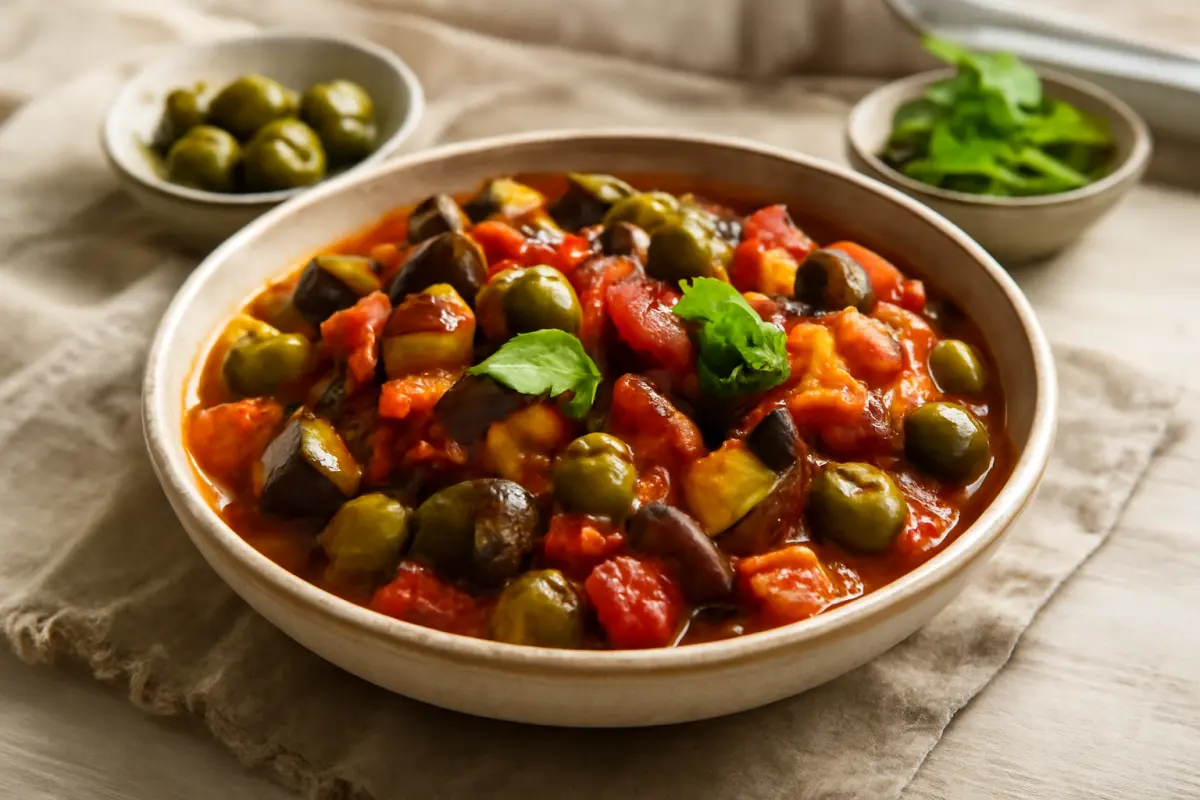
This Sicilian caponata balances silky eggplant and soft vegetables with briny olives and capers, a little sugar, and sharp vinegar. It is best after resting so the sweet-and-sour flavor can settle.
Overview
This Sicilian caponata recipe makes a tender, sweet-and-sour vegetable dish with eggplant, celery, tomatoes, olives, capers, and vinegar. The eggplant is browned separately before it joins the tomato mixture, which helps it stay flavorful instead of watery.
Serve caponata warm, at room temperature, or chilled as an antipasto, side dish, or topping for toasted bread. Let it rest for at least 30 minutes before serving; the vinegar softens and the flavors become more balanced as it sits.
Ingredients
- 2 pounds globe eggplant, cut into 1-inch cubes
- 2 teaspoons kosher salt, plus more for seasoning
- 6 tablespoons extra-virgin olive oil, divided
- 1 medium yellow onion, finely chopped
- 3 celery stalks, trimmed and sliced 1/4 inch thick
- 2 garlic cloves, finely chopped
- 1 can (14.5 ounces) crushed tomatoes
- 1/2 cup pitted green olives, halved
- 3 tablespoons capers, drained and rinsed
- 2 tablespoons red wine vinegar
- 1 tablespoon granulated sugar
- 1/4 teaspoon freshly ground black pepper
- 2 tablespoons toasted pine nuts, optional
- 2 tablespoons chopped fresh parsley, optional
How to make it
Prepare the eggplant. Put the eggplant cubes in a colander and toss them with 2 teaspoons kosher salt. Leave them for 20 minutes, then rinse briefly and pat very dry with a clean kitchen towel or paper towels. Dry eggplant browns more readily and is less likely to splatter in the oil.
Brown the eggplant. Heat 3 tablespoons of the olive oil in a large, wide skillet or Dutch oven over medium-high heat. Add the eggplant in a single layer; work in two batches if the pan is crowded. Cook for 8 to 10 minutes, turning every few minutes, until the cubes are browned on several sides and tender when pierced with a fork. They should have some golden edges but not be collapsing into a puree. Transfer to a plate.
Soften the onion and celery. Reduce the heat to medium and add the remaining 3 tablespoons olive oil. Add the onion and celery with a small pinch of salt. Cook for 7 to 9 minutes, stirring occasionally, until the onion is translucent and the celery is tender enough to bite through but still has a little structure.
Add the garlic and tomatoes. Stir in the garlic and cook for 30 seconds, just until fragrant. Add the crushed tomatoes, olives, capers, vinegar, sugar, and black pepper. Stir well, scraping up any browned bits from the bottom of the pan.
Simmer the caponata. Bring the mixture to a gentle simmer, then cook uncovered for 8 to 10 minutes. The tomato mixture should look slightly thickened rather than soupy. Stir in the browned eggplant and simmer for another 5 minutes, until the eggplant is fully tender and coated with the sauce.
Taste and balance. Taste the caponata while it is warm. Add another teaspoon of vinegar for more sharpness, a pinch of sugar if the tomatoes taste particularly acidic, or a little salt if needed. Stir in the pine nuts and parsley, if using.
Rest before serving. Transfer the caponata to a shallow serving dish and let it rest for at least 30 minutes. Serve at room temperature or gently rewarm it over low heat. Do not boil it hard during reheating, or the eggplant can become mushy.
Expert tips
- Do not crowd the pan: Overcrowded eggplant steams instead of browning. Cook it in batches if the cubes touch in a packed layer.
- Use a wide pan: More surface area helps the tomato mixture reduce and gives the vegetables room to cook evenly.
- Adjust the sweet-and-sour balance gradually: Vinegar brands and tomatoes vary. Add small amounts at the end rather than changing the full quantity at the start.
- For a less oily method: Toss the dried eggplant with 2 tablespoons olive oil, spread it on a baking sheet, and roast at 425°F for 25 to 30 minutes, turning once, until browned and tender. Continue with the skillet method, using the remaining 4 tablespoons oil for the onion and celery.
- Easy substitutions: Use chopped toasted almonds instead of pine nuts, black olives instead of green, or flat-leaf parsley instead of the optional herbs. If using salted capers or olives, rinse them well and season only after simmering.
- If the caponata is watery: Simmer it uncovered for a few extra minutes before adding more seasoning. If it tastes too sharp, stir in 1/2 teaspoon sugar at a time and let it cook for another minute.
Serving and storage
Serve caponata with toasted crusty bread, alongside grilled or roasted food, or as part of an antipasto spread. It can also be spooned over cooked polenta, rice, or pasta. The flavor is usually fuller after it has rested for several hours.
Refrigerate leftovers promptly in a covered, shallow container and use within 4 days. Eat it cold or bring it to room temperature, or reheat it gently in a saucepan over low heat. If freezing, cool it completely, portion it into airtight containers, and thaw it overnight in the refrigerator; the eggplant will be softer after freezing but the dish will remain suitable for serving.
Frequently asked questions
Can I make Sicilian caponata ahead of time?
Yes. Make it up to 2 days ahead and refrigerate it in a covered container. Let it come toward room temperature before serving, or warm it gently in a saucepan. The sweet-and-sour flavor generally becomes more integrated after resting.
Do I need to salt eggplant before cooking?
Salting is not essential for every eggplant, but it helps season the cubes and draws out surface moisture. For this recipe, rinse the eggplant briefly after 20 minutes and dry it thoroughly so it browns instead of steaming.
Why is my caponata bitter or too sour?
The bitterness may come from a particularly strong eggplant or from browned garlic. For excessive sharpness, add sugar in 1/2-teaspoon increments and simmer for a minute after each addition. If the dish is flat rather than sour, it may need a small pinch of salt.
Can I bake the eggplant instead of frying it?
Yes. Toss the dried cubes with 2 tablespoons olive oil and roast them at 425°F for 25 to 30 minutes, turning once. They are ready when browned at the edges and tender in the center; then fold them into the cooked tomato mixture.
What is the best way to serve caponata?
Serve it at room temperature or gently warm it with toasted bread, as an antipasto, side dish, or topping. Pine nuts and parsley can be added just before serving for extra texture and freshness.