Recipes
Spanish Tortilla Recipe
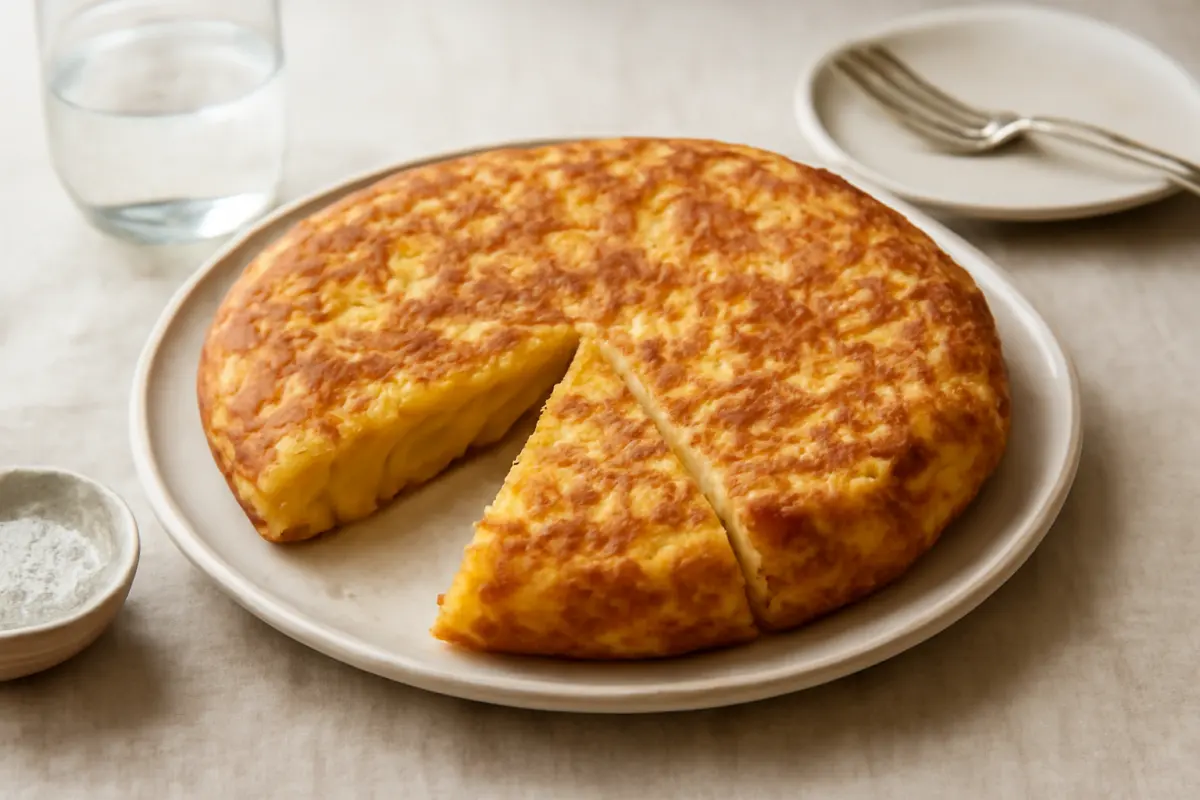
This Spanish tortilla recipe makes a thick, tender tortilla de patatas with olive-oil-softened potatoes, sweet onion, and softly set eggs. Follow the practical flipping method for a golden outside and creamy center.
Overview
Spanish tortilla, or tortilla de patatas, is a thick, rustic omelet made with potatoes, eggs, olive oil, and often onion. The potatoes are gently cooked in olive oil until tender rather than crisp, then folded into beaten eggs before the mixture is set in a skillet.
This version makes a tortilla with a lightly golden outside and a moist, softly set center. Use a well-seasoned cast-iron or nonstick skillet, and keep a plate that is slightly larger than the pan ready for the all-important flip.
Ingredients
- 700 g (about 1½ lb) waxy or all-purpose potatoes, peeled
- 1 medium yellow onion, about 150 g (5 oz), thinly sliced
- 180 ml (¾ cup) extra-virgin olive oil, plus more if needed
- 1 teaspoon fine salt, divided
- 6 large eggs
- ¼ teaspoon freshly ground black pepper, optional
- 1 tablespoon chopped parsley, optional, for serving
How to make it
Slice the potatoes and onion. Cut the potatoes into thin, even slices about 3 mm (⅛ inch) thick. Thin slices cook more evenly and bend slightly when tender. Slice the onion into thin half-moons.
Cook the potatoes and onion. Pour the olive oil into a 25 cm (10-inch) nonstick skillet and warm it over medium heat. Add the potatoes, onion, and ½ teaspoon of the salt. The oil should generously coat the vegetables; they do not need to be submerged.
Cook for 18–25 minutes, stirring gently every few minutes so the slices do not stick or brown heavily. Lower the heat if the potatoes begin to crisp. They are ready when a fork slides through them easily and the onion is soft and translucent, with only light golden edges.
Drain the potato mixture. Set a fine-mesh strainer over a bowl and carefully pour in the potatoes and onion. Reserve 2 tablespoons of the cooking oil for the skillet. Let the vegetables drain for 2–3 minutes. Do not press them firmly; a little oil clinging to the potatoes helps keep the tortilla tender.
Beat the eggs. Crack the eggs into a large bowl. Add the remaining ½ teaspoon salt and the pepper, if using, then whisk just until the whites and yolks are combined. Stir in the warm potatoes and onion. Let the mixture stand for 5 minutes so the eggs can coat the potatoes.
Set the tortilla. Wipe out the skillet if it contains dark, burned bits. Add the reserved 2 tablespoons oil and heat over medium-low. Pour in the egg-and-potato mixture and spread it into an even layer.
Cook for 4–6 minutes, occasionally running a flexible spatula around the edge. The bottom should become golden and set, while the top should still look glossy and loose. If the bottom is browning before the center begins to firm, reduce the heat.
Flip it carefully. Turn off the heat. Place a flat plate larger than the skillet over the pan, hold it firmly with one hand protected by a dry towel or oven mitt, and invert the skillet in one confident motion. Slide the tortilla back into the skillet, using the spatula to tidy the edges.
Finish the second side. Return the skillet to low heat and cook for 2–4 minutes. For a softly set center, stop when the edges are firm and the middle still gives slightly when pressed. For a more fully set tortilla, cook for another 1–2 minutes. The center should be moist and cohesive, not liquid.
Rest and serve. Slide the tortilla onto a plate and rest it for at least 10 minutes before slicing. This lets the eggs finish setting and makes cleaner wedges. Serve warm or at room temperature, optionally sprinkled with parsley.
Expert tips
- Choose the right potatoes: Waxy or all-purpose potatoes hold their shape well. Very floury potatoes can break down more quickly, but they still work if stirred gently.
- Avoid high heat: The potatoes should soften in the oil, not turn into crisp fried potatoes. Excess browning can make the tortilla bitter and harder to bind.
- Use a secure flipping setup: A plate with a completely flat base is easier to manage than a shallow bowl. Keep the pan handle, plate, and your hands dry.
- For an onion-free tortilla: Omit the onion and use the same quantity of potatoes. Add 2–3 minutes to the potato cooking time if the slices are especially firm.
- For less olive oil: Use 120 ml (½ cup) oil in a good nonstick skillet, stirring more frequently so the potatoes cook evenly. The result may be slightly less rich but still tender.
- If the mixture seems too loose: Return the flipped tortilla to low heat for another 2–3 minutes. A thick tortilla firms as it rests, so avoid overcooking it in the pan.
- If it breaks while flipping: Slide the pieces back into the skillet, press the edges together with a spatula, and cook over low heat until set. It may look rustic, but it will still slice well.
- If the bottom browns too fast: Move the pan off the heat for a minute, reduce the burner, and continue cooking gently. A dark crust with a raw center usually means the heat is too high.
Serving and storage
Serve Spanish tortilla in wedges as a light meal, tapas-style snack, or part of a larger spread. It pairs well with a simple green salad, roasted peppers, or crusty bread.
Cool leftovers promptly, cover them, and refrigerate within 2 hours of cooking. Store for up to 3 days. Serve cold, at room temperature, or reheat gently in a low oven or skillet until warmed through. Avoid high heat, which can make the eggs rubbery.
Frequently asked questions
Can I make Spanish tortilla without onion?
Yes. Omit the onion and cook the same quantity of potatoes until fork-tender. The tortilla will have a simpler, more potato-forward flavor and may need a few extra minutes in the skillet.
How do I know when a Spanish tortilla is done?
The edges should be firm, the outside lightly golden, and the center should give slightly when pressed. It should look moist and cohesive rather than fluid. The tortilla will continue setting during its 10-minute rest.
What is the best pan size for this recipe?
A 25 cm (10-inch) nonstick skillet makes a tortilla about 4–5 cm (1½–2 inches) thick. A larger pan produces a thinner tortilla that cooks faster, while a smaller pan makes a thicker one that needs gentler, longer cooking.
Can I prepare Spanish tortilla ahead of time?
Yes. Cook it up to 3 days ahead and refrigerate it covered once cooled. Let it come close to room temperature before serving, or warm it gently so the eggs do not become tough.
Why did my Spanish tortilla fall apart?
The eggs may not have set enough before the flip, the tortilla may have been too thin or wet, or the plate may not have been held firmly against the skillet. Slide any loose pieces back into the pan and cook over low heat until they bind together.