Recipes
Spinach Feta Stuffed Salmon Recipe
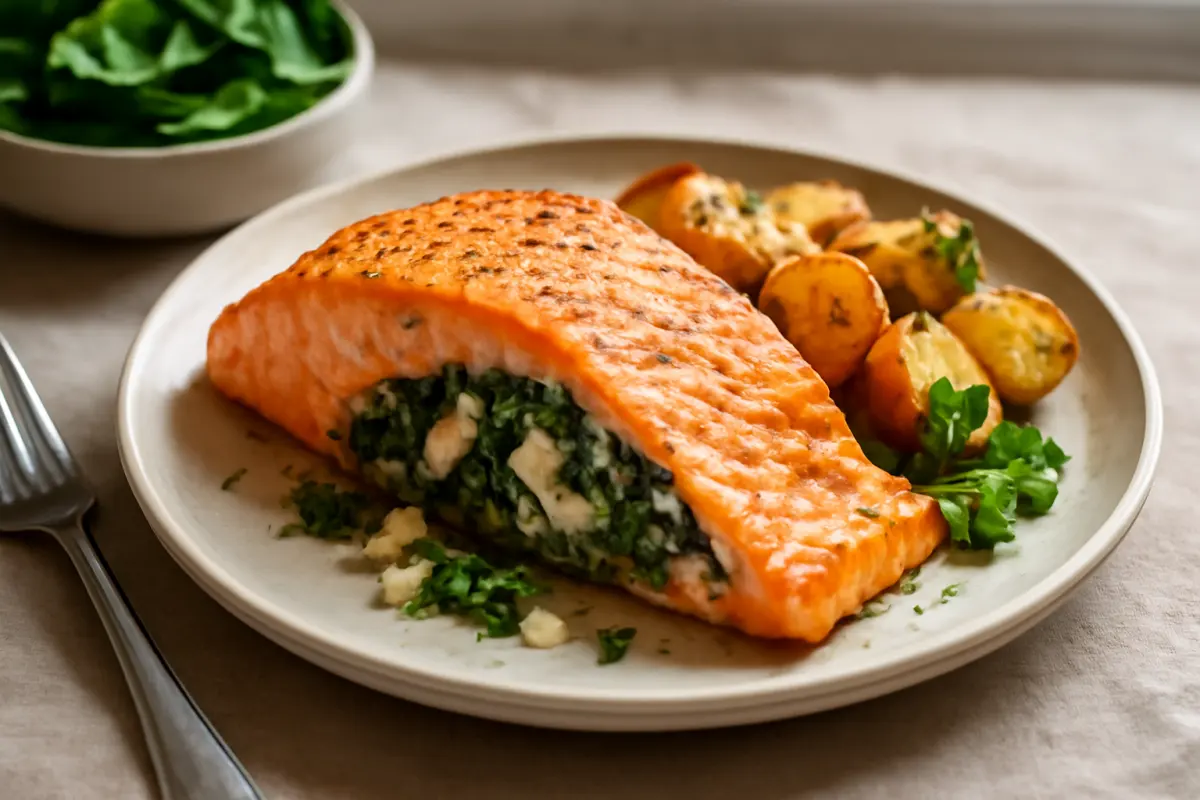
This spinach feta stuffed salmon recipe pairs flaky salmon fillets with a savory filling of wilted spinach, feta, cream cheese, garlic, and lemon. The salmon bakes quickly while the filling stays creamy and tangy.
Overview
This spinach feta stuffed salmon recipe makes a simple, flavorful dinner from four salmon fillets and a creamy spinach filling. The feta adds a salty, tangy bite, while lemon and garlic keep the rich salmon tasting fresh.
Cutting a pocket into each fillet gives the filling somewhere to sit without requiring a complicated roll. Bake the salmon until the thickest part flakes easily and reaches 145°F (63°C), then rest it briefly before serving.
Ingredients
- 4 skinless salmon fillets, 6 ounces (170 g) each, about 1 to 1 1/4 inches thick
- 5 ounces (140 g) fresh baby spinach
- 4 ounces (115 g) cream cheese, softened
- 3 ounces (85 g) crumbled feta cheese
- 2 garlic cloves, finely minced
- 1 tablespoon finely grated lemon zest, divided
- 1 tablespoon fresh lemon juice
- 1 tablespoon olive oil, plus more for the baking dish
- 1/2 teaspoon fine salt, divided
- 1/4 teaspoon freshly ground black pepper
- 1/2 teaspoon dried oregano
- 1 tablespoon chopped fresh dill or parsley, optional
How to make it
Heat the oven and prepare the dish. Heat the oven to 400°F (200°C). Lightly oil a 9-by-13-inch baking dish or line it with parchment. Pat the salmon dry with paper towels. Removing excess surface moisture helps the fish season evenly and brown lightly as it bakes.
Wilt and cool the spinach. Warm the olive oil in a skillet over medium heat. Add the garlic and cook for about 30 seconds, just until fragrant. Add the spinach in handfuls and stir for 1 to 2 minutes, until it collapses and looks bright green. Transfer it to a bowl and let it cool for 5 minutes. Squeeze out excess moisture with clean hands or the back of a spoon. This step prevents watery filling.
Mix the filling. Stir the softened cream cheese, feta, spinach, lemon juice, 1/2 teaspoon of the lemon zest, oregano, dill or parsley if using, 1/4 teaspoon salt, and the black pepper together. The mixture should be thick and spreadable, with the spinach evenly distributed. Taste it before adding more salt because feta varies in saltiness.
Cut pockets in the salmon. Place each fillet flat on a cutting board. Using a sharp knife, cut a slit horizontally into the thickest side of each fillet, stopping about 1/2 inch before the opposite edge and leaving the top, bottom, and ends intact. Do not cut all the way through. Gently open each pocket with your fingers.
Fill and season the fillets. Divide the spinach-feta mixture among the pockets, using about 2 generous tablespoons per fillet. Press the filling in gently without packing it too tightly; a little filling may remain visible at the opening. Arrange the salmon in the prepared dish. Sprinkle with the remaining lemon zest and the remaining 1/4 teaspoon salt.
Bake the salmon. Bake for 14 to 18 minutes, depending on the thickness of the fillets. The salmon is ready when the flesh turns opaque, flakes easily when pressed with a fork, and the center reaches 145°F (63°C) on an instant-read thermometer inserted into the thickest part of the fish, avoiding the filling and the pan. If the fillets are very thick, they may need a few additional minutes.
Rest and serve. Let the salmon rest in the dish for 3 minutes. Spoon any warm juices from the pan over the top and serve with lemon wedges. The filling should be hot and creamy, while the fish should remain moist and separate into large flakes rather than shredding dry.
Expert tips
- Use similar-sized fillets. Pieces with the same thickness will finish at roughly the same time. Very thin tail pieces may need to come out several minutes early.
- Cool the spinach before mixing. Hot spinach can loosen the cream cheese, making the filling difficult to place inside the salmon.
- Do not overfill the pockets. Too much filling can spill out and make it harder for the center of the fish to cook evenly.
- If the salmon browns too quickly, loosely cover the dish with foil for the remaining baking time. Do not seal it tightly, or the surface may steam instead of lightly roast.
- For frozen spinach, use 5 ounces after thawing and squeeze it very dry. Frozen spinach releases more water than fresh spinach, so thorough draining matters.
- For a feta-only filling, replace the cream cheese with 3 additional ounces of feta plus 2 tablespoons of plain Greek yogurt. The mixture will be tangier and slightly more crumbly, so press it into the pockets carefully.
- If the filling seems too loose, chill it for 10 to 15 minutes before stuffing the salmon. If it seems too stiff, stir in 1 teaspoon of lemon juice at a time.
Serving and storage
Serve the salmon with lemon wedges and a crisp salad, steamed green beans, rice, or roasted potatoes. Greek lemon potatoes would make a particularly fitting side because their bright, garlicky flavor complements the feta and lemon in the filling.
Refrigerate leftovers in a covered container within 2 hours of cooking and use them within 3 days. Reheat gently in a covered baking dish at 300°F (150°C) until warmed through, or microwave in short intervals. Avoid high heat, which can dry the salmon and make the filling oily. For the best texture, flake chilled leftovers into a salad, grain bowl, or wrap instead of reheating them repeatedly.
Frequently asked questions
Can I prepare spinach feta stuffed salmon ahead of time?
Yes. Assemble the stuffed fillets, cover them, and refrigerate for up to 8 hours before baking. Add about 2 to 4 minutes to the baking time if the salmon goes directly from the refrigerator to the oven, and check the center with an instant-read thermometer.
Why is my salmon filling watery?
The spinach was probably not drained thoroughly, or it was mixed into the cream cheese while still hot. Squeeze cooked spinach very dry and let it cool before combining it with the other filling ingredients.
Can I use frozen salmon?
For the most even result, thaw the salmon completely in the refrigerator first and pat it dry. Stuffing frozen fillets makes it difficult to cut a clean pocket and can leave the filling cold while the outside overcooks.
How do I know when stuffed salmon is done?
The thickest part should reach 145°F (63°C), measured in the salmon rather than the filling. The flesh should look opaque and flake easily, while the filling should be hot and creamy.