Recipes
Houmous Recipe
This easy houmous recipe makes a smooth, lemony dip with creamy tahini, tender chickpeas, and a fresh garlic finish. Blend it in minutes and adjust the texture and seasoning to suit your table.
Overview
This houmous recipe makes a smooth, creamy dip from chickpeas, tahini, lemon juice, garlic, and olive oil. Ice-cold water helps loosen the mixture while keeping the finished houmous light enough to spoon or spread.
For the smoothest texture, rinse the chickpeas well and blend the tahini, lemon juice, garlic, and water before adding the chickpeas. Serve it with warm flatbread, crunchy vegetables, or as part of a mezze plate.
Ingredients
- 1 x 400 g can chickpeas, drained and rinsed, or 240 g cooked chickpeas
- 90 g tahini
- 45 ml fresh lemon juice, from about 1 large lemon
- 1 small garlic clove, peeled
- ½ teaspoon fine salt, plus more to taste
- ½ teaspoon ground cumin, optional
- 60 ml ice-cold water, plus 1–2 tablespoons more if needed
- 2 tablespoons extra-virgin olive oil, plus extra for serving
- 1 tablespoon chopped fresh parsley, optional, for serving
- A pinch of paprika or sumac, optional, for serving
How to make it
Prepare the chickpeas. Drain the chickpeas in a sieve and rinse them under cold running water until the water runs clear. Shake off as much excess water as possible. If you have time, rub the chickpeas gently between your fingers and remove any loose skins; this takes a few minutes but gives a smoother result.
Blend the tahini base. Add the tahini, lemon juice, garlic, salt, cumin, and ice-cold water to a food processor. Blend for 30–45 seconds, stopping once to scrape down the bowl. The mixture may look thick or slightly split at first; continue blending until it becomes pale, smooth, and creamy.
Add the chickpeas. Add the drained chickpeas and blend for 1 minute. Scrape down the sides, then blend for another 2–3 minutes. The houmous should look smooth and hold soft peaks when lifted with a spoon, rather than appearing grainy or stiff.
Adjust the consistency. With the processor running, slowly pour in the olive oil. Taste the houmous and add more salt or lemon juice if needed. If it is too thick, blend in cold water 1 tablespoon at a time. Give it 20–30 seconds of blending after each addition so you can judge the texture accurately.
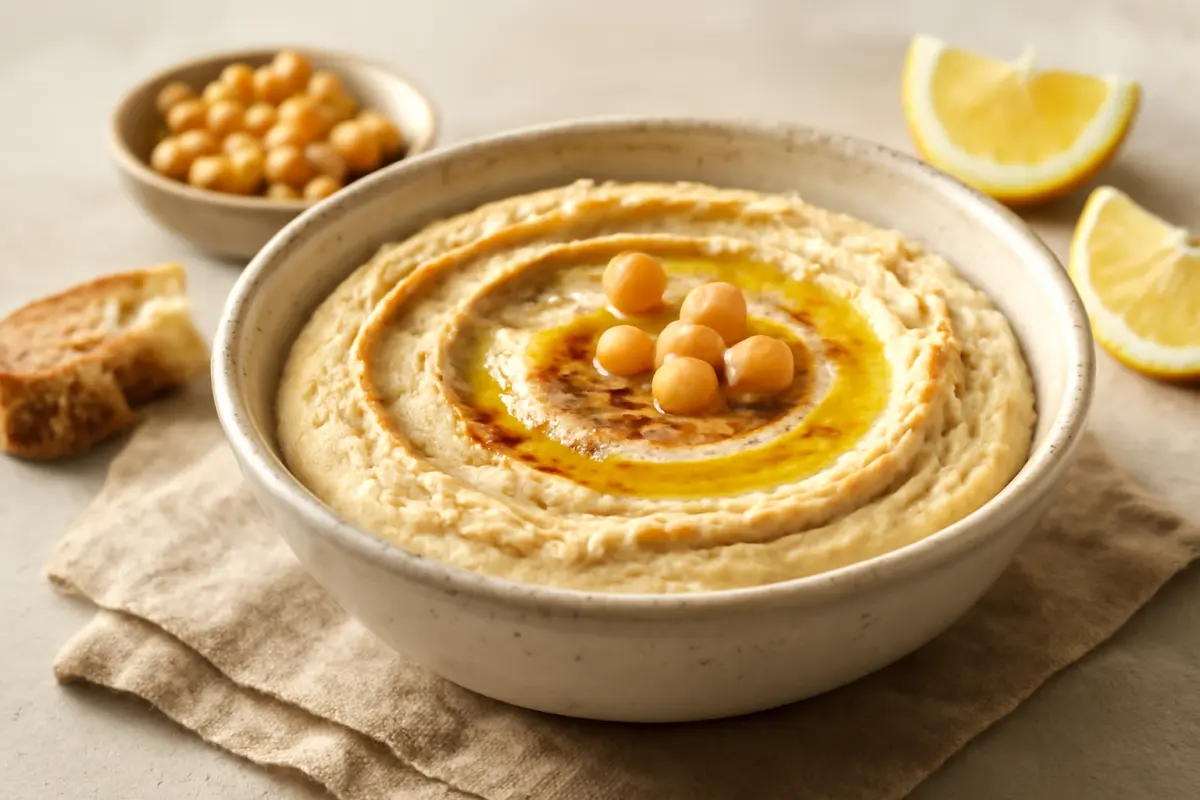
Finish and serve. Spoon the houmous into a shallow bowl and make a small swirl in the surface with the back of a spoon. Drizzle with olive oil and scatter with parsley, paprika, or sumac if using. Serve straight away or chill until needed.
Expert tips
- Use smooth tahini. Stir the tahini thoroughly in its jar before measuring, especially if the oil has risen to the top. A thick, dry layer of tahini can make the houmous taste bitter and become difficult to blend.
- Do not add all the water at once. Chickpeas vary in moisture, so start with 60 ml and add more gradually. The finished dip should be creamy and spreadable, not runny.
- Blend longer than you think. A full 3–4 minutes of total blending breaks down the chickpeas much more effectively than a brief pulse-and-stir method.
- Soften sharp garlic if needed. For a milder flavour, grate the garlic into the lemon juice and leave it for 5 minutes before blending. For a sweeter, deeper variation, try this roasted garlic hummus recipe.
- For a warmer flavour, add a pinch more cumin or finish the bowl with sumac. Avoid adding too much cumin at the start, since it can overpower the lemon and tahini.
Troubleshooting
- The houmous is grainy: Keep blending, adding 1 tablespoon of ice water if the blades are struggling. Removing the chickpea skins can also help.
- It tastes bitter: The tahini may be naturally bitter, or too much garlic or cumin may have been used. Add lemon juice a teaspoon at a time, then balance with a little more chickpea or water.
- It is too sharp: Blend in 1–2 tablespoons more tahini or a few chickpeas, then taste again. A small splash of water will soften the texture without adding more acidity.
- It is too loose: Blend in a few extra chickpeas, 1 tablespoon at a time. Chilling it for 30 minutes also makes the texture feel firmer.
- It tastes flat: Add salt in small pinches first, then adjust with lemon juice. Houmous usually needs enough salt to bring out the chickpea and tahini flavours.
Serving and storage
Serve houmous at room temperature or lightly chilled. It is good with warm pitta, flatbread, cucumber, carrots, peppers, olives, falafel, or as a spread in sandwiches and wraps.
Transfer leftovers to an airtight container, smooth the surface, and refrigerate within 2 hours of making. Use within 3–4 days. The houmous will firm up in the refrigerator, so stir in a teaspoon or two of cold water before serving if needed. Do not leave it at room temperature for extended periods, particularly in warm conditions.
Frequently asked questions
Can I make houmous without a food processor?
Yes. A high-powered blender can make houmous, although you may need to stop and scrape the sides more often. For a more rustic texture, mash the chickpeas with a fork or potato masher, then stir in the tahini, lemon, garlic, salt, water, and olive oil gradually.
Should I peel chickpeas for houmous?
Peeling is optional. Removing the loose skins can make the dip smoother, but thorough blending with enough cold water usually gives a creamy result without peeling every chickpea.
Why is my houmous too thick?
The chickpeas may be drier than usual, or the tahini may be particularly thick. Blend in ice-cold water 1 tablespoon at a time, waiting briefly between additions, until the houmous becomes smooth and spoonable.
Can I use dried chickpeas?
Yes. Soak dried chickpeas overnight, drain them, then simmer in fresh water until completely tender. They should squash easily between your fingers before blending. Use 240 g cooked chickpeas for this recipe.
How long does homemade houmous last?
Keep it covered in the refrigerator and use it within 3–4 days. Stir it before serving, since the dip can thicken and lose a little moisture while chilled.