Recipes
Thai Mango Sticky Rice Recipe
This Thai mango sticky rice recipe pairs chewy steamed glutinous rice with sweet, lightly salted coconut sauce and juicy ripe mango. The method includes soaking, steaming, mixing, and practical fixes for rice that is hard, wet, or overly sweet.
Overview
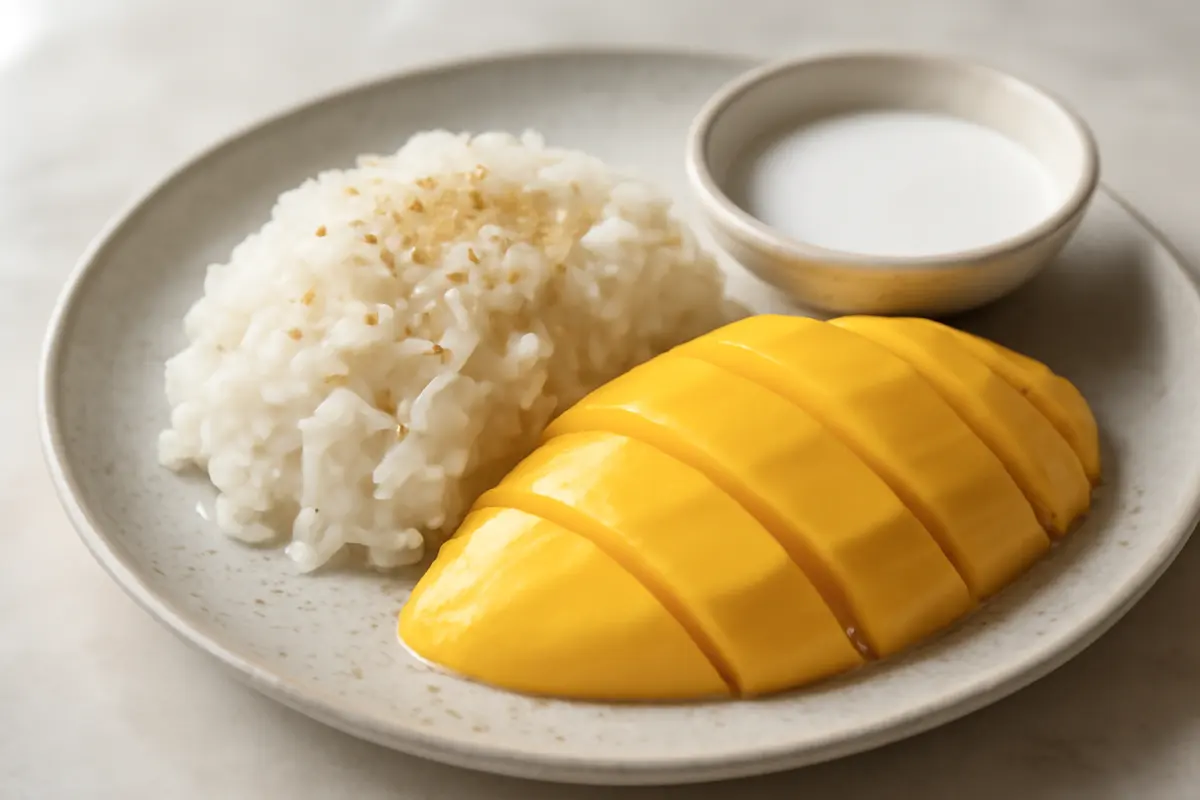
Thai mango sticky rice combines soft, chewy glutinous rice with a sweet coconut sauce and ripe mango. The rice is steamed rather than boiled, then mixed with warm coconut sauce so it absorbs the flavor while staying distinct and pleasantly sticky.
For the best texture, use glutinous rice, also sold as sweet rice or sticky rice. Regular jasmine rice will become tender, but it will not develop the same chewy, cohesive texture. Plan ahead for at least 4 hours of soaking, or soak the rice overnight.
Ingredients
- 1 cup (200 g) Thai glutinous rice, also called sweet rice or sticky rice
- Water, for soaking and steaming
- 1 can (13.5 fl oz or 400 ml) full-fat unsweetened coconut milk, shaken well
- 1/3 cup (67 g) granulated sugar
- 1/2 teaspoon fine salt
- 1 tablespoon cornstarch
- 2 tablespoons cold water
- 2 ripe mangoes, peeled, pitted, and sliced
- 1 tablespoon toasted sesame seeds or split mung beans, optional, for serving
How to make it
Soak the rice. Put the glutinous rice in a bowl and cover it with at least 2 inches of cool water. Soak for 4 to 8 hours, or overnight. The grains should look plumper and become easier to bend between your fingers. Drain thoroughly in a fine-mesh sieve.
Prepare the steamer. Bring several inches of water to a steady simmer in a pot. Line a bamboo steamer basket or steamer insert with a clean, damp kitchen cloth or steamer liner. Spread the drained rice into an even layer. Keep the rice above the water rather than letting it sit in the simmering liquid.
Steam the rice. Cover and steam for 20 to 25 minutes, turning or gently loosening the rice once halfway through if the layer is thick. The rice is ready when the grains are translucent, chewy, and tender all the way through, with no firm white core. If the center is still chalky, steam for another 5 minutes and check again.
Make the coconut sauce. While the rice steams, combine the coconut milk, sugar, and salt in a small saucepan. Warm over medium-low heat, stirring until the sugar dissolves and the mixture is hot but not boiling. Boiling can make the sauce reduce too quickly or separate slightly.
Reserve the topping sauce. Pour 3/4 cup of the warm coconut mixture into a small bowl. In a separate cup, stir the cornstarch with the cold water until smooth. Add this slurry to the saucepan with the remaining coconut mixture. Cook over medium-low heat for 1 to 2 minutes, stirring constantly, until the sauce lightly coats a spoon. Remove it from the heat. This thicker portion is for drizzling over the finished dessert.
Season the sticky rice. Transfer the hot steamed rice to a heatproof bowl. Pour the remaining unthickened coconut sauce over it and fold gently with a spatula or wooden spoon. Avoid vigorous stirring, which can crush the grains. Cover and let the rice stand for 20 to 30 minutes, stirring once halfway through, until the sauce has been absorbed and the rice looks glossy and cohesive.
Prepare the mango. Peel the mangoes, cut the flesh away from the pits, and slice or dice it. The mango should yield slightly when pressed and smell sweet and fragrant. If it is very firm or sour, let it ripen at room temperature before making the dessert.
Serve. Spoon the coconut-soaked sticky rice onto plates beside the mango. Drizzle with the thickened coconut sauce and sprinkle with toasted sesame seeds or split mung beans, if using. Serve while the rice is warm or at room temperature.
Expert tips
- Do not skip the soaking step. Undersoaked rice often cooks unevenly, leaving a firm center while the outside turns soft.
- If you do not have a bamboo steamer, use a metal steamer insert. Line it so the small grains cannot fall through the holes, and keep the rice in a shallow, even layer.
- Coconut milk brands vary in thickness. If the sauce seems very thin, simmer it gently for an extra minute before adding the cornstarch slurry; do not increase the cornstarch without first mixing it with cold water.
- If the finished rice is too firm, sprinkle 1 to 2 tablespoons of hot water over it, cover, and steam for 5 minutes. If it is wet, leave it uncovered for a few minutes so excess moisture can evaporate.
- Use full-fat coconut milk for a richer, smoother sauce. Light coconut milk can work, but the sauce will be thinner and less creamy.
- For a less sweet dessert, reduce the sugar in the coconut sauce to 1/4 cup. Keep the salt because it balances the sweetness and brings out the coconut flavor.
Serving and storage
Serve mango sticky rice the day it is made for the best texture. The mango can be chilled separately, but allow it to sit out briefly before serving so it is not ice-cold beside the warm rice.
Cool leftover sticky rice promptly, place it in a covered container, and refrigerate for up to 2 days. Store the mango and coconut topping separately. Reheat the rice gently in a steamer or microwave with a teaspoon or two of water until soft; it will be firmer after refrigeration. Refrigerate the coconut sauce in a covered container and warm it gently, stirring before serving. Discard leftovers that have been left at room temperature for more than 2 hours.
Frequently asked questions
Can I make mango sticky rice without a steamer?
Yes. Place a heatproof bowl or colander lined with cheesecloth or a clean damp cloth over a pot of simmering water, making sure the rice stays above the water. Cover tightly and steam until the grains are translucent and tender, usually 20 to 30 minutes.
What type of rice is used for Thai mango sticky rice?
Use Thai glutinous rice, also labeled sweet rice or sticky rice. Jasmine rice, sushi rice, and ordinary short-grain rice do not produce the same chewy, cohesive texture.
Why is my sticky rice hard in the middle?
The rice probably needed more soaking or steaming. Soak it for at least 4 hours, drain it well, and steam until there is no opaque, chalky center. If it is already partially cooked, steam it for another 5 minutes and check again.
Can I use canned mango instead of fresh mango?
Fresh ripe mango gives the best flavor and texture, but drained canned mango can work when fresh mango is unavailable. Pat it dry and add it just before serving so its syrup does not make the rice watery.
Can mango sticky rice be made ahead?
You can steam the rice and make the coconut sauces several hours ahead, but the dessert is best assembled on the day of serving. Keep the components covered and refrigerate the sauces and mango if holding them for more than a short time.