Desserts
Vanilla Cupcakes Recipe
These vanilla cupcakes are light, tender, and warmly vanilla-scented, with a creamy buttercream topping that is easy to pipe or spread. Follow the mixing cues for a soft crumb and even rise.
Overview
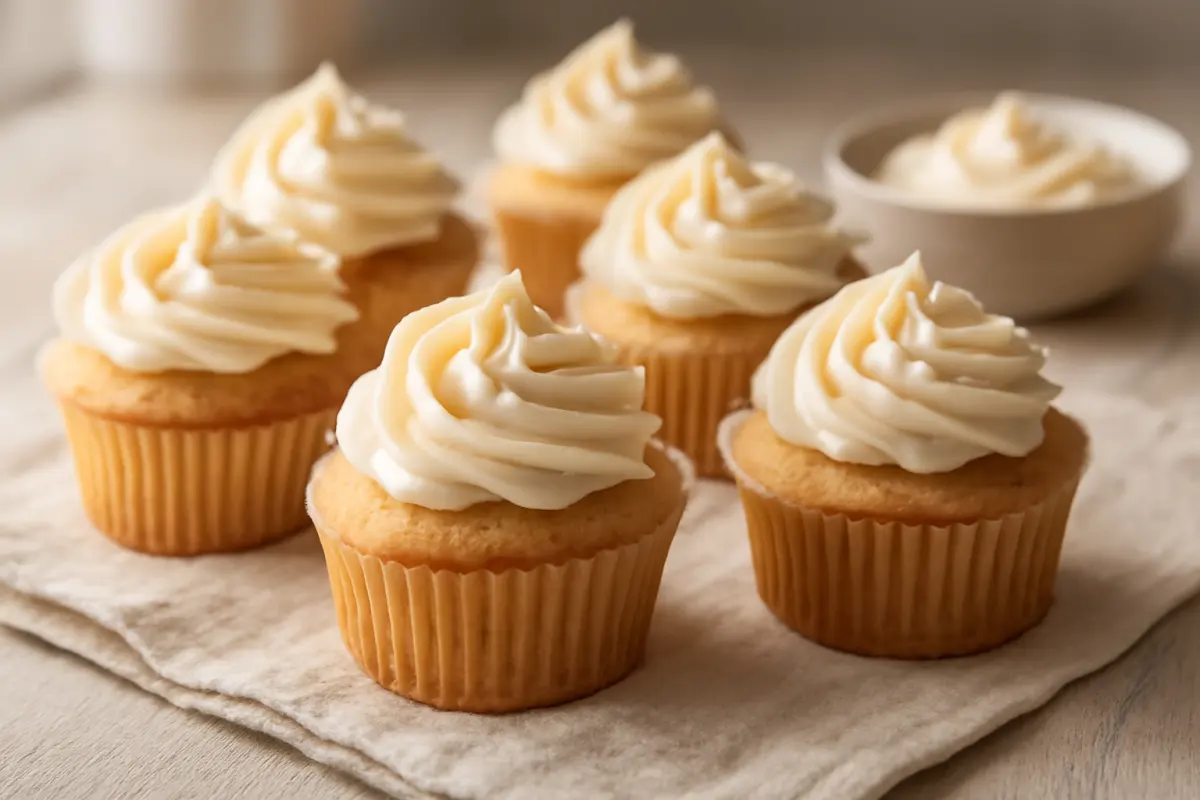
These vanilla cupcakes have a soft, tender crumb, lightly golden edges, and a clear vanilla flavor without being overly sweet. The batter comes together with softened butter, milk, and one egg, then bakes into 12 evenly sized cupcakes.
A simple vanilla buttercream finishes each cupcake with a smooth, creamy texture. For the neatest shape, cool the cupcakes completely before frosting and use a piping bag or a small offset spatula.
Ingredients
For the cupcakes
- 1 1/2 cups (188 g) all-purpose flour
- 1 1/2 teaspoons baking powder
- 1/4 teaspoon fine salt
- 1/2 cup (113 g) unsalted butter, softened to room temperature
- 3/4 cup (150 g) granulated sugar
- 2 large eggs, room temperature
- 2 teaspoons pure vanilla extract
- 1/2 cup (120 ml) whole milk, room temperature
For the vanilla buttercream
- 1 cup (226 g) unsalted butter, softened to room temperature
- 3 cups (360 g) powdered sugar, sifted if lumpy
- 2 teaspoons pure vanilla extract
- 2 tablespoons heavy cream or whole milk, plus more if needed
- 1/8 teaspoon fine salt
How to make it
Prepare the pan and oven. Heat the oven to 350°F (175°C). Line a 12-cup muffin pan with paper liners. Let the butter, eggs, and milk sit at room temperature before mixing; room-temperature ingredients blend more evenly and help the cupcakes rise consistently.
Combine the dry ingredients. Whisk the flour, baking powder, and salt in a medium bowl until evenly combined. This distributes the baking powder so the cupcakes rise evenly.
Cream the butter and sugar. In a large bowl, beat the softened butter and granulated sugar with an electric mixer on medium speed for 2 to 3 minutes. Stop when the mixture looks pale, smooth, and slightly fluffy. If the butter is hard and cold, it will not incorporate enough air; if it is melted, the cupcakes may bake up dense.
Add the eggs and vanilla. Beat in the eggs one at a time, scraping down the bowl after each addition. Mix in the vanilla. The batter may look slightly curdled after the eggs go in, but it will smooth out when the flour and milk are added.
Finish the batter. Add half of the dry ingredients and mix on low speed just until a few flour streaks remain. Add the milk, mix briefly, then add the remaining dry ingredients. Stop mixing as soon as the batter looks smooth. Overmixing can make the cupcakes chewy rather than tender.
Fill the liners. Divide the batter evenly among the 12 liners, using about 3 tablespoons of batter per cupcake. The liners should be about two-thirds full. Wipe any drips from the pan so they do not burn while baking.
Bake. Bake for 18 to 22 minutes, rotating the pan once after about 10 minutes if your oven has hot spots. The cupcakes are done when the tops spring back lightly when pressed in the center and a toothpick inserted into one comes out with a few moist crumbs, not wet batter. Do not wait for the tops to become deeply brown.
Cool completely. Leave the cupcakes in the pan for 5 minutes, then transfer them to a wire rack. Cool for at least 45 minutes before frosting. Warm cupcakes will soften the buttercream and can make it slide.
Make the buttercream. Beat the softened butter on medium speed for 2 to 3 minutes, until smooth and pale. Add the powdered sugar in three additions, mixing on low after each addition to prevent a cloud of sugar. Add the vanilla, salt, and 2 tablespoons of cream or milk. Beat on medium-high for 2 to 3 minutes, until fluffy and spreadable.
Adjust and frost. If the buttercream is too thick, beat in additional milk or cream 1 teaspoon at a time. If it is too loose, add powdered sugar 1 tablespoon at a time. Pipe or spread about 2 tablespoons of buttercream over each cooled cupcake. Finish with sprinkles, if desired.
Expert tips
- Measure flour by weight when possible. If using cups, spoon the flour into the measuring cup and level it rather than scooping directly from the bag.
- No electric mixer? Use a sturdy whisk for the butter and sugar, but make sure the butter is very soft. The cupcakes may be slightly less airy, but they will still work.
- For a stronger vanilla flavor, replace 1 teaspoon of the vanilla extract with vanilla bean paste. Do not add extra liquid vanilla in large amounts, since it can loosen the batter or frosting.
- For dairy-free cupcakes, use a dairy-free baking stick and an unsweetened, unflavored plant milk. Use a dairy-free butter-style spread for the frosting, choosing one that is firm enough to whip.
- If the cupcakes sink, the batter may have been overmixed, the oven may have been opened too early, or the cupcakes may have been underbaked. Check that the centers spring back and show no wet batter before removing them.
- If the tops are peaked, the oven may be running hot or the batter may have been mixed too vigorously after the flour was added. An oven thermometer can help identify an inaccurate temperature.
Serving and storage
Serve the cupcakes at room temperature so the crumb is soft and the buttercream is creamy. They can be decorated with sprinkles, finely grated white chocolate, or a small fresh berry just before serving.
Store frosted cupcakes in an airtight container at room temperature for up to 2 days, provided the room is cool. If your kitchen is warm, refrigerate them, then let them sit at room temperature for 30 to 45 minutes before serving so the frosting softens. Unfrosted cupcakes can be wrapped well and frozen for up to 2 months. Thaw them, still wrapped, at room temperature before frosting.
Frequently asked questions
Can I make these vanilla cupcakes ahead of time?
Yes. Bake the cupcakes up to 2 days ahead and keep them in an airtight container at room temperature, or freeze the unfrosted cupcakes for up to 2 months. Prepare the buttercream up to 3 days ahead and refrigerate it in an airtight container; bring it to room temperature and beat it briefly before using.
Why are my vanilla cupcakes dense?
Common causes include measuring too much flour, using cold or melted butter, overmixing after adding the flour, or leaving out some of the baking powder. Cream softened butter and sugar until pale, then mix the finished batter only until no dry streaks remain.
Can I use salted butter?
Yes. Use the same total amount of butter and reduce the added salt in the cupcake batter to a pinch. For the buttercream, omit the added salt at first and taste before adding any.
How full should cupcake liners be?
Fill each liner about two-thirds full, or use roughly 3 tablespoons of batter per standard cupcake. Overfilled liners can spill over the edges, while underfilled liners tend to bake up short.
Can I use this batter for mini cupcakes?
Yes. Divide the batter among about 36 mini liners and begin checking them after 10 minutes. They are ready when the centers spring back lightly and a toothpick comes out with a few moist crumbs.