Recipes
Vegetable Lasagna Roll-Ups Recipe
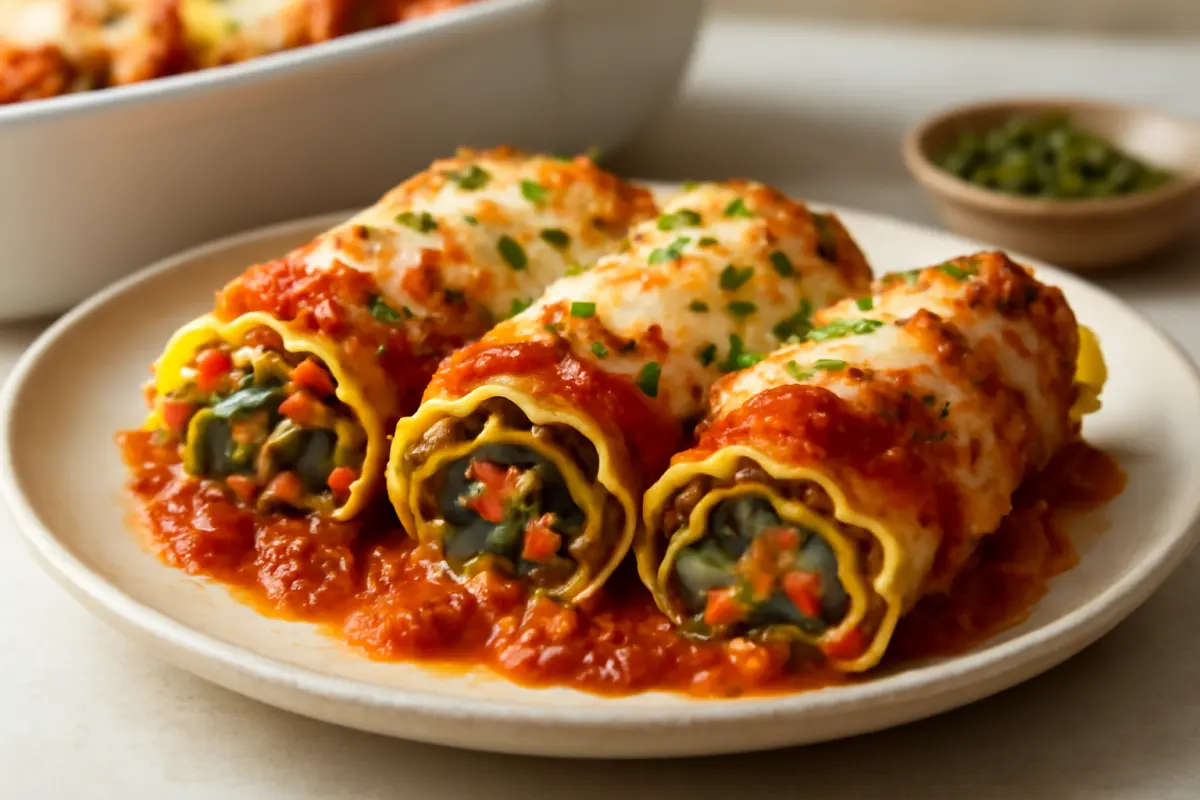
These vegetable lasagna roll-ups fill tender pasta with creamy ricotta, sautéed vegetables, spinach, and Parmesan, then bake in marinara until bubbling and golden. They are easier to portion than layered lasagna and can be assembled ahead.
Overview
These vegetable lasagna roll-ups are a practical way to make baked pasta when you want distinct portions instead of a large layered casserole. Each noodle is spread with creamy ricotta filling, rolled around sautéed zucchini, mushrooms, spinach, and onion, then baked with marinara and mozzarella.
The key to firm, tidy roll-ups is removing excess moisture from the vegetables and cooking the noodles only until flexible. The rolls should be tender, hot in the center, and surrounded by bubbling sauce without becoming watery.
Ingredients
- 12 lasagna noodles, regular or oven-ready
- 1 tablespoon olive oil, plus more for greasing
- 1 small yellow onion, finely diced
- 8 ounces cremini mushrooms, finely chopped
- 1 medium zucchini, about 7 ounces, finely diced
- 2 garlic cloves, minced
- 5 ounces baby spinach
- 15 ounces whole-milk ricotta
- 1 large egg
- 1/2 cup finely grated Parmesan cheese, divided
- 1 teaspoon Italian seasoning
- 1/2 teaspoon kosher salt, plus more for the pasta water
- 1/4 teaspoon black pepper
- 3 cups marinara sauce, divided
- 1 1/2 cups shredded low-moisture mozzarella, divided
- Chopped fresh basil or parsley, for serving, optional
How to make it
Heat the oven and prepare the pan. Heat the oven to 375°F. Lightly grease a 9-by-13-inch baking dish. Spread 1 cup of marinara sauce evenly over the bottom.
Cook the noodles. Bring a large pot of generously salted water to a boil. Cook the lasagna noodles according to the package directions, stopping when they are flexible and just tender but still slightly firm in the center. Drain and lay them flat on a lightly oiled baking sheet or parchment so they do not stick. If using oven-ready noodles, follow the package directions; some brands need soaking rather than boiling.
Cook the vegetables until dry. While the pasta cooks, warm 1 tablespoon olive oil in a large skillet over medium heat. Add the onion and mushrooms and cook for 5 to 7 minutes, stirring occasionally, until the mushroom liquid has evaporated and the vegetables begin to brown. Add the zucchini and cook for 3 to 4 minutes, until tender but not mushy. Stir in the garlic and cook for 30 seconds.
Wilt and cool the spinach. Add the spinach in handfuls and stir until wilted, about 1 to 2 minutes. Transfer the vegetables to a plate or bowl and let them cool for 5 minutes. If the mixture looks wet, gently press it with the back of a spoon or blot it with a paper towel. Excess moisture can make the filling loose.
Make the filling. In a medium bowl, stir together the ricotta, egg, 1/4 cup Parmesan, Italian seasoning, salt, and black pepper. Fold in the cooled vegetables until evenly combined. The filling should be thick enough to spread without running.
Fill and roll the noodles. Place one noodle flat on a work surface. Spread about 1/3 cup of filling over the noodle, leaving a 1-inch strip clear at one short end. Starting from the covered short end, roll the noodle snugly but not tightly. Place it seam-side down in the prepared baking dish. Repeat with the remaining noodles, arranging the rolls in a single layer.
Add sauce and cheese. Spoon the remaining 2 cups marinara over the roll-ups, covering the exposed pasta so it does not dry out. Sprinkle with the mozzarella and the remaining 1/4 cup Parmesan.
Bake until bubbling. Cover the dish tightly with foil, keeping the foil from touching the cheese if possible. Bake for 20 minutes. Remove the foil and bake for 10 to 15 minutes more, until the sauce is bubbling around the edges, the cheese is melted and lightly browned, and the centers are hot when tested with a knife.
Rest and serve. Let the roll-ups rest for 10 minutes before serving. This gives the filling time to set so the rolls hold together when lifted. Finish with basil or parsley if desired.
Expert tips
- Chop the mushrooms and zucchini small so the filling spreads smoothly and the rolls are easy to cut.
- Do not skip cooking the mushrooms until their liquid evaporates. Adding them while they are still wet is the most common cause of watery lasagna roll-ups.
- Keep cooked noodles separate with parchment or a little oil. Stacking them while warm can make them stick together and tear.
- If a noodle tears, overlap the damaged section with another noodle or use the torn piece in a smaller roll; the sauce and cheese will hold it together.
- For a richer vegetable variation, replace up to 4 ounces of the mushrooms with finely chopped roasted red pepper. Pat jarred peppers dry before adding them.
- If you prefer a milder filling, substitute chopped baby kale for half of the spinach, but sauté it for an extra minute so it softens fully.
Serving and storage
Serve two roll-ups per person with a green salad, garlic bread, or a simple vegetable side. For another vegetable-forward side, pair them with roasted asparagus with Parmesan.
Cool leftovers in the baking dish, cover, and refrigerate within 2 hours. Store them in the refrigerator for up to 4 days. Reheat covered in a 350°F oven until hot throughout, or microwave individual portions in short intervals. If the pasta looks dry, add a spoonful of marinara before reheating.
To freeze, assemble the roll-ups without baking in a freezer-safe dish, cover tightly, and freeze for up to 2 months. Thaw in the refrigerator overnight, then bake covered at 375°F until hot in the center; uncover for the final 10 to 15 minutes so the cheese can brown.
Frequently asked questions
Can I make vegetable lasagna roll-ups ahead of time?
Yes. Assemble the roll-ups, cover the dish, and refrigerate it for up to 24 hours before baking. Add about 5 to 10 minutes to the covered baking time if the dish goes into the oven cold.
Why are my lasagna roll-ups watery?
The vegetables probably released too much liquid. Cook mushrooms until their moisture evaporates, avoid overcooking the zucchini, and blot the spinach mixture before combining it with the ricotta.
Can I use frozen spinach?
Yes. Thaw 5 ounces of frozen spinach completely, squeeze it very dry in a clean towel, and use it in place of the fresh spinach. Because frozen spinach is already wilted, it does not need to be cooked in the skillet.
How do I keep lasagna noodles from tearing?
Cook them in plenty of salted water until just flexible, then lay them flat on a lightly oiled surface. Overcooked noodles become fragile, while undercooked noodles can split when rolled.
Can I use cottage cheese instead of ricotta?
Yes. Use 15 ounces of small-curd cottage cheese, preferably full-fat, and drain it if it looks watery. For a smoother filling, pulse it briefly in a food processor before mixing.