Recipes
Vegetable Lo Mein Recipe
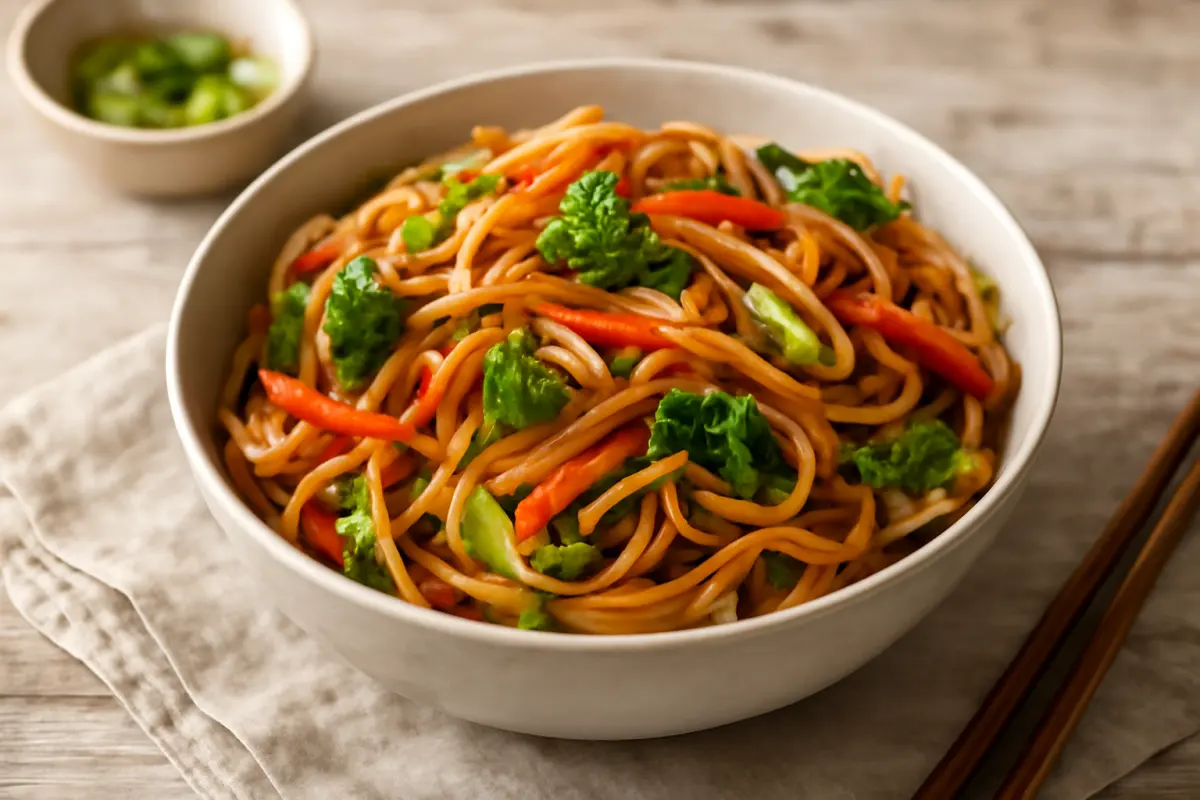
This vegetable lo mein recipe combines chewy noodles, crisp-tender vegetables, and a glossy soy-sesame sauce for a quick, flexible dinner. Prep everything before cooking because the stir-fry comes together in one hot pan.
Overview
This vegetable lo mein recipe makes a savory, satisfying noodle dinner with chewy noodles, colorful vegetables, and a sauce that is salty, lightly sweet, garlicky, and fragrant with sesame oil. It serves four as a main dish and comes together in about 30 minutes.
The key to good lo mein is preparation. Cook the noodles just until tender, drain them well, and have the vegetables and sauce ready before the skillet or wok gets hot. The vegetables should stay crisp-tender rather than soft, and the noodles should be glossy without sitting in a pool of sauce.
Ingredients
- 12 ounces dried lo mein noodles, or dried spaghetti
- 2 tablespoons low-sodium soy sauce
- 1 tablespoon oyster sauce, or vegetarian mushroom stir-fry sauce
- 1 tablespoon hoisin sauce
- 1 tablespoon rice vinegar
- 2 teaspoons toasted sesame oil, divided
- 1 teaspoon granulated sugar
- 1/4 teaspoon freshly ground black pepper
- 2 tablespoons neutral cooking oil, such as canola, avocado, or peanut oil
- 3 cloves garlic, finely minced
- 1 tablespoon fresh ginger, finely grated
- 1 medium carrot, peeled and cut into matchsticks
- 1 red bell pepper, thinly sliced
- 2 cups thinly sliced green cabbage
- 1 cup broccoli florets, cut into bite-size pieces
- 4 green onions, thinly sliced, with the white and green parts separated
- 1/4 cup water, only if needed while stir-frying
- 1 tablespoon toasted sesame seeds, for serving, optional
How to make it
Mix the sauce. In a small bowl, whisk together the soy sauce, oyster sauce, hoisin sauce, rice vinegar, 1 teaspoon of the sesame oil, sugar, and black pepper. The sauce should taste savory and slightly sweet. Set it beside the stove.
Cook the noodles. Bring a large pot of water to a boil. Cook the lo mein noodles according to the package directions, removing them about 1 minute before the suggested time. They should be flexible and nearly tender but still have a little firmness in the center. Drain thoroughly. Toss with the remaining 1 teaspoon sesame oil to reduce sticking, and set aside. If using spaghetti, do not rinse it; the surface starch helps the sauce cling.
Heat the pan. Place a large wok or 12-inch skillet over medium-high heat. Add the neutral oil and heat until it shimmers. Add the white parts of the green onions, garlic, and ginger. Stir constantly for 20 to 30 seconds, just until fragrant. Do not let the garlic brown, or it may taste bitter.
Stir-fry the vegetables. Add the carrot and broccoli. Cook for 2 minutes, tossing frequently. Add the bell pepper and cabbage, then stir-fry for 2 to 3 minutes more. The vegetables are ready when the broccoli is bright green, the carrots have softened slightly, and the cabbage has wilted at the edges while remaining crisp in the thicker pieces. If the pan looks dry or the vegetables begin catching, add the water 1 tablespoon at a time.
Add the noodles and sauce. Add the cooked noodles and pour the sauce around the sides of the hot pan. Use tongs to lift and toss the noodles with the vegetables for 2 to 3 minutes. Keep turning rather than stirring aggressively so the noodles do not break. The finished noodles should look evenly coated and glossy, with no watery sauce collecting at the bottom.
Finish and serve. Turn off the heat and toss in the green parts of the scallions. Taste and adjust with a small splash of soy sauce for salt, rice vinegar for brightness, or a teaspoon of water if the noodles seem too tightly coated. Sprinkle with sesame seeds, if using, and serve immediately.
Expert tips
- Prep before heating the pan: Lo mein cooks quickly, so slice the vegetables, mix the sauce, and drain the noodles before starting the stir-fry.
- Avoid a crowded pan: If your skillet is smaller than 12 inches, stir-fry the vegetables in two batches. Crowding traps steam and leaves them soft instead of lightly seared.
- Use the right noodle texture: Slightly undercooked noodles finish cooking in the pan. Fully cooked noodles can become mushy during the final toss.
- For a vegetarian version: Use vegetarian mushroom stir-fry sauce in place of oyster sauce. Check that the soy sauce and other bottled sauces meet your dietary needs.
- For extra protein: Add 8 ounces of thinly sliced chicken, pork, or beef, or 8 ounces of pressed, cubed firm tofu. Cook the protein first in 1 tablespoon oil until done, transfer it to a plate, and return it with the noodles.
- If the noodles clump: Separate them with your fingers before adding them. If they are already in the pan, add 1 tablespoon water and lift them with tongs rather than pressing them down.
- If the sauce tastes too salty: Toss in a little more plain cooked noodle or vegetables. A teaspoon of rice vinegar can sharpen the flavor, but it will not remove saltiness.
- If the finished lo mein is dry: Add 1 tablespoon warm water and toss over low heat. Add more only as needed; too much liquid makes the noodles soupy.
Serving and storage
Serve the lo mein hot as a main dish, with extra sliced scallions or sesame seeds on top. It is also suitable as a side dish with other stir-fried foods.
Cool leftovers promptly and refrigerate them in a covered container within 2 hours. They keep for up to 3 days. Reheat one portion in a skillet over medium heat with 1 tablespoon water, tossing until steaming hot throughout. A microwave also works: cover loosely, heat in 45-second intervals, and stir between intervals. The vegetables will be softer after storage, but a small splash of water helps loosen the noodles.
Frequently asked questions
Can I use spaghetti instead of lo mein noodles?
Yes. Dried spaghetti is a practical substitute. Cook it about 1 minute less than the package directions suggest, drain it well, and toss it with sesame oil before adding it to the stir-fry.
What vegetables work well in vegetable lo mein?
Carrots, bell peppers, cabbage, broccoli, snow peas, mushrooms, and bok choy all work well. Cut firm vegetables thinly and add them before quicker-cooking vegetables so everything finishes crisp-tender.
Why did my lo mein noodles turn mushy?
They were likely fully cooked before entering the pan or were stir-fried too long. Cook the noodles slightly underdone, drain them well, and toss them with the sauce for only 2 to 3 minutes.
Can I make vegetable lo mein ahead of time?
It is best immediately after cooking, but you can refrigerate it for up to 3 days. Reheat it in a skillet with a tablespoon of water to loosen the sauce and noodles.
Is oyster sauce necessary for this recipe?
No. Replace it with vegetarian mushroom stir-fry sauce for a vegetarian version, or use an additional tablespoon of hoisin sauce for a sweeter, less savory result.