Recipes
Vegetable Pad See Ew Recipe
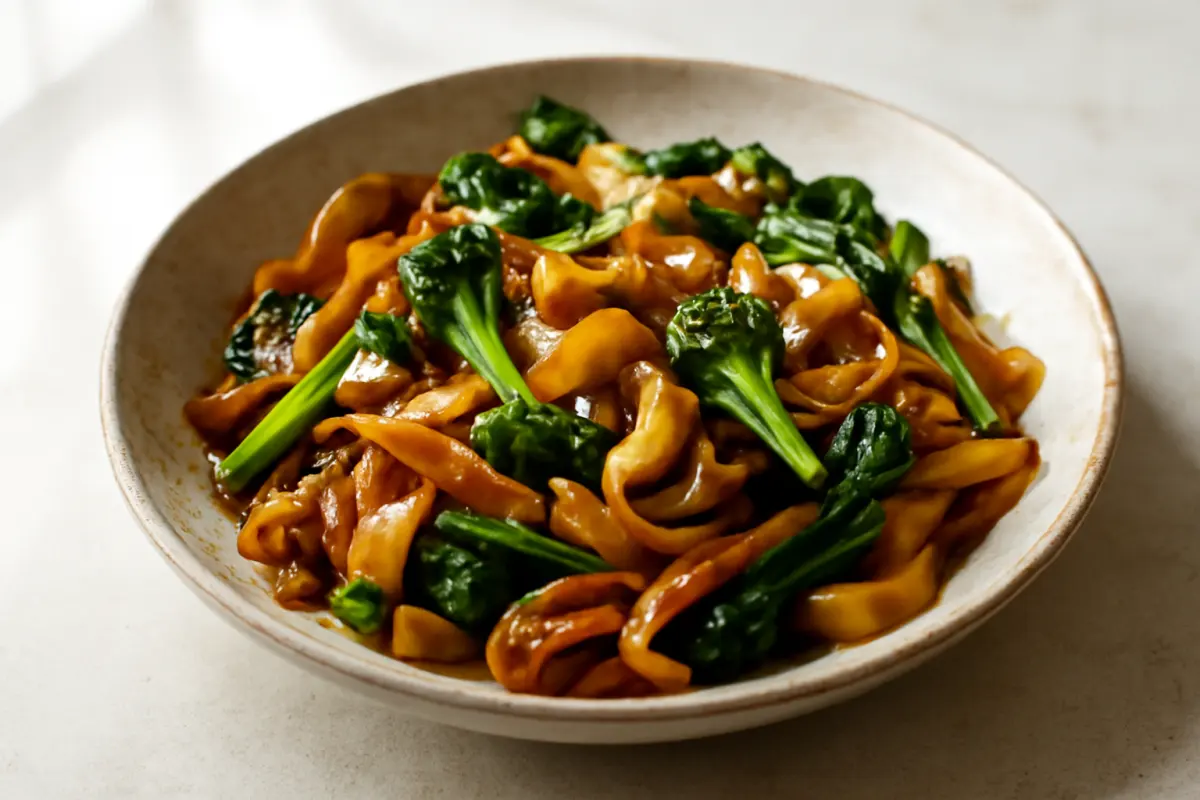
This vegetable pad see ew combines chewy rice noodles, crisp-tender vegetables, tofu, and eggs with a glossy savory-sweet sauce. The key is cooking in batches so the noodles sear instead of steaming.
Overview
This vegetable pad see ew is a fast stir-fry of wide rice noodles, Chinese broccoli, tofu, and colorful vegetables coated in a savory-sweet soy sauce. The noodles should be tender but chewy, with a few lightly browned edges from the hot wok.
The recipe serves four and works best when the ingredients are prepared before cooking. A very hot pan, short cooking times, and cooking the noodles in a single layer help prevent a soft, broken, or watery result.
Ingredients
- 12 ounces (340 g) dried wide rice noodles, about ¼ inch wide
- 2 tablespoons low-sodium soy sauce
- 1 tablespoon dark soy sauce
- 1 tablespoon vegetarian oyster sauce
- 1 tablespoon packed light brown sugar
- 1 tablespoon water
- 1 tablespoon neutral oil, plus more for the pan if needed
- 8 ounces (225 g) extra-firm tofu, pressed and cut into ½-inch cubes
- 3 large garlic cloves, finely chopped
- 2 large eggs
- 8 ounces (225 g) Chinese broccoli, cut into 2-inch pieces, with thick stems sliced lengthwise
- 1 medium carrot, peeled and cut into thin matchsticks
- 1 small red bell pepper, thinly sliced
- ¼ teaspoon freshly ground black pepper
- 1 teaspoon toasted sesame oil, for finishing
- Lime wedges, for serving
How to make it
Prepare the noodles. Place the dried rice noodles in a large bowl and cover with very hot tap water. Soak according to the package directions, checking early, until the noodles are pliable but still slightly firm in the center. This usually takes 20 to 30 minutes. Drain thoroughly and toss with 1 teaspoon of neutral oil to reduce sticking. Do not boil them until fully soft; they will finish cooking in the wok.
Mix the sauce. In a small bowl, stir together the soy sauce, dark soy sauce, vegetarian oyster sauce, brown sugar, and water. The sugar should dissolve before the sauce goes into the pan. Set the bowl beside the stove.
Cook the tofu. Heat a large wok or 12-inch skillet over medium-high heat until a drop of water evaporates immediately. Add 1 tablespoon oil, then arrange the tofu in a single layer. Cook for 5 to 7 minutes, turning occasionally, until the cubes are golden on several sides and feel lightly crisp at the edges. Transfer them to a plate.
Stir-fry the vegetables. Return the wok to medium-high heat and add a small splash of oil if it looks dry. Add the Chinese broccoli stems and carrot; stir-fry for 2 minutes. Add the broccoli leaves, bell pepper, and garlic. Cook for 1 to 2 minutes more, stirring often, until the stems are crisp-tender, the leaves are wilted, and the garlic smells fragrant but is not browned. Transfer the vegetables to the tofu plate.
Cook the eggs. Add another teaspoon of oil. Crack in the eggs and let them sit for about 15 seconds, then gently scramble until large, soft curds form and no liquid egg remains. Move the eggs to the plate with the tofu and vegetables.
Fry the noodles. Add the drained noodles to the hot wok. Pour the sauce around the sides so it heats before reaching the noodles, then toss gently with tongs for 2 to 3 minutes. The noodles should become glossy, fully tender, and slightly browned in a few places. If they stick or look dry before they soften, add 1 tablespoon water at a time; avoid adding a large amount, which can make them mushy.
Finish the stir-fry. Return the tofu, vegetables, and eggs to the wok. Add the black pepper and toss for 30 to 60 seconds, just until everything is hot and evenly coated. Turn off the heat and stir in the sesame oil. Taste one noodle; add a small splash of soy sauce if it needs more salt, or a teaspoon of water if the sauce is too intense.
Serve immediately. Divide the noodles among four bowls and serve with lime wedges. The noodles are at their best right away, while the edges are still lightly seared and the vegetables retain some bite.
Expert tips
- Do not overcrowd the wok. If your pan is smaller than 12 inches, fry the noodles in two batches and combine everything at the end. Too much food at once lowers the heat and causes steaming.
- Use the correct noodle texture. Fully boiled rice noodles are likely to break during stir-frying. Stop soaking when they bend easily but still resist a little when bitten.
- Chinese broccoli substitutions: Broccolini works especially well. Regular broccoli can be used, but slice the stems thinly so they cook in the same time as the leaves.
- For a vegan version, omit the eggs and use extra-firm tofu. Check that the vegetarian oyster sauce is vegan, or replace it with 1 tablespoon mushroom stir-fry sauce.
- For a gluten-free version, use certified gluten-free rice noodles, tamari instead of soy sauce, and gluten-free vegetarian oyster sauce. Check every sauce label.
- If the noodles clump, separate them with clean, damp fingers before adding them to the wok. If they are already in the pan, use tongs and add 1 tablespoon water while tossing.
- If the finished dish is too salty, toss in 1 to 2 tablespoons water and a squeeze of lime. If it tastes flat rather than salty, add a little more vegetarian oyster sauce instead of more soy sauce.
Serving and storage
Serve the pad see ew hot with lime wedges. It is a complete meatless meal, but you can also serve it with a simple cucumber salad or extra stir-fried greens.
Cool leftovers promptly and refrigerate them in a shallow, airtight container within 2 hours. Use within 3 to 4 days. Reheat in a skillet over medium heat with 1 to 2 teaspoons of water, tossing until steaming hot throughout. Microwave portions in short intervals, stirring between each one; the noodles may soften slightly after refrigeration.
For another vegetable-centered dinner with a baked format, try this vegetable enchilada casserole. For a rice-based option, this vegetable korma biryani uses a layered method rather than a quick stir-fry.
Frequently asked questions
Can I make vegetable pad see ew without a wok?
Yes. Use a wide 12-inch skillet and heat it thoroughly before adding the ingredients. Cook in batches if the noodles and vegetables do not fit in a loose layer; a crowded skillet will steam the food instead of searing it.
Why did my rice noodles become mushy?
They were probably soaked or boiled until completely soft before stir-frying, or too much liquid was added to the pan. Soak them until pliable but still slightly firm, drain them well, and add water only 1 tablespoon at a time if needed.
What can I use instead of Chinese broccoli?
Use broccolini, thinly sliced regular broccoli, or a combination of broccoli stems and leafy greens. Slice firm stems thinly so they become crisp-tender before the noodles are finished.
Can I prepare the ingredients ahead of time?
Yes. Mix the sauce, press and cube the tofu, cut the vegetables, and soak the noodles shortly before cooking. Keep the prepared ingredients separate; combining them too early can make the noodles stick and the vegetables release water.
How can I make this recipe vegan?
Omit the eggs, use extra-firm tofu, and confirm that the vegetarian oyster sauce is vegan. You can replace it with mushroom stir-fry sauce if needed.