Recipes
Vegetable Tikka Masala Recipe
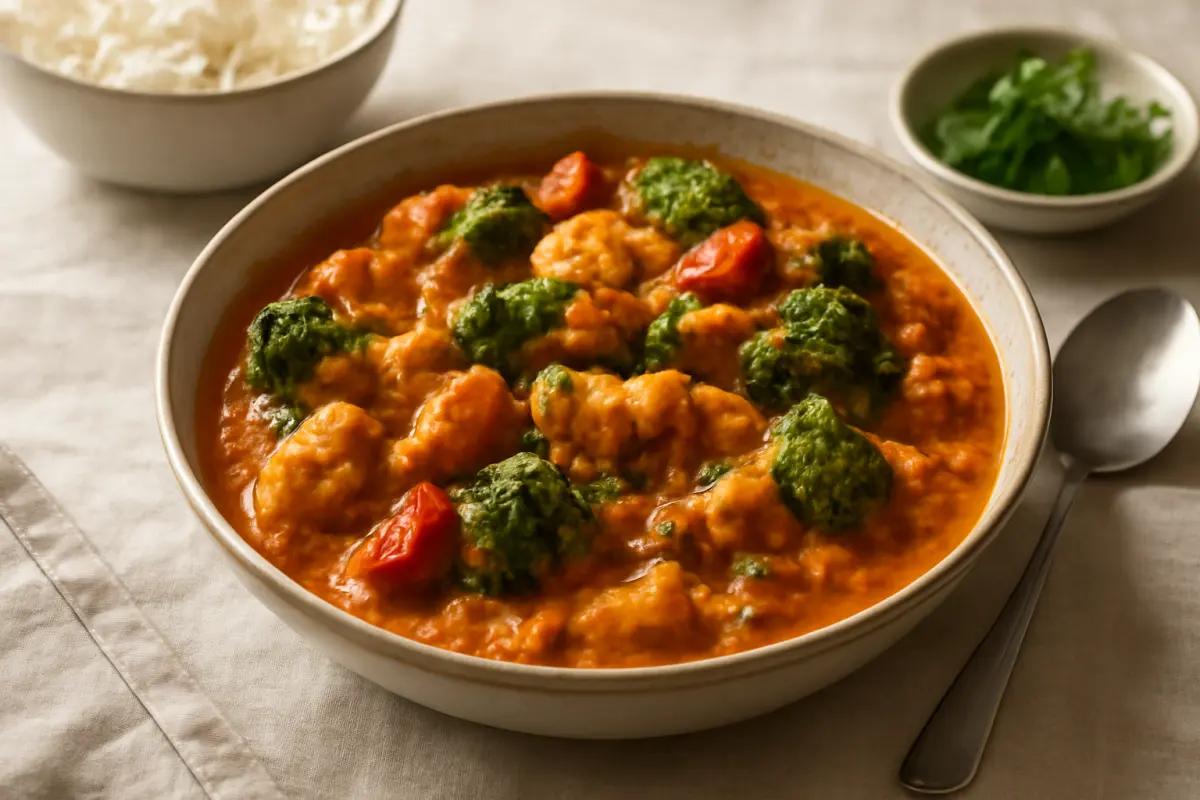
This vegetable tikka masala combines charred cauliflower, peppers, and onion with a rich tomato sauce scented with garam masala. Roast the vegetables first for browned edges, then simmer them briefly in the sauce so they stay tender rather than mushy.
Overview
This vegetable tikka masala recipe pairs roasted, spiced vegetables with a smooth tomato sauce. Cauliflower, bell pepper, red onion, and peas bring different textures, while yogurt, garlic, ginger, and warm spices give the vegetables plenty of flavor before they meet the sauce.
The vegetables roast separately from the sauce, which gives the cauliflower and peppers browned edges instead of allowing them to steam in the pan. Serve it with basmati rice, naan, or a simple salad. For another rice-centered vegetable dinner, see this vegetable korma biryani recipe.
Ingredients
- 1 medium cauliflower, about 700 g (1 1/2 lb), cut into bite-size florets
- 1 large red bell pepper, about 180 g (6 oz), cut into 2.5 cm (1-inch) pieces
- 1 medium red onion, about 180 g (6 oz), cut into thick wedges
- 1 cup frozen peas, 150 g, thawed
- 3/4 cup plain Greek yogurt, 180 g
- 2 tablespoons neutral oil, divided
- 1 tablespoon lemon juice
- 4 garlic cloves, finely grated or minced
- 1 tablespoon fresh ginger, finely grated
- 1 1/2 teaspoons ground cumin, divided
- 1 1/2 teaspoons ground coriander, divided
- 1 teaspoon garam masala, divided
- 1/2 teaspoon smoked paprika or mild paprika
- 1/2 teaspoon ground turmeric
- 1 teaspoon fine salt, divided, plus more to taste
- 1 tablespoon unsalted butter or ghee
- 1 medium yellow onion, finely diced
- 1 x 400 g (14 oz) can crushed tomatoes
- 1/2 cup water or vegetable stock, 120 ml
- 1/2 cup heavy cream, 120 ml
- 1 teaspoon sugar, optional, if the tomatoes taste sharp
- 2 tablespoons chopped fresh cilantro, plus more for serving
- Cooked basmati rice or naan, for serving
How to make it
Heat the oven and prepare the vegetables. Heat the oven to 220°C (425°F). Line a large rimmed baking sheet with parchment or lightly oil it. Pat the cauliflower, bell pepper, and red onion dry; excess moisture will slow browning.
Make the marinade. In a large bowl, stir together the yogurt, 1 tablespoon oil, lemon juice, garlic, ginger, 1 teaspoon cumin, 1 teaspoon coriander, 1/2 teaspoon garam masala, paprika, turmeric, and 1/2 teaspoon salt. Add the cauliflower, bell pepper, and red onion. Toss until every piece is coated.
Roast the vegetables. Spread the vegetables over the baking sheet in one layer, leaving a little space between pieces. Roast for 25–30 minutes, turning once after 15 minutes. They are ready when the cauliflower can be pierced with a fork but still offers slight resistance, and the onion and pepper have browned edges. If the tray looks crowded, use two trays; crowded vegetables soften without browning.
Start the sauce. While the vegetables roast, heat the remaining 1 tablespoon oil and the butter or ghee in a wide saucepan over medium heat. Add the diced yellow onion and cook for 7–9 minutes, stirring occasionally, until soft and lightly golden. Do not rush this step; a raw onion flavor will remain if it is only softened for a minute or two.
Bloom the spices. Stir in the remaining 1/2 teaspoon cumin, remaining 1/2 teaspoon coriander, and remaining 1/2 teaspoon garam masala. Cook for 30 seconds, stirring constantly, until fragrant. Add a tablespoon of water if the spices begin sticking.
Simmer the tomato base. Add the crushed tomatoes, water or stock, and the remaining 1/2 teaspoon salt. Bring to a gentle simmer, then cook uncovered for 12–15 minutes. Stir occasionally. The sauce should thicken enough to briefly hold a line when you drag a spoon across the bottom of the pan.
Finish the sauce. Lower the heat and stir in the cream. Add the sugar if the sauce tastes noticeably sharp. Simmer gently for 2 minutes; avoid a hard boil, which can make the cream separate. Taste and adjust the salt.
Combine everything. Add the roasted vegetables and peas to the sauce. Simmer for 3–5 minutes, just until the peas are hot and the vegetables are coated. The cauliflower should remain intact rather than collapsing into the sauce. Stir in the cilantro.
Serve. Spoon the tikka masala over basmati rice or serve it with naan. Finish with extra cilantro and, if you like, a small squeeze of lemon.
Expert tips
- For a dairy-free version: Use unsweetened plant-based yogurt in the marinade and full-fat coconut milk instead of cream. Add the coconut milk at the same point as the cream and taste before adding sugar, since coconut milk can make the sauce taste sweeter.
- For a milder dish: Omit the smoked paprika and use mild paprika. The recipe has warmth from the spices but no fresh chili; add 1/4 teaspoon cayenne if you want heat.
- If the sauce is too thin: Simmer it uncovered for a few extra minutes before adding the vegetables. Avoid simmering the finished dish for a long time, or the vegetables may become soft.
- If the sauce tastes too acidic: Add the optional sugar in 1/4-teaspoon increments, tasting after each addition. A little extra cream can also round out the flavor.
- If the yogurt marinade looks thin: Stir in 1 tablespoon chickpea flour before coating the vegetables. This helps the marinade cling, but it does not replace the need for a hot oven and uncrowded tray.
- Vegetable substitutions: Use 250 g (9 oz) peeled butternut squash, zucchini, green beans, or mushrooms in place of some of the cauliflower. Cut firm vegetables small enough to cook in about 30 minutes; add quick-cooking zucchini during the final 15 minutes of roasting.
Serving and storage
Serve the tikka masala hot with rice or naan. It also works with a spoonful of plain yogurt, chopped cilantro, or sliced cucumber on the side.
Cool leftovers promptly, transfer them to a covered container, and refrigerate for up to 3 days. Reheat gently in a saucepan over medium-low heat, stirring occasionally, until the sauce and vegetables are steaming hot. Add a splash of water if the sauce has thickened in the refrigerator. The vegetables will soften slightly after storage, so avoid boiling them during reheating.
Frequently asked questions
Can I make vegetable tikka masala without roasting the vegetables?
Yes, but roasting gives the vegetables their browned edges and deeper flavor. If you need a one-pan method, sauté the marinated vegetables in batches until lightly browned, then add them to the finished sauce for 3–5 minutes.
Can I use frozen vegetables?
You can use frozen cauliflower or peas. Thaw the cauliflower and pat it very dry before marinating; frozen cauliflower usually needs about 5 extra minutes in the oven. Add frozen peas directly to the sauce and simmer until hot.
Why did my yogurt marinade turn watery?
Watery vegetables, low-fat yogurt, or overcrowding can thin the coating. Pat the vegetables dry, use thick Greek yogurt, and spread the pieces out. One tablespoon of chickpea flour can help the marinade cling.
Can I prepare this recipe ahead of time?
Make the tomato sauce and roast the vegetables up to 1 day ahead, then refrigerate them separately. Reheat the sauce gently, add the vegetables and peas, and simmer for 3–5 minutes just before serving.
What can I use instead of heavy cream?
Use full-fat coconut milk for a dairy-free finish, or use half-and-half for a lighter dairy option. Add either at the end and keep the sauce at a gentle simmer rather than boiling it.