Recipes
Wild Mushroom Barley Risotto Recipe
This wild mushroom barley risotto uses pearl barley instead of rice for a pleasantly chewy texture and deep, savory flavor. Sauté the mushrooms separately, then gradually add warm stock to the barley until tender and creamy.
Overview
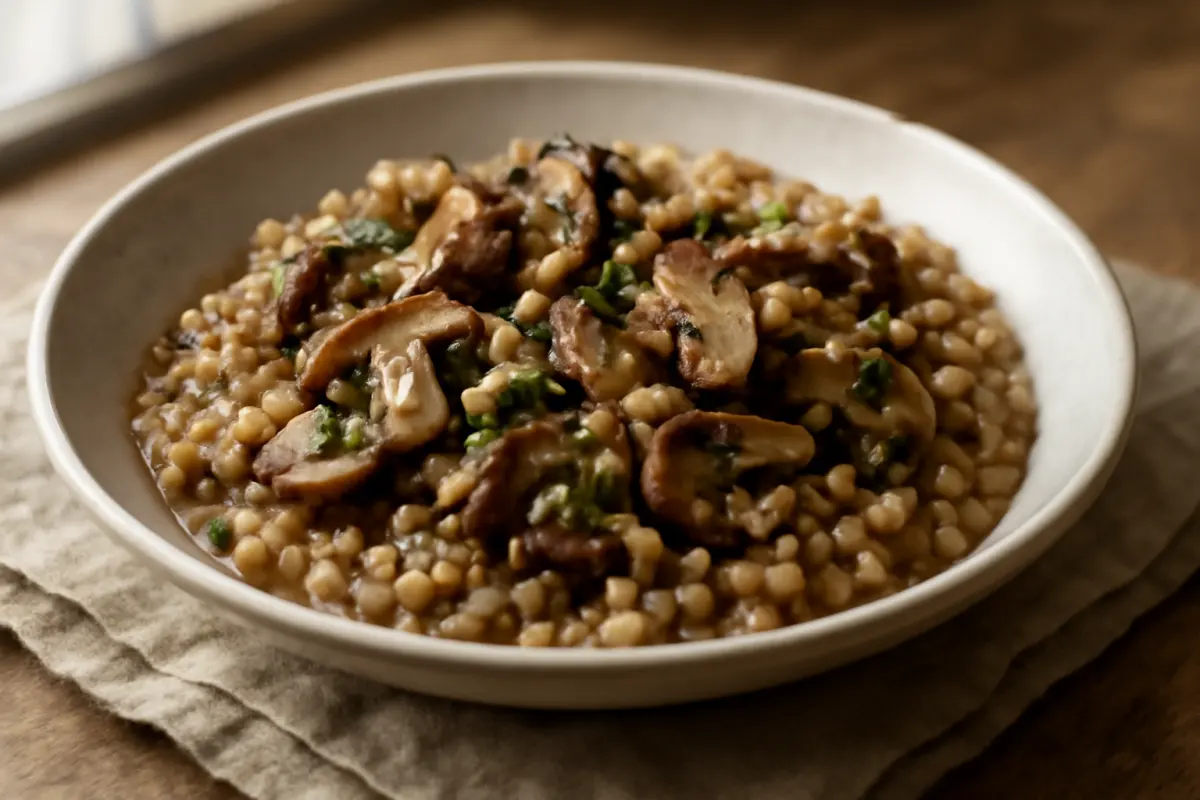
This wild mushroom barley risotto is creamy without being soft or mushy. Pearl barley takes longer to cook than Arborio rice, but it rewards the extra time with a pleasantly chewy texture and a rich, spoon-coating finish.
Sautéing the mushrooms separately keeps their edges browned instead of allowing them to steam in the barley. A splash of dry white wine, Parmesan, butter, garlic, and thyme round out the dish without overwhelming the earthy mushroom flavor.
Ingredients
- 12 ounces (340 g) mixed wild mushrooms, such as oyster, shiitake, maitake, or cremini, trimmed and sliced
- 5 cups (1.2 L) low-sodium vegetable or chicken stock, plus up to 1 cup more if needed
- 1 tablespoon olive oil
- 2 tablespoons unsalted butter, divided
- 1 medium yellow onion or 2 large shallots, finely diced
- 2 garlic cloves, finely chopped
- 1 1/2 cups (300 g) pearl barley, rinsed and drained
- 1/2 cup (120 ml) dry white wine, such as Sauvignon Blanc or Pinot Grigio
- 1 teaspoon fresh thyme leaves, or 1/2 teaspoon dried thyme
- 3/4 teaspoon fine salt, plus more for the mushrooms and finishing
- 1/2 teaspoon freshly ground black pepper
- 1/2 cup (45 g) finely grated Parmesan cheese
- 2 tablespoons chopped fresh parsley
- 1 teaspoon finely grated lemon zest, optional
How to make it
Prepare the stock and mushrooms. Pour the stock into a saucepan and bring it just to a simmer over medium heat. Reduce the heat to low so it stays hot but does not boil. Wipe the mushrooms clean with a damp towel or brush off any dirt, then slice larger mushrooms into bite-size pieces. Avoid soaking them, since wet mushrooms are more likely to steam than brown.
Brown the mushrooms. Heat the olive oil and 1 tablespoon of the butter in a wide, heavy saucepan or Dutch oven over medium-high heat. Add the mushrooms in a single layer, working in two batches if the pan looks crowded. Season lightly with salt and pepper. Cook for 4 to 6 minutes per batch, stirring occasionally, until the mushrooms release their moisture and develop browned edges. Transfer them to a plate.
Soften the aromatics. Lower the heat to medium and add the remaining 1 tablespoon butter. Add the onion and cook for 4 to 5 minutes, stirring, until translucent and soft but not browned. Stir in the garlic and thyme and cook for 30 seconds, just until fragrant.
Toast the barley. Add the rinsed pearl barley and stir for 1 to 2 minutes. The grains should become lightly glossy and smell faintly nutty. This brief toasting helps build flavor without browning the barley deeply.
Deglaze with wine. Pour in the white wine and stir, scraping the bottom of the pan. Let it simmer for 2 to 3 minutes, until most of the liquid has evaporated and the sharp alcohol smell has faded.
Add the stock gradually. Stir in about 1 cup of the hot stock. Cook at a gentle simmer, stirring frequently, until the barley has absorbed most of the liquid. Add another 1/2 to 1 cup of stock and repeat, stirring every minute or so. Keep the heat low enough that the barley bubbles gently rather than boiling hard.
Cook until tender. Continue adding stock as the pan becomes nearly dry. Start tasting after 30 minutes. The barley is ready when it is tender enough to chew easily but still has a slight, pleasant bite. The mixture should look loose and creamy, with no watery liquid pooling around the grains. This usually takes 35 to 45 minutes, and you may not need all 6 cups of stock.
Finish with mushrooms and cheese. Stir the browned mushrooms into the barley during the final 3 to 5 minutes of cooking so they warm through without losing all of their texture. Remove the pan from the heat and stir in the Parmesan, parsley, and lemon zest, if using. Taste and adjust the salt and pepper.
Rest and serve. Cover the pan and let the risotto rest for 2 minutes. If it thickens more than you prefer, loosen it with a few tablespoons of hot stock. Serve immediately while it is creamy and spoonable, with extra Parmesan if desired.
Expert tips
- Use pearl barley, not hulled or pot barley, for the stated cooking time. Hulled barley retains more of its outer layer and needs substantially longer to soften.
- Do not crowd the mushrooms. If they overlap heavily, they will release liquid and steam instead of browning. A second batch takes only a few extra minutes.
- Keep the stock hot. Adding cold liquid repeatedly lowers the temperature and extends the cooking time.
- Stir often, but not constantly. Frequent stirring releases enough starch for creaminess while allowing the barley to cook evenly.
- If the barley is still firm when the pan is nearly dry, add more hot stock, 1/2 cup at a time, and continue cooking. If the barley is tender but the risotto is loose, simmer for another minute or two without adding stock.
- For a vegetarian version, use vegetable stock and check that the Parmesan is suitable for your dietary needs. For a dairy-free version, replace the butter with more olive oil and omit the Parmesan; the barley will still thicken the dish, though the finish will be less rich.
- If you do not have wild mushrooms, use 12 ounces of cremini, baby bella, or a combination of cultivated mushrooms. A small amount of dried porcini, rehydrated and finely chopped, can add deeper mushroom flavor; strain its soaking liquid before using it as part of the stock.
Serving and storage
Serve the barley risotto as soon as it is finished, either as a main course with a crisp salad or as a side dish with roasted vegetables or chicken. The texture is creamiest on the first serving.
Refrigerate leftovers in a shallow, covered container within 2 hours of cooking. Use them within 3 to 4 days. Reheat gently in a saucepan or microwave with a splash of stock or water, stirring occasionally until steaming hot throughout. The barley will absorb liquid as it chills, so loosen it gradually rather than adding a large amount at once. Do not leave cooked risotto at room temperature for extended periods.
Frequently asked questions
Can I make wild mushroom barley risotto ahead of time?
Yes, but it is best slightly undercooked if you plan to finish it later. Stop when the barley is almost tender, spread it in a shallow dish to cool quickly, and refrigerate it in a covered container. Reheat it in a saucepan with hot stock, stirring until tender and creamy, then add the Parmesan and fresh herbs.
Why is my barley risotto still hard after 45 minutes?
The stock may have been added too quickly, the simmer may have been too gentle, or the barley may be a less-processed variety. Add hot stock 1/2 cup at a time and continue cooking until the grains are tender. Check the package label to confirm that you used pearl barley rather than hulled barley.
Can I use red wine instead of white wine?
You can, but red wine will give the risotto a darker color and a more pronounced flavor. Dry white wine keeps the mushrooms and barley lighter and more delicate. If you do not want to use wine, replace it with an equal amount of stock and add a small squeeze of lemon at the end if the flavor needs brightness.
How do I stop the mushrooms from becoming soggy?
Wipe them clean instead of soaking them, dry them well, use a wide hot pan, and cook in batches if necessary. Let them sit briefly between stirs so their moisture can evaporate and their cut edges can brown.