Recipes
Apple Pie Recipe
This classic apple pie has a buttery, flaky crust and tender apples in a lightly spiced filling. Follow the temperature and cooling cues for a golden crust and slices that hold together.
Overview
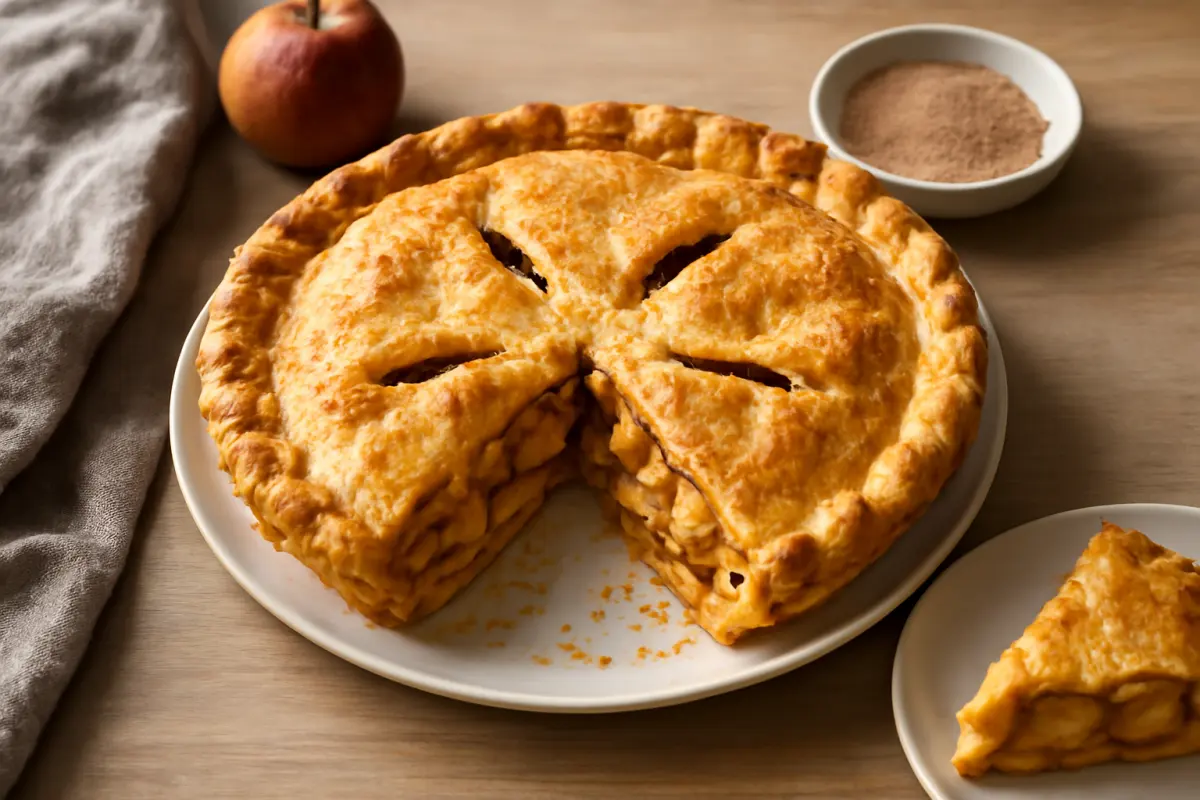
This apple pie recipe makes one 9-inch double-crust pie with a crisp, flaky pastry and a warmly spiced apple filling. The apples are tossed with sugar, lemon, cinnamon, and a little flour so the juices thicken as the pie bakes.
For the best texture, keep the pastry cold, use firm baking apples, and let the finished pie cool before slicing. The filling should bubble visibly through the vents, and the crust should be deep golden rather than pale blonde.
Ingredients
- 315 g (2 1/2 cups) all-purpose flour, plus more for rolling
- 1 tablespoon granulated sugar
- 1 teaspoon fine salt
- 225 g (1 cup) cold unsalted butter, cut into 1/2-inch cubes
- 6 to 8 tablespoons ice water
- 1.2 kg (about 2 1/2 lb) firm apples, such as Granny Smith, Honeycrisp, Braeburn, or a combination
- 150 g (3/4 cup) granulated sugar
- 2 tablespoons all-purpose flour
- 1 tablespoon lemon juice
- 1 teaspoon ground cinnamon
- 1/4 teaspoon ground nutmeg
- 1/4 teaspoon fine salt
- 1 large egg
- 1 tablespoon milk or water
- 1 tablespoon coarse sugar, optional, for sprinkling
How to make it
Make the pastry. Whisk the flour, sugar, and salt in a large bowl. Add the cold butter and rub it in with your fingertips, or cut it in with a pastry cutter, until the mixture has pea-sized pieces of butter and some smaller crumbs. The visible butter pieces help create flaky layers.
Drizzle in 6 tablespoons of ice water, tossing with a fork as you go. Squeeze a small handful of dough: it should hold together without feeling wet. Add the remaining 1 to 2 tablespoons water, 1 tablespoon at a time, only if the dough is still crumbly. Do not knead it smooth.
Turn the dough onto the counter and divide it into two portions, one slightly larger than the other. Press each portion into a disk, wrap tightly, and refrigerate for at least 1 hour and up to 2 days.
Prepare the apples. Peel, core, and slice the apples 1/4 inch thick. Put them in a large bowl and toss with the sugar, flour, lemon juice, cinnamon, nutmeg, and salt. Let them stand for 15 minutes while you roll the pastry. A little liquid will collect in the bowl; this is normal.
Roll the bottom crust. Heat the oven to 220°C (425°F). On a lightly floured surface, roll the larger pastry disk into a circle about 12 inches wide and 1/8 inch thick. Turn the dough occasionally as you roll so it does not stick. If it softens or begins to tear, chill it for 10 minutes.
Transfer the dough to a 9-inch pie plate, preferably metal or glass, leaving about 1 inch overhanging the edge. Ease it into the corners without stretching it. Refrigerate the lined pie plate for 15 minutes.
Fill the pie. Stir the apples once more, then mound them into the crust. Pour any liquid left in the bowl over the apples. The filling should sit slightly higher in the center because it will settle as it cooks.
Add the top crust. Roll the second pastry disk into an 11-inch circle. Lay it over the apples and trim both crusts to leave about 1/2 inch beyond the rim. Press the edges together, then fold the overhang underneath itself and crimp with your fingers or a fork.
Cut 5 or 6 vents in the top crust. Beat the egg with the milk or water, then brush it over the pastry, avoiding puddles around the edges. Sprinkle with coarse sugar if using. Place the pie on a baking sheet to catch drips.
Bake. Bake at 220°C (425°F) for 20 minutes. Without opening the oven for long, reduce the temperature to 190°C (375°F) and bake for another 40 to 55 minutes. The pie is ready when the crust is deep golden and the filling is bubbling steadily through the vents. If the edges brown too quickly, cover them with a strip of foil.
Transfer the pie to a rack and cool for at least 3 hours before slicing. The filling will thicken as it cools. For the cleanest slices, wait until the pie is barely warm or at room temperature.
Expert tips
- Choose firm apples that hold their shape. A combination of tart Granny Smith and sweeter Honeycrisp or Braeburn gives balanced flavor and texture.
- Do not skip the chilling steps. Warm pastry can slump, leak butter, or bake up tough instead of flaky.
- If the dough cracks while rolling, let it sit for 2 to 3 minutes, then patch cracks with a small piece of dough and continue.
- If the apples are very juicy, add 1 extra teaspoon of flour to the filling. Avoid adding much more, or the filling may turn pasty.
- A pale, watery pie usually needs more time. Look for active bubbling in the center, not only around the edges, before removing it from the oven.
- If the top is golden but the filling is not bubbling, tent the whole pie loosely with foil and continue baking.
- For a dairy-free crust, use a firm plant-based butter in the same quantity. For an egg-free finish, brush the crust with milk or cream, or leave it unwashed and sprinkle with sugar.
Serving and storage
Serve the pie warm or at room temperature, plain or with vanilla ice cream. Keep the cooled pie covered at room temperature for up to 2 days. For longer storage, refrigerate it in an airtight container or under a tight cover for up to 4 days.
To reheat, place individual slices in a 175°C (350°F) oven for 10 to 15 minutes, or warm the whole pie for 15 to 20 minutes until heated through. The crust is crisper when reheated in the oven than in the microwave.
Frequently asked questions
What are the best apples for apple pie?
Firm apples that keep their shape work best, including Granny Smith, Honeycrisp, Braeburn, and Pink Lady. Combining a tart apple with a sweeter variety gives the filling more depth.
Why is my apple pie filling watery?
The apples may have released more juice than expected, or the pie may not have baked long enough. Use the recommended flour, bake until the filling bubbles in the center, and cool the pie for at least 3 hours so the juices can set.
Can I make apple pie ahead of time?
Yes. Bake it up to 2 days ahead and keep it covered at room temperature once fully cooled. Rewarm it in a 175°C (350°F) oven before serving if desired.
How do I stop the pie crust edges from burning?
Cover the rim with a narrow strip of foil once it becomes golden, usually during the second stage of baking. Keep the center uncovered so the top crust can continue browning.