Recipes
Sesame Ginger Beef Noodles Recipe
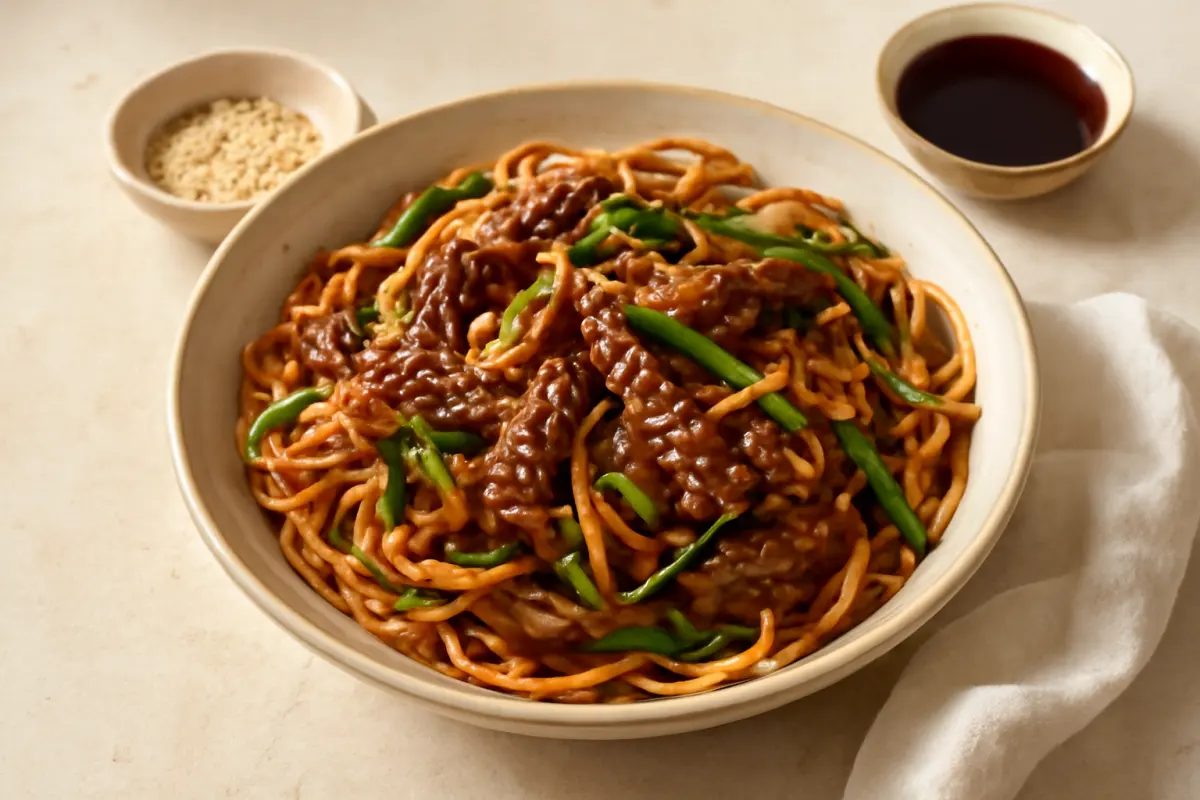
These sesame ginger beef noodles combine thinly sliced beef, springy noodles, crisp vegetables, and a glossy sesame-soy sauce for a fast, satisfying dinner.
Overview
This sesame ginger beef noodles recipe brings together tender strips of beef, chewy noodles, crisp vegetables, and a savory sauce with fresh ginger, garlic, sesame oil, and soy sauce. The sauce is mixed before cooking, so the stir-fry comes together quickly once the pan is hot.
Use a wide skillet or wok and cook the beef in a single layer for the best browning. Keep the vegetables slightly crisp and toss the noodles with the sauce only until everything is hot and glossy.
Ingredients
- 12 ounces (340 g) flank steak or sirloin, thinly sliced against the grain
- 8 ounces (225 g) dried lo mein, yakisoba, or wheat noodles
- 1 tablespoon neutral oil, such as avocado, canola, or vegetable oil, plus more if needed
- 1 medium red bell pepper, thinly sliced
- 1 medium carrot, cut into thin matchsticks
- 4 ounces (115 g) snap peas, strings removed
- 3 scallions, thinly sliced, with the white and green parts separated
- 3 garlic cloves, finely grated or minced
- 1 tablespoon finely grated fresh ginger
- 3 tablespoons low-sodium soy sauce
- 1 tablespoon toasted sesame oil
- 1 tablespoon rice vinegar
- 1 tablespoon packed light brown sugar
- 1 tablespoon water
- 1 teaspoon cornstarch
- 1/2 teaspoon red pepper flakes, optional
- 1 tablespoon toasted sesame seeds, for serving
How to make it
Mix the sauce. In a small bowl, whisk together the soy sauce, sesame oil, rice vinegar, brown sugar, water, cornstarch, red pepper flakes if using, garlic, and ginger. The cornstarch may settle, so whisk again just before adding the sauce to the pan.
Prepare the noodles. Cook the noodles according to the package directions, stopping when they are just tender but still slightly firm in the center. Drain them well, rinse briefly under cool water if they tend to stick, and toss with 1 teaspoon of neutral oil. Set them aside. Do not leave them sitting in hot water, or they can become soft before the stir-fry is finished.
Get the beef ready. Pat the sliced beef dry with paper towels. Cut it no thicker than 1/4 inch, and slice across the visible muscle fibers. This shortens the fibers and helps the cooked beef feel tender rather than chewy.
Sear the beef. Heat a large skillet or wok over medium-high heat until a drop of water evaporates immediately. Add 1 tablespoon oil, then arrange the beef in a single layer. Cook for 60 to 90 seconds on the first side and another 30 to 60 seconds on the second side, working in batches if the pan looks crowded. The edges should be browned and the centers should still be slightly pink. Transfer the beef to a plate.
Stir-fry the vegetables. Add the bell pepper, carrot, snap peas, and the white parts of the scallions to the same pan. Cook for 3 to 4 minutes, stirring often, until the vegetables are brightly colored and crisp-tender. The carrot should bend slightly when pressed but still offer some resistance, while the snap peas should remain green and snappy.
Bring everything together. Whisk the sauce once more and pour it into the pan. Add the cooked noodles and beef. Toss continuously for 1 to 2 minutes, using tongs to lift and turn the noodles, until the sauce thickens into a shiny coating and the beef is hot throughout. If the mixture looks dry, add 1 tablespoon water at a time; if it looks loose, keep tossing for another 30 seconds.
Finish and serve. Remove the pan from the heat and fold in the green scallion tops. Sprinkle with toasted sesame seeds and serve immediately. The noodles should be springy, the vegetables crisp-tender, and the sauce glossy rather than watery.
Expert tips
- Slice the beef while it is partly chilled. Fifteen to 20 minutes in the freezer makes thin, even slices easier. Do not freeze it solid.
- Avoid crowding the pan. A crowded pan releases moisture and steams the beef. Cook in two batches if the slices overlap.
- Use the right noodle texture. Slightly undercooked noodles finish in the sauce without turning mushy. If using fresh noodles, they usually need only brief heating after boiling.
- Adjust the sauce carefully. For a saltier dish, add 1 teaspoon soy sauce at a time. For more brightness, add 1 teaspoon rice vinegar. Avoid adding extra sesame oil too early, as its flavor can become overpowering.
- No wok? A wide, heavy skillet works well. Let it reheat between batches so the beef sears instead of simmering.
- Easy substitutions: Use broccoli florets, shredded cabbage, or sliced mushrooms instead of the snap peas. Tamari can replace soy sauce, and thinly sliced chicken can replace the beef; cook chicken until the thickest piece reaches 165°F (74°C).
- For a vegetarian version, replace the beef with 8 ounces cubed extra-firm tofu. Pat it dry, brown it in the oil until golden on several sides, and return it to the pan with the noodles.
Serving and storage
Serve the noodles hot, with extra sesame seeds and scallions if desired. A small dish of chili crisp or sliced fresh chili can be offered at the table for additional heat.
Refrigerate leftovers in a shallow airtight container within 2 hours of cooking. They keep for up to 3 days. Reheat in a skillet over medium heat with 1 to 2 tablespoons water, tossing until steaming hot; the microwave also works in 45-second intervals. The noodles may soften slightly after refrigeration, so add a small splash of water rather than extra oil when reheating.
Frequently asked questions
What cut of beef is best for sesame ginger beef noodles?
Flank steak and sirloin work well because they can be sliced thinly and cook quickly. Slice across the grain, and avoid cutting the pieces thicker than 1/4 inch so they stay tender during the brief stir-fry.
Can I make sesame ginger beef noodles ahead of time?
You can prepare the sauce, slice the beef, and cut the vegetables up to 1 day ahead. Cook the noodles and stir-fry shortly before serving for the best texture, since noodles can soften as they sit in the sauce.
Why did my beef turn out tough?
The beef may have been sliced with the grain, cut too thickly, or cooked in a crowded pan. Slice across the grain, pat the meat dry, sear it in batches, and return it to the pan only at the end.
Can I use spaghetti instead of Asian wheat noodles?
Yes. Cook spaghetti until just shy of al dente, drain it well, and toss it into the stir-fry at the same point as the cooked noodles. The sauce will cling best if the pasta is not overcooked.
How can I make the sauce less salty?
Use low-sodium soy sauce and replace 1 tablespoon of soy sauce with 1 tablespoon water. You can also add a little more cooked noodles or vegetables to spread the seasoning through the dish.