Recipes
Baked Haddock With Herbs Recipe
This baked haddock is tender, flaky, and bright with lemon, parsley, dill, and garlic. A light buttery breadcrumb topping adds gentle crunch without hiding the mild flavor of the fish.
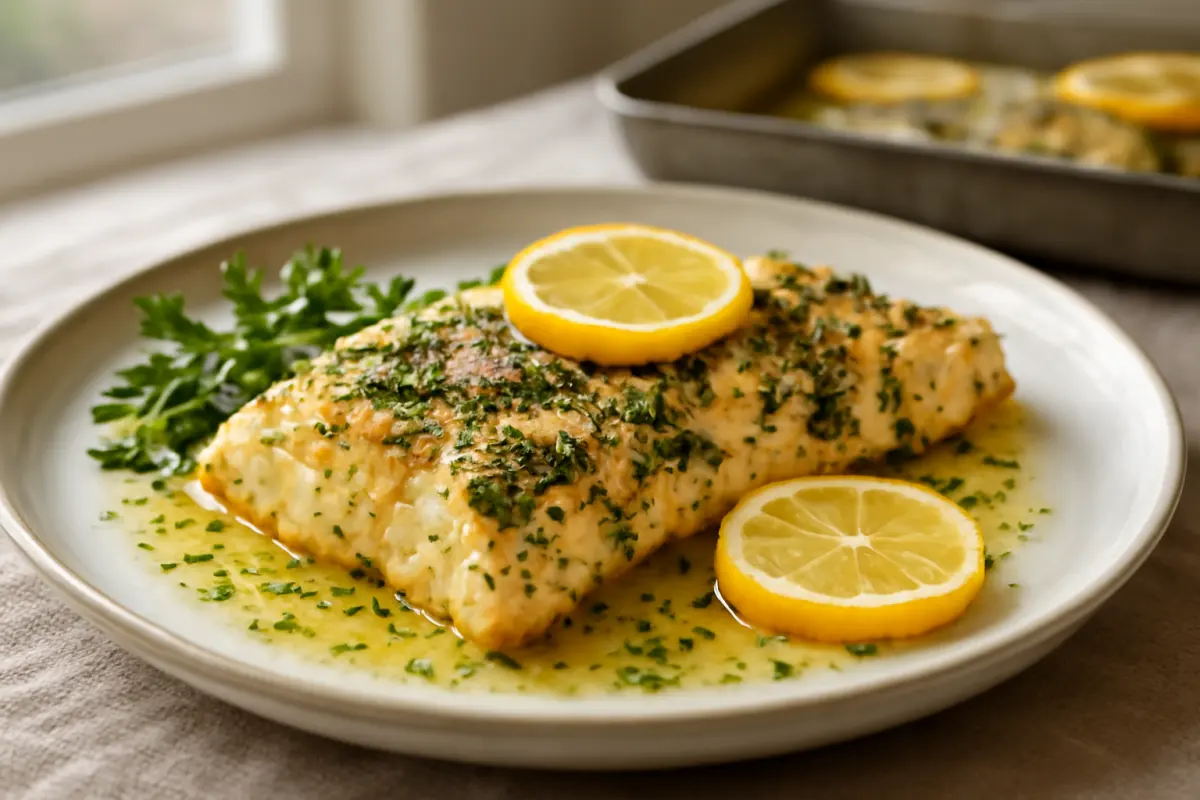
Overview
This baked haddock with herbs recipe turns mild white fish into a quick, flavorful dinner. The fillets are brushed with lemon-garlic butter, topped with parsley, dill, and breadcrumbs, then baked until the fish flakes easily and the topping is lightly golden.
Use fillets of a similar thickness so they finish at about the same time. Haddock can go from moist to dry quickly, so begin checking thinner pieces after 10 minutes and use the fish's texture, rather than the clock alone, as your final cue.
Ingredients
- 4 haddock fillets, about 6 ounces (170 g) each, skinless and boneless
- 2 tablespoons unsalted butter, melted
- 1 tablespoon extra-virgin olive oil
- 1 tablespoon fresh lemon juice
- 1 garlic clove, finely grated or minced
- 1/2 teaspoon fine sea salt, plus more if needed
- 1/4 teaspoon freshly ground black pepper
- 2 tablespoons finely chopped fresh parsley
- 1 tablespoon finely chopped fresh dill
- 1/3 cup plain breadcrumbs or panko
- 1 teaspoon finely grated lemon zest
- Lemon wedges, for serving
How to make it
Heat the oven and prepare the pan. Heat the oven to 400°F (200°C). Lightly oil a 9-by-13-inch baking dish or line a rimmed baking sheet with parchment. Pat the haddock dry with paper towels. Removing surface moisture helps the topping adhere and keeps the fish from steaming excessively.
Make the herb butter. In a small bowl, stir together the melted butter, olive oil, lemon juice, garlic, salt, and pepper. In a second bowl, combine the parsley, dill, breadcrumbs, and lemon zest.
Season the haddock. Arrange the fillets in a single layer with a little space between them. Brush the tops and sides with the lemon-garlic butter. Spoon the breadcrumb and herb mixture over the tops, pressing it gently so it stays in place. If the fillets are very thick at one end, tuck the thin tail underneath itself so it does not overcook before the thicker section is done.
Bake the fish. Bake for 12 to 16 minutes, depending on the thickness of the fillets. The haddock is ready when the center changes from translucent to opaque, the flesh separates into large moist flakes when pressed with a fork, and the thickest part reaches 145°F (63°C) on an instant-read thermometer. If the topping is pale but the fish is cooked, switch on the broiler for 30 to 60 seconds, watching closely.
Rest briefly and serve. Let the haddock rest for 2 to 3 minutes. Serve with lemon wedges and spoon any buttery juices from the pan over the fish.
Expert tips
- Choose even fillets: Pieces about 1 to 1 1/2 inches thick bake most evenly. Very thin fillets may be ready in 8 to 10 minutes.
- Fresh or dried herbs: Replace the fresh parsley with 2 teaspoons dried parsley, but use fresh dill when possible. If using dried dill, use 1 teaspoon and mix it into the breadcrumbs.
- No breadcrumbs: Leave them out for a softer, lighter topping, or replace them with 2 tablespoons finely crushed crackers. Check the salt if the crackers are seasoned.
- Prevent dry fish: Do not bake cold, thin fillets for the full suggested time without checking them. Carryover cooking will continue briefly after the dish leaves the oven.
- If the topping browns too quickly: Loosely cover the dish with foil for the remainder of baking. Remove the foil for the final minute if the topping needs more color.
- If the fish releases liquid: Blot the fillets more thoroughly next time and avoid crowding the pan. A small amount of liquid is normal, but a tightly packed dish can make the topping soft.
Serving and storage
Serve the haddock immediately with roasted potatoes, rice, steamed green beans, or a crisp green salad. The lemon-herb topping is also good with sautéed spinach or asparagus.
Refrigerate leftovers in a covered container within 2 hours of cooking and use them within 3 days. Reheat gently in a 325°F (165°C) oven until warmed through, or microwave in short intervals with the container loosely covered. The breadcrumb topping will soften during storage, so reheating in the oven gives the best texture. Do not leave cooked fish at room temperature for extended periods.
Frequently asked questions
How long does haddock take to bake at 400°F?
Haddock fillets usually take 12 to 16 minutes at 400°F (200°C), but thickness matters more than weight. Thin fillets can finish in 8 to 10 minutes, while thick pieces may need a few extra minutes. The fish is done when it is opaque, flakes easily, and reaches 145°F (63°C) in the thickest part.
Can I use frozen haddock for this recipe?
Yes, but thaw it fully in the refrigerator first and pat it very dry before seasoning. Baking directly from frozen can release excess water, soften the breadcrumb topping, and make the fillets cook unevenly.
What herbs go well with baked haddock?
Parsley and dill provide a fresh, mild combination that suits haddock. Chives, tarragon, basil, or a small amount of fresh thyme also work. Use delicate herbs in the topping and avoid adding too much rosemary, which can overpower the fish.
How can I tell when baked haddock is done without a thermometer?
Make a small cut into the thickest part. The flesh should be opaque rather than translucent and should separate into moist flakes with gentle pressure. If it looks glossy and resists flaking, return it to the oven for 2 to 3 minutes and check again.
Can I prepare the herb topping ahead of time?
Yes. Mix the breadcrumbs, herbs, and lemon zest up to 1 day ahead and refrigerate them in a sealed container. Make the butter mixture shortly before baking so the garlic and lemon stay fresh.