Recipes
Baked Honey Mustard Salmon Recipe
This baked honey mustard salmon combines a sweet-tangy glaze with tender, flaky fish and lightly caramelized edges. It is ready in about 25 minutes and works equally well for a weeknight dinner or a simple meal for guests.
Overview
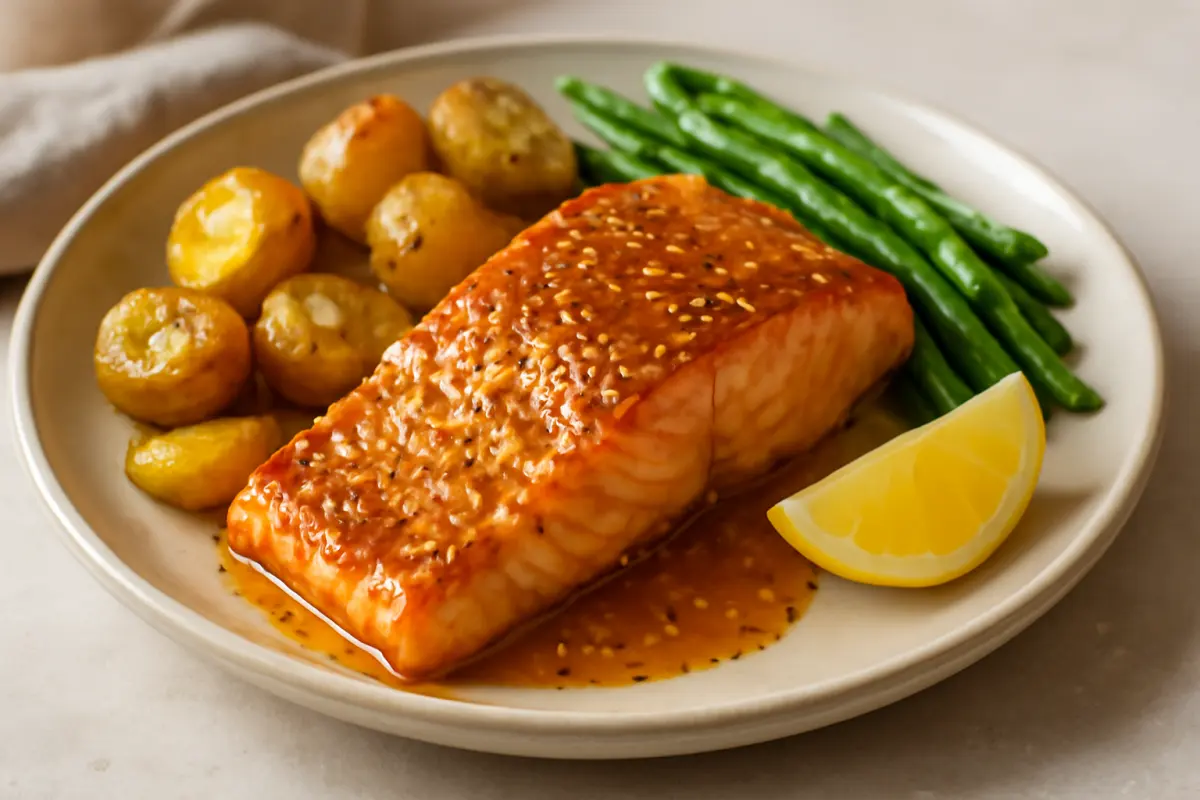
This baked honey mustard salmon recipe uses a quick glaze of honey, Dijon mustard, lemon, garlic, and olive oil. The salmon roasts uncovered until the center is just cooked and the glaze looks glossy, lightly browned, and clingy.
Use one large salmon fillet for easy serving or several smaller portions. The thickness of the fish matters more than its weight, so begin checking early if your fillet is thin. Serve it with rice, roasted vegetables, or lemon herb couscous to catch the extra glaze.
Ingredients
- 1 1/2 pounds salmon fillet, skin on or off, preferably 1 to 1 1/2 inches thick
- 1 1/2 tablespoons Dijon mustard
- 2 tablespoons honey
- 1 tablespoon extra-virgin olive oil
- 1 tablespoon fresh lemon juice
- 1 garlic clove, finely grated or minced
- 1/2 teaspoon kosher salt, plus more for the salmon if needed
- 1/4 teaspoon freshly ground black pepper
- 1/2 teaspoon smoked paprika, optional
- 1 tablespoon chopped fresh parsley or dill, for serving
- Lemon wedges, for serving
How to make it
Heat the oven and prepare the pan. Heat the oven to 400°F (200°C). Line a rimmed baking sheet or small baking dish with parchment paper or foil. If the salmon has skin, place it skin-side down. Pat the fish dry with paper towels; a dry surface helps the glaze adhere instead of sliding off.
Make the honey mustard glaze. In a small bowl, whisk together the Dijon mustard, honey, olive oil, lemon juice, garlic, salt, pepper, and smoked paprika if using. The mixture should be smooth and thick enough to coat the back of a spoon. Taste it before adding it to the fish; add another small squeeze of lemon if you prefer a sharper glaze.
Coat the salmon. Place the salmon on the prepared pan and brush the glaze evenly over the top and sides. If using individual portions, leave a little space between them so hot air can circulate. Reserve about 1 tablespoon of glaze if you want extra for serving, but keep it separate from any utensil that touched the raw fish.
Bake until just cooked. Bake for 10 to 16 minutes, depending on the thickness of the fillet. Start checking at 10 minutes. The salmon is ready when the thickest part flakes into large, moist pieces when pressed with a fork, the center has changed from translucent to opaque, and an instant-read thermometer registers 145°F (63°C) in the thickest section. For a softer, more medium texture, remove it around 140°F (60°C), then let carryover cooking finish it; use your preferred level of doneness and follow local food-safety guidance.
Rest and finish. Let the salmon rest on the pan for 3 to 5 minutes. This gives the juices time to settle and makes the fillet less likely to break when served. Sprinkle with parsley or dill and serve with lemon wedges. Spoon any glaze and juices from the pan over the top.
Expert tips
- Choose even thickness. The thin tail end will cook before the thick center. Fold the tail underneath itself or tuck a thin section under the fillet to create a more even thickness.
- Avoid a burnt glaze. Honey can darken quickly. If the top is browning before the salmon is cooked, loosely cover the fish with foil and continue baking.
- Do not overbake. Salmon keeps cooking briefly after it leaves the oven. Check the thickest part early rather than relying only on the clock.
- For skin-on salmon, bake skin-side down and serve directly from the skin, or slide a thin spatula between the flesh and skin after resting.
- Easy substitutions: Use whole-grain mustard for a textured glaze, maple syrup instead of honey, or lime juice instead of lemon. For a dairy-free and gluten-free meal, check that the mustard is labeled appropriately if that matters for your needs.
- If the glaze is too thick, whisk in 1 teaspoon of water. If it is too thin, add 1 teaspoon more mustard. Do not thin it with a large amount of liquid, or it may run off the fish during baking.
- If the salmon seems watery, pat it dry more thoroughly next time and avoid crowding several portions in a small dish. Moisture trapped around the fish can make the glaze slide and prevent browning.
Serving and storage
Serve the salmon hot with steamed green beans, roasted broccoli, rice, potatoes, or couscous. A crisp green salad also balances the sweet glaze. For extra sauce, make a fresh half-batch of glaze rather than serving leftover glaze that has touched raw fish.
Refrigerate leftovers in a shallow airtight container within 2 hours of cooking. Use within 3 to 4 days, and reheat gently in a covered dish at 300°F (150°C) until warmed through; stop as soon as the fish is hot to help prevent drying. You can also flake cold leftovers into salads, grain bowls, or sandwiches. Freeze cooled portions in airtight wrapping for up to 2 months, then thaw overnight in the refrigerator before reheating.
Frequently asked questions
How long does salmon take to bake at 400°F?
A 1- to 1 1/2-inch-thick salmon fillet usually takes 10 to 16 minutes at 400°F (200°C). Begin checking at 10 minutes because thinner pieces and individual portions cook faster than a thick center-cut fillet.
How can I tell when baked salmon is done?
The thickest part should be opaque rather than translucent and should separate into large, moist flakes when pressed with a fork. An instant-read thermometer should register 145°F (63°C) for fully cooked salmon.
Can I use frozen salmon for this recipe?
Yes, but thaw it completely in the refrigerator first and pat it very dry. Baking salmon while still frozen changes the cooking time and can leave the glaze watery or unevenly browned.
Can I prepare the honey mustard salmon ahead of time?
You can whisk the glaze up to 2 days ahead and refrigerate it in a covered container. For the best texture, coat and bake the salmon shortly before serving rather than leaving the raw fish in the acidic glaze for a long period.
Why did the honey mustard glaze burn?
Honey browns faster than the salmon cooks, especially under a strong top heating element or on a thin fillet. Cover the salmon loosely with foil once the glaze is deeply golden, and check the fish early so it does not overcook.