Recipes
Hummus Recipe with Canned Chickpeas
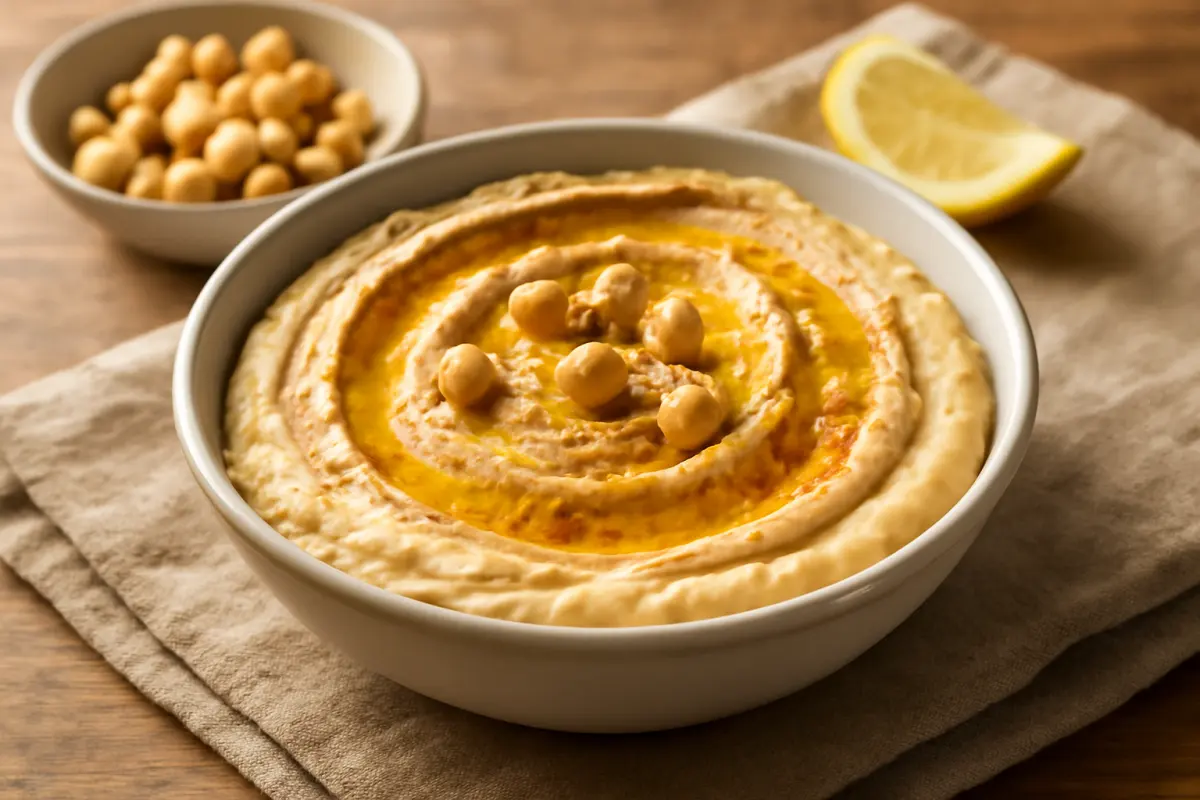
This easy hummus recipe uses canned chickpeas and a food processor to make a smooth, lemony dip with tahini, garlic, and olive oil. Blend it silky or leave it slightly textured, then adjust the seasoning to taste.
Overview
This hummus recipe with canned chickpeas is a quick way to make a creamy dip from everyday ingredients. The chickpeas are rinsed and drained, then blended with tahini, lemon juice, garlic, cumin, salt, and ice water until smooth.
For the best texture, blend the tahini, lemon juice, and water before adding the chickpeas. This gives the mixture a light, creamy base and makes it easier to create smooth hummus without cooking the chickpeas first.
Ingredients
- 2 cans (15 ounces each) chickpeas, drained and rinsed
- 1/2 cup tahini, stirred well before measuring
- 1/3 cup fresh lemon juice, from about 2 large lemons
- 1 small garlic clove, peeled
- 1/2 teaspoon ground cumin
- 3/4 teaspoon fine salt, plus more to taste
- 1/4 cup ice-cold water, plus 1 to 2 tablespoons more if needed
- 2 tablespoons extra-virgin olive oil, plus more for serving
- 1 tablespoon chopped fresh parsley, optional, for garnish
- A pinch of paprika or sumac, optional, for garnish
How to make it
Prepare the chickpeas. Drain the chickpeas in a colander and rinse them under cool running water until the liquid runs mostly clear. Pick out any loose skins if you notice them, but there is no need to remove every skin. Shake off excess water.
Blend the tahini mixture. Add the tahini, lemon juice, garlic, cumin, salt, and ice-cold water to a food processor. Process for 45 to 60 seconds, stopping once to scrape down the sides. The mixture should become pale, thick, and creamy. If it looks stiff or separated, add another tablespoon of cold water and blend again.
Add the chickpeas. Add the drained chickpeas and process for 2 minutes. Scrape down the bowl, then process for another 1 to 2 minutes. The hummus should look smooth and hold soft ridges from the blade. If it is too thick to move easily, add the remaining water 1 tablespoon at a time.
Add the olive oil. With the processor running, slowly pour in the olive oil and blend for 30 seconds. Taste with a clean spoon. Add more salt for a fuller savory flavor, more lemon juice for brightness, or a tablespoon of water if the texture is still too dense.
Check the texture. For very smooth hummus, continue processing for 1 to 2 more minutes. It should be thick enough to sit on a plate but soft enough to spread with the back of a spoon. Remember that it will firm slightly as it chills.
Serve. Spoon the hummus into a shallow bowl and use the back of a spoon to make a wide swirl. Drizzle with olive oil and sprinkle with parsley, paprika, or sumac if using. Serve with pita, sliced vegetables, crackers, or as a spread in sandwiches and wraps.
Expert tips
- Use fresh lemon juice. Bottled lemon juice can taste flatter and sharper, so fresh juice gives the hummus a cleaner flavor.
- Stir the tahini first. Tahini naturally separates in its jar. Mix it until evenly combined before measuring so the hummus is not too oily or too thick.
- Do not add all the water at once if you prefer thick hummus. Start with 1/4 cup, then adjust gradually. A little extra water can transform a dense paste into a creamy dip, but too much makes it loose.
- For a milder garlic flavor, use half a small clove or soak the peeled clove in the lemon juice for 5 minutes before blending.
- For warmer flavor, toast the cumin in a dry skillet over low heat for about 30 seconds, just until fragrant, then cool it before adding it to the processor.
- If the hummus is grainy, keep processing rather than adding more oil. Extra blending and a tablespoon of cold water usually improve the texture.
- If you want an especially light texture, simmer the drained chickpeas in fresh water for 10 minutes, drain them well, and cool them slightly before blending. This is optional, but softer chickpeas break down more easily.
- Tahini substitution: Use 3 tablespoons of smooth unsweetened sunflower-seed butter for a sesame-free version. The flavor will be different, but the texture will remain creamy. Avoid sweetened nut or seed butter.
Serving and storage
Serve the hummus at cool room temperature or lightly chilled. If it has been refrigerated and feels firm, stir in 1 to 2 teaspoons of water before serving to loosen it.
Store hummus in an airtight container in the refrigerator and use it within 4 to 5 days. Keep the serving spoon clean and do not leave the dip at room temperature for more than 2 hours, or 1 hour if the room is very warm. Freeze hummus in a sealed container for up to 3 months, leaving a little space for expansion. Thaw it in the refrigerator, then stir vigorously with a splash of water before serving.
For another detailed approach to getting a smooth texture, see How to Cook Hummus.
Frequently asked questions
Can I make hummus without tahini?
Yes. The flavor will not be traditional, but you can replace the 1/2 cup tahini with 3 tablespoons of smooth unsweetened sunflower-seed butter, or omit it and add 2 tablespoons of olive oil. Add water gradually because the final texture may be looser without tahini.
Why is my canned-chickpea hummus bitter?
Tahini can taste bitter, especially if it is very dark or has separated unevenly. Try adding 1 to 2 tablespoons more lemon juice, a pinch of salt, and a splash of cold water, then blend again. A small amount of extra olive oil can also round out the flavor.
Do I need to peel canned chickpeas for hummus?
No. Peeling can produce an even smoother dip, but it is time-consuming and not necessary with thorough blending. For a smoother result without peeling, simmer the rinsed chickpeas in water for about 10 minutes before draining and blending.
How can I fix hummus that is too thick?
Blend in ice-cold water 1 tablespoon at a time until the hummus becomes soft and spreadable. Scrape the sides of the processor between additions so the water incorporates evenly.
Can I make this hummus without a food processor?
A high-powered blender can work, but you may need to stop often and use the tamper or scrape the sides. A standard blender may require extra water, which can make the hummus thinner. For a small batch, mash the chickpeas very thoroughly with a fork, then whisk in the tahini, lemon juice, garlic, seasoning, and water.