Recipes
Lemon Herb Couscous Recipe
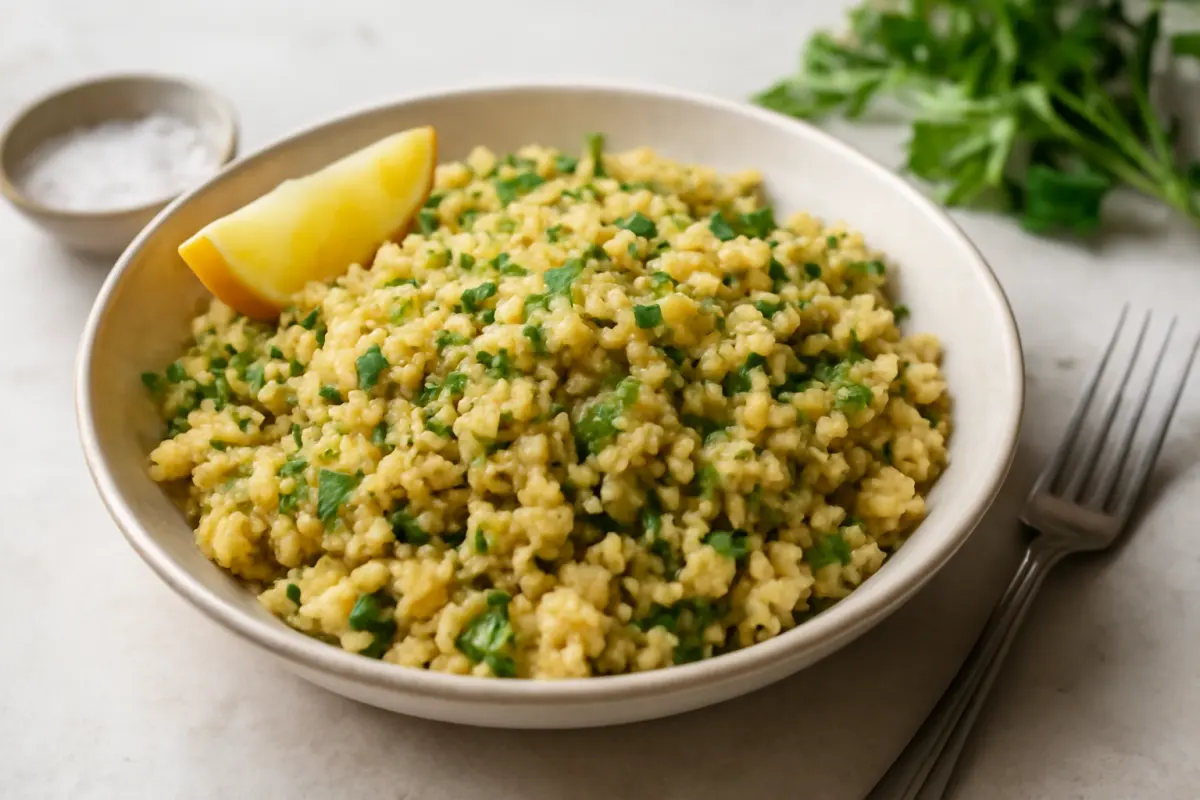
This lemon herb couscous is light, fluffy, and finished with fresh lemon, parsley, dill, and olive oil. It is an easy side dish for grilled seafood, roasted vegetables, chicken, or beans.
Overview
This lemon herb couscous recipe makes tender, fluffy couscous with bright lemon zest, fresh herbs, and a savory vegetable broth base. It comes together in about 20 minutes and needs only a short rest before you fluff it with a fork.
The recipe uses regular Moroccan couscous, the small granules that steam and hydrate quickly. Serve it warm as a side dish or at room temperature as part of a larger meal. For a fuller plate, pair it with lemon garlic shrimp skewers or honey sesame roasted carrots.
Ingredients
- 1 1/2 cups regular Moroccan couscous, not pearl couscous
- 1 1/2 cups low-sodium vegetable broth or chicken broth
- 1 tablespoon extra-virgin olive oil, plus more for finishing if desired
- 1/2 teaspoon fine salt, or to taste; use less if the broth is salted
- 1 small garlic clove, finely grated or minced
- 1 teaspoon finely grated lemon zest, from 1 lemon
- 2 tablespoons fresh lemon juice, plus more to taste
- 1/2 cup finely chopped fresh parsley, loosely packed
- 1/4 cup finely chopped fresh dill, loosely packed
- 2 tablespoons thinly sliced scallions, optional
- 1/4 teaspoon freshly ground black pepper
How to make it
Warm the broth. Add the broth, olive oil, salt, garlic, and lemon zest to a medium saucepan. Bring the mixture to a full simmer over medium-high heat. The broth should be steaming with small bubbles around the edges, not boiling vigorously.
Add the couscous. Remove the saucepan from the heat and immediately stir in the couscous. Stir once so every grain is moistened, then cover the pan tightly with a lid. Let it stand for 5 minutes. Do not lift the lid during this resting time; the trapped steam is what tenderizes the grains.
Fluff the grains. Remove the lid and check a few grains. They should be tender, with no hard center, but still separate rather than wet or clumped. Fluff the couscous gently with a fork, working from the edges toward the center. If a few grains are still firm, cover the pan again for 2 more minutes.
Add the lemon and herbs. Transfer the couscous to a serving bowl, or leave it in the saucepan if there is room to mix comfortably. Add the lemon juice, parsley, dill, scallions if using, and black pepper. Fold gently with a fork until the herbs are evenly distributed. Taste and add another pinch of salt or a teaspoon of lemon juice if needed.
Finish and serve. Let the couscous stand uncovered for 2 to 3 minutes so excess steam can escape. The finished texture should be fluffy and light, with separate grains and a fresh lemon flavor. Add a small drizzle of olive oil just before serving if it tastes dry.
Expert tips
- Use regular couscous: Pearl couscous requires a different cooking method and liquid ratio. To substitute it, simmer 1 1/2 cups pearl couscous in 2 cups broth for about 10 minutes, or until tender, then drain any excess liquid before adding the lemon and herbs.
- Keep the herbs fresh: Add parsley and dill after cooking. Heating them in the broth dulls their color and makes their flavor less lively.
- Prevent clumps: Measure the couscous and broth accurately, keep the pan covered during the 5-minute rest, and fluff with a fork rather than stirring forcefully with a spoon.
- Fix dry couscous: Sprinkle in 1 tablespoon of hot broth or water, cover for 2 minutes, and fluff again. Repeat once if necessary.
- Fix wet couscous: Spread it on a wide plate or baking sheet for 5 to 10 minutes so steam can escape. Gently separate the grains with a fork afterward.
- Adjust the lemon at the end: Lemon strength varies by fruit. Start with 2 tablespoons of juice, taste, and add more in 1-teaspoon increments.
- Make it more substantial: Fold in 1 cup of rinsed chickpeas, 1/3 cup toasted sliced almonds, or 1 cup of halved cherry tomatoes after the couscous has cooled slightly.
Serving and storage
Serve the couscous warm or at room temperature with grilled shrimp, roasted chicken, fish, chickpeas, or vegetables. It also works as a base for a simple grain bowl. A crisp vegetable side or a spoonful of yogurt can balance the lemon and herbs.
Refrigerate leftovers in a covered container within 2 hours of cooking. They will keep for up to 4 days. Reheat individual portions in the microwave with 1 teaspoon of water per cup of couscous, covering loosely and stirring once, or warm them in a saucepan over low heat. Add a little fresh lemon juice and chopped herbs after reheating to brighten the flavor.
Frequently asked questions
Can I make lemon herb couscous ahead of time?
Yes. Prepare it up to 1 day ahead, cool it promptly, and refrigerate it in a covered container. Serve it cold or at room temperature, or reheat it gently with a teaspoon of water per cup and refresh it with lemon juice and herbs.
Why is my couscous sticky?
Too much liquid, overmixing, or leaving it covered after it has finished steaming can make couscous sticky. Measure the broth carefully, let the couscous rest for 5 minutes, then uncover it and fluff gently with a fork.
Can I use pearl couscous for this recipe?
Yes, but pearl couscous needs to simmer rather than simply steep. Cook 1 1/2 cups pearl couscous in about 2 cups broth for 10 minutes, or until tender, then drain excess liquid and mix in the lemon and herbs.
What herbs can I use instead of dill?
Replace the dill with an additional 1/4 cup of parsley, or use 2 tablespoons of chopped cilantro, mint, or basil. Add delicate herbs after cooking so they retain their fresh flavor.