Recipes
Chicken Chow Mein Recipe
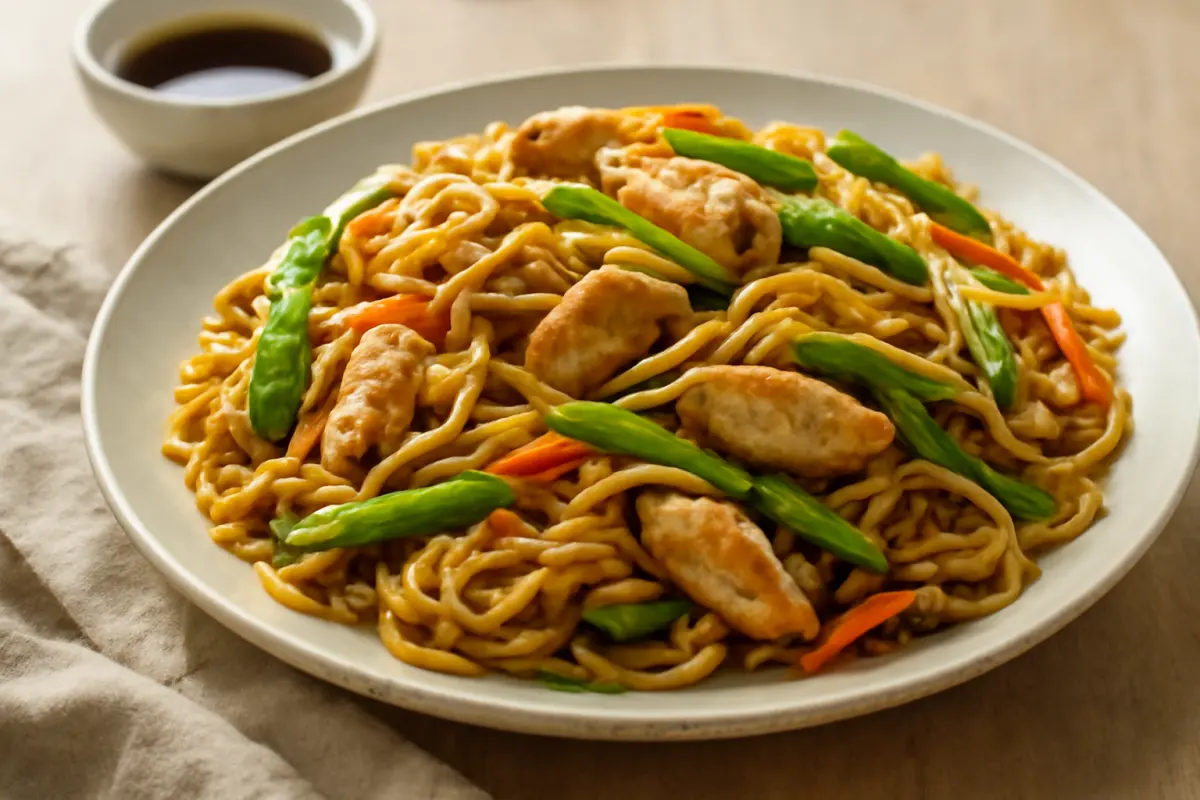
This chicken chow mein recipe makes chewy noodles tossed with tender chicken, crunchy vegetables, garlic, ginger, and a glossy savory sauce. The practical method keeps the noodles from turning soggy and gives you clear cues for properly cooked chicken and vegetables.
Overview
This chicken chow mein recipe makes four generous servings of chewy noodles, tender chicken, and crisp-tender vegetables coated in a savory, lightly glossy sauce. The chicken is marinated briefly while the noodles cook, so the whole dish comes together quickly.
The key is to prepare every ingredient before heating the pan. Stir-frying moves fast: cook the chicken first, keep the vegetables slightly crisp, and add the noodles only after the sauce is ready. A large wok is ideal, but a wide skillet works well if you cook in batches rather than overcrowding it.
Ingredients
- 400 g dried chow mein or medium egg noodles
- 450 g boneless, skinless chicken thighs or chicken breasts, cut into thin strips
- 1 tablespoon light soy sauce, for the chicken
- 1 tablespoon cornstarch
- 1 teaspoon toasted sesame oil, divided
- 3 tablespoons neutral cooking oil, divided
- 4 garlic cloves, finely chopped
- 1 tablespoon fresh ginger, finely grated or finely chopped
- 1 medium yellow onion, thinly sliced
- 1 medium carrot, cut into thin matchsticks
- 1 red bell pepper, thinly sliced
- 2 cups thinly sliced green cabbage, about 150 g
- 4 scallions, sliced, with the white and green parts separated
- 3 tablespoons light soy sauce, for the stir-fry sauce
- 1 tablespoon oyster sauce
- 1 tablespoon dark soy sauce
- 1 tablespoon rice vinegar
- 1 teaspoon granulated sugar
- 3 tablespoons water
- 1/4 teaspoon ground white pepper, or black pepper
How to make it
Marinate the chicken. Put the chicken in a bowl and mix it with 1 tablespoon light soy sauce, the cornstarch, and 1/2 teaspoon sesame oil. Toss until every strip is lightly coated. Leave it for 10 to 15 minutes while you prepare the remaining ingredients. The cornstarch should cling to the chicken in a thin, damp coating rather than form a thick paste.
Mix the sauce. In a small bowl, stir together 3 tablespoons light soy sauce, the oyster sauce, dark soy sauce, rice vinegar, sugar, water, and white pepper. Stir until the sugar is mostly dissolved. Set the bowl beside the stove.
Cook the noodles. Bring a large pot of water to a boil. Cook the noodles according to the packet directions, but stop 1 minute before the recommended time. They should be flexible but still noticeably firm in the center because they will finish cooking in the wok. Drain thoroughly, rinse briefly under cold water to stop the cooking, and toss with the remaining 1/2 teaspoon sesame oil. Do not leave the noodles sitting in a deep pile, where they can stick together.
Heat the wok or skillet. Place a wok or large, wide skillet over medium-high to high heat. Let it heat for about 1 minute. Add 1 tablespoon of the cooking oil and swirl to coat the surface. The oil should look fluid and shimmer, but it should not smoke heavily.
Stir-fry the chicken. Add the chicken in a single layer. Cook for 2 minutes without moving it much so the underside can brown, then toss and cook for another 2 to 3 minutes. The pieces should be opaque in the center, lightly browned at the edges, and should release clear juices. Transfer the chicken to a clean plate. If the pan is too small to hold the chicken in one layer, cook it in two batches.
Cook the aromatics and vegetables. Add the remaining 2 tablespoons oil. Add the white parts of the scallions, garlic, and ginger, and stir for 20 to 30 seconds, just until fragrant. Add the onion and carrot and stir-fry for 2 minutes. Add the bell pepper and cabbage and cook for another 2 to 3 minutes. The onion should begin to soften, while the carrot and cabbage should still have a little bite rather than collapse.
Combine the noodles and sauce. Add the cooked noodles and return the chicken and any juices from the plate to the wok. Pour the sauce around the hot sides of the wok, then toss continuously with tongs or two spatulas for 2 to 3 minutes. Lift and turn the noodles instead of pressing them flat. The sauce should coat the noodles with a light sheen, and there should be no pool of liquid at the bottom.
Finish and serve. Add the green parts of the scallions and toss for 30 seconds. Taste one noodle. It should be tender but not mushy, with savory seasoning and a slight tang. If the noodles are still firm, add 1 tablespoon water and toss for another 30 to 45 seconds. Serve immediately while the vegetables are still crisp-tender.
Expert tips
- Use chicken thighs for extra moisture. Thinly sliced breasts also work, but remove the pan from the heat as soon as the chicken is cooked so it does not dry out.
- Fresh or refrigerated chow mein noodles can be substituted. Use about 500 g and boil them only if the package instructs you to; otherwise loosen them in hot water, drain, and add them directly to the wok.
- For a vegetarian version, replace the chicken with 250 g sliced mushrooms or 300 g firm tofu and use vegetarian oyster sauce. Cook the mushrooms until their moisture evaporates before adding the vegetables.
- If you do not have oyster sauce, use 1 extra tablespoon light soy sauce plus 1 teaspoon brown sugar. The result will be less rounded but still savory.
- Prevent soggy noodles by draining well. Excess water dilutes the sauce and causes the noodles to steam instead of stir-fry. A wide pan and batch cooking also make a noticeable difference.
- If the dish tastes too salty, toss in a small handful of unsauced cooked noodles or vegetables. Avoid adding more water alone, which can make the finished chow mein wet.
Serving and storage
Serve the chow mein immediately on warmed plates or in shallow bowls. It is a complete meal on its own, but you can add extra sliced scallions or a small dish of chili oil at the table. For another vegetable-forward side, serve it with mixed vegetable curry, keeping the curry portion modest so the meal does not become overly heavy.
Cool leftovers promptly and refrigerate them in a covered container within 2 hours. Eat within 3 days. Reheat one portion in a hot skillet with 1 tablespoon water, tossing until steaming hot throughout; the microwave also works, though the noodles will be softer. Do not repeatedly cool and reheat the dish.
Frequently asked questions
Can I make chicken chow mein without a wok?
Yes. Use the widest skillet you have and cook the chicken in a single layer, followed by the vegetables. If the skillet is crowded, stir-fry in batches so the ingredients brown instead of steaming.
Why did my chow mein noodles turn soggy?
They were probably overcooked before stir-frying, not drained well, or left in too much sauce. Cook dried noodles about 1 minute less than the packet time, rinse and drain them thoroughly, and toss them in the wok only until coated and heated through.
Can I use spaghetti instead of chow mein noodles?
Yes. Thin or regular spaghetti is a practical substitute. Cook it just until barely tender, drain it well, and use the same amount by weight. It will have a different shape and texture but will still work with the stir-fry sauce.
How do I know when the chicken is cooked?
The strips should be opaque all the way through, lightly browned at the edges, and firm rather than rubbery. For the most reliable check, the thickest piece should reach 74°C on an instant-read thermometer.
Can I prepare chicken chow mein ahead of time?
You can slice the chicken and vegetables and mix the sauce several hours ahead, storing them separately in the refrigerator. Cook the noodles and stir-fry just before serving for the best texture.