Recipes
Mixed Vegetable Curry Recipe
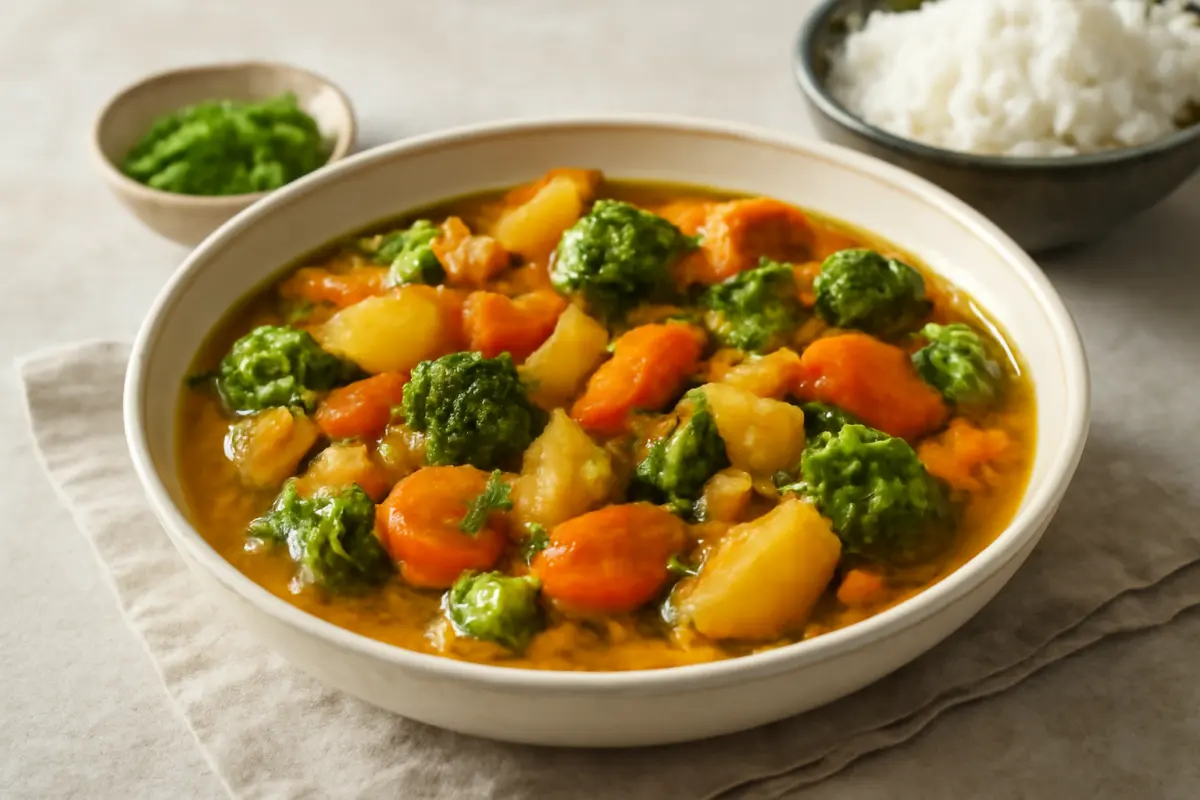
This mixed vegetable curry combines tender potatoes, carrots, cauliflower, peas, and bell pepper in a thick, warmly spiced onion-tomato sauce. Cook the vegetables in stages so they finish tender without turning mushy.
Overview
This mixed vegetable curry is a practical, flavorful one-pot meal made with everyday vegetables and a gently spiced tomato-onion gravy. Potatoes and carrots provide a hearty base, while cauliflower, peas, and bell pepper add color and varied texture.
The recipe serves 4 and takes about 50 minutes, including chopping. The vegetables are added in stages because potatoes and carrots need longer to cook than peas and bell pepper. Serve it with rice, roti, or naan, and add a cooling side such as cucumber raita.
Ingredients
- 3 tablespoons neutral cooking oil
- 1 medium yellow onion, finely chopped, about 150 g
- 1 teaspoon cumin seeds
- 1 tablespoon finely grated fresh ginger
- 4 garlic cloves, finely grated or minced
- 2 medium tomatoes, finely chopped, about 250 g, or 1 cup canned crushed tomatoes
- 1 teaspoon ground coriander
- 1/2 teaspoon ground turmeric
- 1 teaspoon Kashmiri chili powder or mild paprika
- 1/2 teaspoon red chili powder, optional
- 1 teaspoon fine salt, plus more to taste
- 2 medium potatoes, peeled and cut into 2 cm cubes, about 300 g
- 2 medium carrots, peeled and cut into 1 cm-thick half-moons, about 180 g
- 2 cups cauliflower florets, about 220 g
- 1 1/2 cups water, divided
- 1/2 medium red or green bell pepper, cut into 2 cm pieces, about 75 g
- 1 cup frozen green peas, about 150 g; no need to thaw
- 1/2 teaspoon garam masala
- 2 tablespoons chopped fresh cilantro, plus extra for serving
- 1 teaspoon fresh lemon juice, optional
How to make it
Prepare the vegetables. Cut everything before heating the pan. Keep the potatoes, carrots, cauliflower, bell pepper, and peas separate so they can be added at the right time. Uniform pieces help the vegetables cook evenly.
Build the onion base. Heat the oil in a wide, heavy-bottomed pot or deep skillet over medium heat. Add the cumin seeds and cook for 30 seconds, until they sizzle and smell nutty. Add the onion and cook for 7–9 minutes, stirring occasionally, until softened and lightly golden at the edges.
Cook the aromatics and spices. Add the ginger and garlic and stir for 1 minute. Add the chopped tomatoes, coriander, turmeric, Kashmiri chili powder, optional red chili powder, and salt. Cook for 8–10 minutes, stirring often, until the tomatoes break down and the mixture looks thick and glossy. If it begins sticking before the tomatoes soften, add 1–2 tablespoons of water.
Start the firm vegetables. Add the potatoes, carrots, cauliflower, and 1 cup of the water. Stir well, bring the liquid to a gentle boil, then reduce the heat to low. Cover and simmer for 15 minutes. The curry should bubble quietly rather than boil hard.
Add the quick-cooking vegetables. Stir in the bell pepper, frozen peas, and remaining 1/2 cup water. Cover again and cook for 8–12 minutes, or until the potatoes can be pierced easily with a fork and the carrots are tender but not collapsing. The cauliflower should be soft enough to bite through while still holding its shape.
Finish the curry. Remove the lid and simmer for 2–4 minutes if the sauce looks thinner than you prefer. Stir in the garam masala and cilantro. Taste and adjust the salt. Add the lemon juice if you want a brighter, slightly tangy finish.
Rest and serve. Turn off the heat and let the curry rest for 5 minutes. This gives the sauce time to cling to the vegetables. Serve hot with steamed rice, roti, or naan.
Expert tips
- For a thicker gravy: Mash two or three cooked potato pieces against the side of the pot, then stir them into the sauce. This thickens the curry without adding flour or cream.
- For a thinner curry: Add hot water 2 tablespoons at a time and simmer for 1–2 minutes after each addition so the seasoning does not become diluted all at once.
- If the vegetables are unevenly cooked: The pieces were likely different sizes or the pan was not covered tightly. Continue cooking over low heat with a splash of water until the firmest piece is tender.
- If the curry tastes raw or sharp: Cook the onion-tomato masala longer before adding the vegetables. It should look glossy and cohesive, not watery or distinctly tomatoey.
- Easy substitutions: Use green beans, zucchini, sweet potato, cabbage, or cooked chickpeas in similar volumes. Add zucchini or cabbage with the peas because they cook quickly; add sweet potato with the potatoes.
- For more heat: Add one chopped green chili with the ginger and garlic, or increase the red chili powder gradually. Taste before adding more.
- For a richer curry: Replace 1/2 cup of the final water with unsweetened coconut milk, added during the last 8 minutes. Keep the heat low so it does not boil aggressively.
Serving and storage
Serve the curry hot with basmati rice, roti, or naan. A spoonful of plain yogurt or cucumber raita balances the warm spices, while chopped cilantro and a squeeze of lemon add freshness.
Cool leftovers promptly and transfer them to a covered container. Refrigerate for up to 3 days. Reheat gently in a saucepan over medium-low heat with a splash of water, stirring occasionally, until steaming hot throughout. You can freeze the curry for up to 2 months, although potatoes and cauliflower may soften slightly after thawing. Thaw it in the refrigerator overnight and reheat gently.
Frequently asked questions
Can I make mixed vegetable curry without cauliflower?
Yes. Replace the cauliflower with an equal volume of green beans, zucchini, cabbage, or extra carrots. Add zucchini or cabbage with the peas so they do not overcook.
Why is my mixed vegetable curry watery?
The vegetables may have released extra moisture, or too much water was added. Remove the lid and simmer the curry uncovered for 2–5 minutes, stirring gently, until the sauce thickens. If needed, mash a few potato pieces into the gravy.
How do I stop the vegetables from becoming mushy?
Cut the vegetables into fairly even pieces and add them in stages. Simmer gently rather than boiling hard, and check the potatoes with a fork as soon as the minimum cooking time has passed.
Can I use frozen mixed vegetables?
Yes. Use about 5 cups of frozen mixed vegetables, but skip the separate potato and carrot cooking stage if the mix is already fully cut. Add the frozen vegetables after the masala is cooked, use about 1 cup of water, and simmer until tender.
Can I make this curry ahead of time?
Yes. It can be made up to 3 days ahead and refrigerated in a covered container. Reheat gently with a splash of water; the sauce may thicken as it stands.