Recipes
Chicken Tikka Recipe
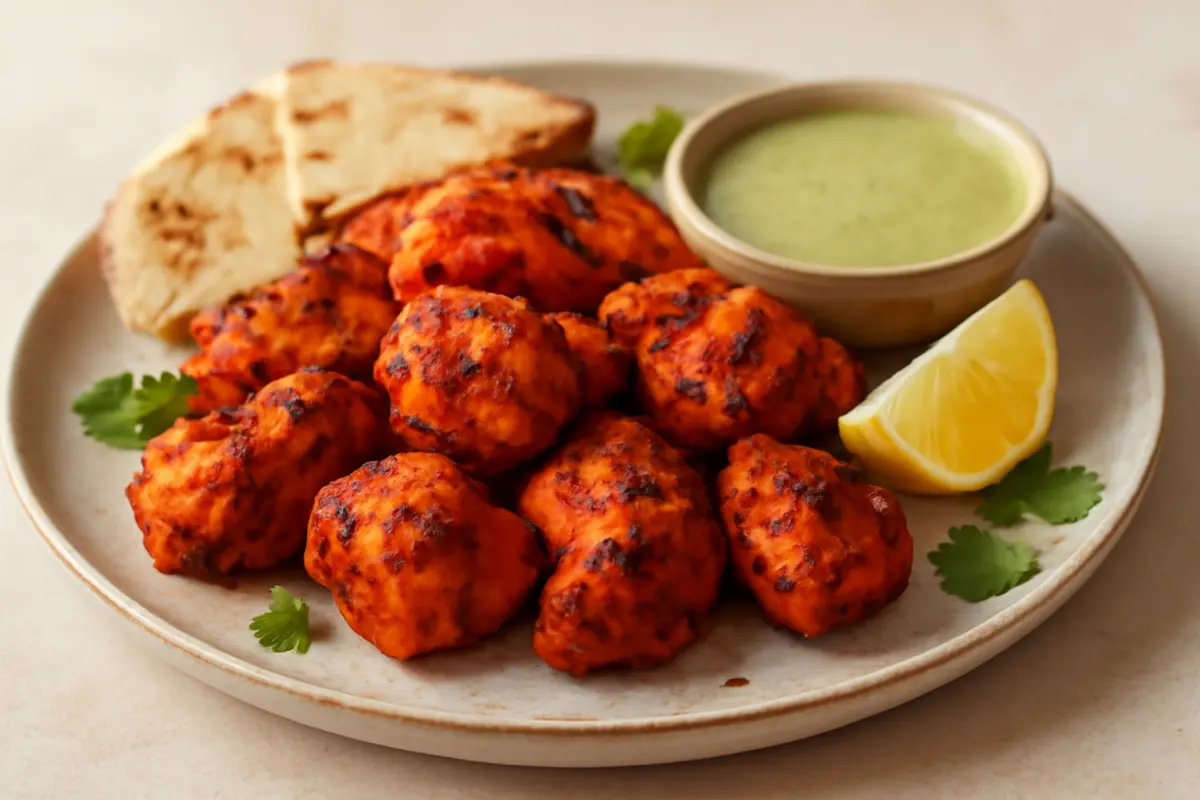
This chicken tikka recipe uses boneless chicken thighs, spiced yogurt, lemon, ginger, and garlic for tender pieces with browned edges. Cook the skewers under a hot grill or in the oven, then serve with chutney, naan, or rice.
Overview
This chicken tikka recipe makes juicy, boldly seasoned pieces of chicken with lightly charred edges. Boneless chicken thighs are especially forgiving, but chicken breast also works if you avoid overcooking it.
The chicken needs at least 2 hours to marinate, so plan ahead. A hot grill or oven gives the best color; leave space between the pieces so they roast rather than steam.
Ingredients
- 700 g boneless, skinless chicken thighs, cut into 4 cm pieces
- 180 g plain full-fat yogurt
- 1 tablespoon lemon juice
- 1 tablespoon neutral oil, plus more for the tray or rack
- 4 garlic cloves, finely grated
- 15 g fresh ginger, finely grated
- 1 1/2 teaspoons fine sea salt
- 2 teaspoons ground cumin
- 2 teaspoons ground coriander
- 1 1/2 teaspoons paprika or mild Kashmiri chilli powder
- 1 teaspoon garam masala
- 1/2 teaspoon ground turmeric
- 1/2 teaspoon cayenne pepper, optional
- 1 tablespoon gram flour, also called besan, optional but useful for a thicker coating
- Lemon wedges, to serve
- Fresh coriander, to serve, optional
How to make it
Prepare the chicken. Pat the chicken dry with kitchen paper and cut it into evenly sized pieces. Trim away large pieces of excess fat, but leave small amounts because they help keep the meat moist.
Make the marinade. In a large bowl, stir together the yogurt, lemon juice, oil, garlic, ginger, salt, cumin, coriander, paprika, garam masala, turmeric, and cayenne, if using. Stir in the gram flour until smooth. The mixture should be thick enough to cling to a spoon.
Marinate. Add the chicken and turn each piece until coated. Cover and refrigerate for at least 2 hours, or up to 24 hours. Do not leave the chicken marinating at room temperature. If you are using wooden skewers, soak them in water for at least 30 minutes before cooking.
Heat the oven or grill. For an oven method, heat the oven to 230°C, or 210°C fan, and place a rack in the upper-middle position. Line a sturdy baking tray with foil and set an oiled wire rack over it if you have one. For a grill or broiler, heat it to high and position the rack so the chicken will sit about 10–15 cm from the heat.
Thread the chicken. Lift the pieces from the marinade, allowing excess to drip back into the bowl. Thread the chicken onto skewers with a small gap between pieces. Do not pack them tightly together. Arrange the skewers on the rack. If you are not using a rack, spread the chicken in a single layer on the lined tray.
Cook the first side. Roast for 12 minutes, then turn the skewers. Continue cooking for 8–12 minutes, depending on the size of the pieces. For a grill or broiler, cook for about 8–10 minutes per side, watching closely because the yogurt marinade can darken quickly.
Check for doneness. The chicken is ready when the thickest piece reaches 74°C on an instant-read thermometer. Without a thermometer, cut into the largest piece: it should be opaque all the way through, with clear juices and no translucent center. The edges should have browned patches, and the chicken should feel firm but still springy rather than hard.
Add extra color if needed. If the chicken is cooked but lacks char, move it closer to the grill or use the oven’s grill setting for 1–2 minutes. Watch continuously during this step. Rest the skewers for 5 minutes, then serve with lemon wedges and coriander.
Expert tips
- Use thighs for the most reliable texture. Chicken breast cooks faster and can dry out, so cut it slightly larger and begin checking it early.
- Do not skip drying the chicken. A wet surface thins the marinade and makes browning more difficult.
- Avoid crowding the tray. Space allows hot air to circulate and prevents the chicken from sitting in released juices.
- For stronger color, use paprika or Kashmiri chilli powder. Regular hot chilli powder adds heat quickly, so use it more cautiously.
- If the marinade is runny, stir in the gram flour and refrigerate the coated chicken for 20–30 minutes before skewering.
- If the chicken browns too quickly, move it to a lower oven rack or reduce the oven to 210°C, or 190°C fan, until the center is cooked.
- For a barbecue, cook over medium-high heat rather than a fierce open flame. Turn the skewers regularly so the yogurt coating chars without burning.
Serving and storage
Serve the chicken tikka hot with lemon wedges, sliced onion, naan, roti, rice, or a cooling yogurt sauce. A fresh mint chutney works particularly well with the smoky spices. For a fuller meal, serve it alongside chicken biryani, or use the cooked pieces in wraps and salads.
Refrigerate leftovers in a covered container within 2 hours of cooking and use them within 3 days. Reheat until piping hot throughout, preferably in a covered skillet or a 180°C oven so the chicken does not dry out. Do not store or reuse leftover marinade that has touched raw chicken unless it is boiled thoroughly first; the simplest option is to discard it.
Frequently asked questions
Can I make chicken tikka without skewers?
Yes. Spread the marinated chicken in a single layer on an oiled, foil-lined tray or wire rack and cook using the same oven temperature. Turn the pieces halfway through so they brown on more than one side.
How long should chicken tikka marinate?
Marinate it for at least 2 hours for noticeable flavor. Up to 24 hours gives the spices more time to season the chicken, but keep it covered in the refrigerator throughout.
Can I use chicken breast instead of thighs?
Yes, but cut the breast into slightly larger pieces and check it early because it dries out faster. Remove it as soon as the thickest piece reaches 74°C.
Why is my chicken tikka watery instead of charred?
The chicken may have been crowded, too wet, or cooked at too low a temperature. Pat the chicken dry before marinating, leave gaps between pieces, and use a hot oven or grill. A wire rack also keeps the pieces above released juices.
Can I freeze chicken tikka?
Freeze cooked chicken tikka in an airtight container for up to 2 months. Thaw it in the refrigerator overnight and reheat gently until hot throughout. The texture may be slightly less juicy than freshly cooked chicken.