Recipes
Mint Chutney Recipe
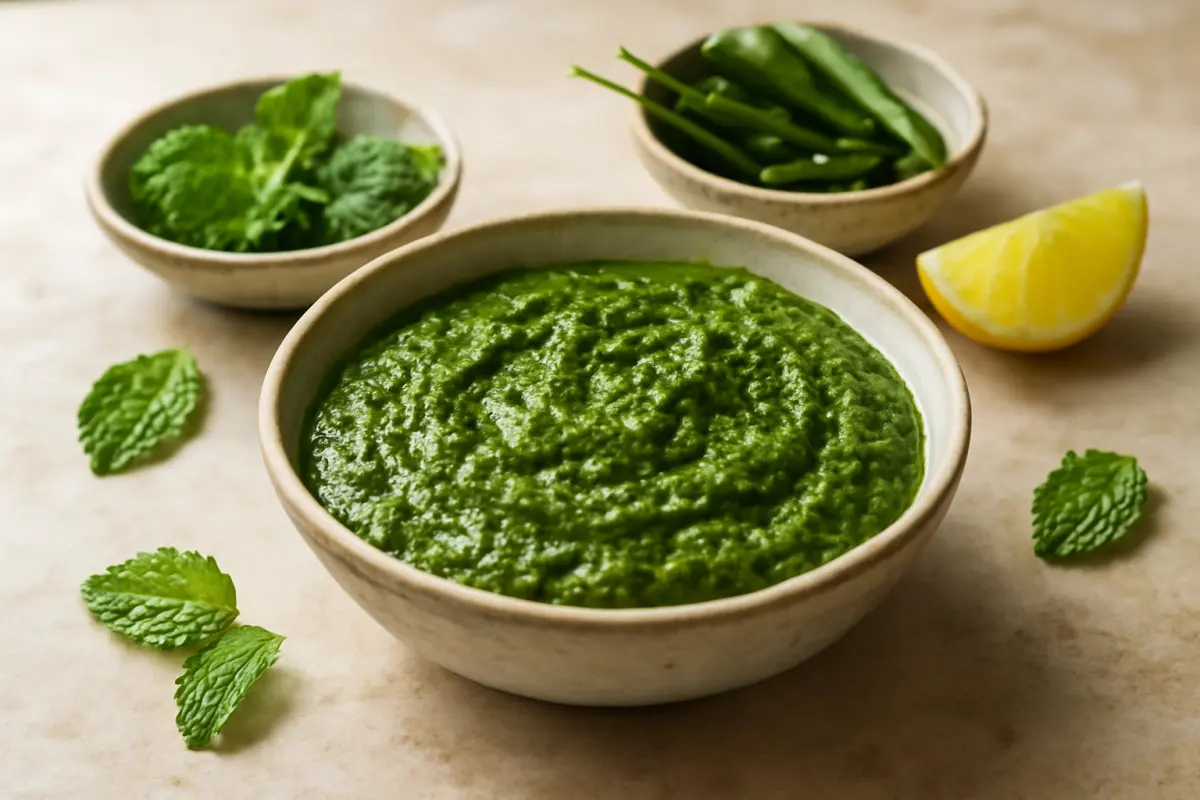
This fresh mint chutney is bright, savory, lightly spicy, and ready in about 10 minutes. Blend mint and cilantro with green chile, lemon, ginger, and spices for a smooth dipping sauce or sandwich spread.
Overview
This mint chutney recipe makes a bright, savory green chutney with fresh mint, cilantro, green chile, lemon, and a little cumin. It has enough body for dipping but can be loosened with a spoonful of water when you want to drizzle it over snacks or rice.
The key is to blend the herbs briefly with cold water and lemon juice, then taste before adding more chile or salt. Serve it with samosas, pakoras, grilled foods, sandwiches, or dahi bhalla, where its sharp, fresh flavor balances creamy yogurt and sweet-tangy tamarind chutney.
Ingredients
- 1 packed cup fresh mint leaves, thick stems removed
- 1 packed cup fresh cilantro leaves and tender stems
- 1 small green chile, such as serrano, roughly chopped
- 1-inch piece fresh ginger, peeled and roughly chopped
- 1 small garlic clove, roughly chopped
- 2 tablespoons fresh lemon juice
- 1/2 teaspoon ground cumin
- 1/2 teaspoon fine salt, plus more to taste
- 1/4 teaspoon sugar, optional, to soften sharp or bitter notes
- 3 to 5 tablespoons ice-cold water, as needed
How to make it
Wash and dry the herbs. Rinse the mint and cilantro thoroughly in cool water, then shake or spin them as dry as possible. Excess water makes the chutney thin and dilutes its flavor. Remove the tough mint stems, but tender cilantro stems can stay.
Add the ingredients to a blender. Put the mint, cilantro, green chile, ginger, garlic, lemon juice, cumin, salt, and optional sugar into a small blender or food processor. Start with 3 tablespoons of cold water.
Blend in short bursts. Blend for 10 to 15 seconds, scrape down the sides, and blend again until the herbs are finely minced and the chutney looks evenly green. Avoid running the blender continuously for a long time, which can warm the herbs and dull their fresh flavor.
Adjust the consistency. Add the remaining water 1 tablespoon at a time until the chutney is thick but spoonable. It should slowly fall from a spoon rather than pour like juice. If it becomes too thin, blend in a little extra cilantro or mint, if available.
Taste and balance. Taste with a clean spoon. Add a pinch more salt if it tastes flat, another teaspoon of lemon juice if it needs brightness, or a small pinch of sugar if the mint tastes especially sharp. For more heat, blend in another half green chile.
Rest briefly before serving. Let the chutney stand for 5 minutes so the cumin, chile, and lemon can settle into the herbs. Taste once more, then serve immediately or refrigerate it in a covered container.
Expert tips
- Keep the color fresh: Use cold water, blend only until smooth, and avoid prolonged high-speed blending. A small ice cube can replace 1 tablespoon of water if your blender tends to heat the mixture.
- For a milder chutney: Remove the chile seeds and white membrane, or use half a chile. The green chile contributes flavor as well as heat, so do not omit it unless necessary.
- For a creamier dip: Stir in 2 to 3 tablespoons plain yogurt after blending. Add the yogurt only after the herb mixture is smooth, then taste for salt and lemon.
- If using dried mint: It will not provide the same fresh flavor or color. Use fresh mint when possible; dried mint is better treated as an additional seasoning rather than a full replacement.
- If the chutney tastes bitter: Add 1/4 teaspoon sugar and a teaspoon of lemon juice, then blend briefly. Bitter flavor can also come from large, tough mint stems or overheated herbs.
- If it tastes too sharp: Stir in another tablespoon of cilantro or mint, or add 1 to 2 tablespoons yogurt. Adjust salt only after the flavor has mellowed.
- For a looser chutney: Add cold water gradually. Adding a large amount at once can leave you with a watery sauce that is difficult to rebalance.
Serving and storage
Serve the chutney chilled or at cool room temperature. It works as a dip for pakoras and samosas, a topping for chaat, or a fresh accompaniment to aloo gobi, moong dal, grilled meat, roasted vegetables, and sandwiches.
Store it in a clean, airtight container in the refrigerator and use it within 3 to 4 days for the best color and flavor. Press a piece of plastic wrap directly against the surface before covering if you want to reduce air exposure. Stir before serving; natural separation is normal. Do not leave the chutney at room temperature for extended periods, especially after adding yogurt.
Frequently asked questions
Can I make mint chutney without cilantro?
Yes. Use 2 packed cups of mint leaves, but expect a stronger, more intense flavor. You may need an extra 1 to 2 tablespoons of water and a small pinch of sugar to balance the mint.
Why is my mint chutney bitter?
Large mint stems, overheated herbs, or very mature mint can create bitterness. Remove tough stems, use cold water, blend briefly, and balance the chutney with a little lemon juice and up to 1/4 teaspoon sugar.
How can I make mint chutney less spicy?
Use half a green chile or remove its seeds and white membrane before blending. If the chutney is already blended, mix in more mint or cilantro and add a spoonful of plain yogurt.
Can I use a food processor instead of a blender?
Yes. A food processor works well, although the chutney may be slightly more textured. Scrape the bowl several times and add water gradually so it does not become watery.
Can mint chutney be frozen?
It can be frozen in small portions, but the herbs may lose some brightness and become slightly darker after thawing. Freeze without yogurt, thaw in the refrigerator, stir well, and add fresh lemon juice to refresh the flavor.