Desserts
Chocolate Tres Leches Cake Recipe
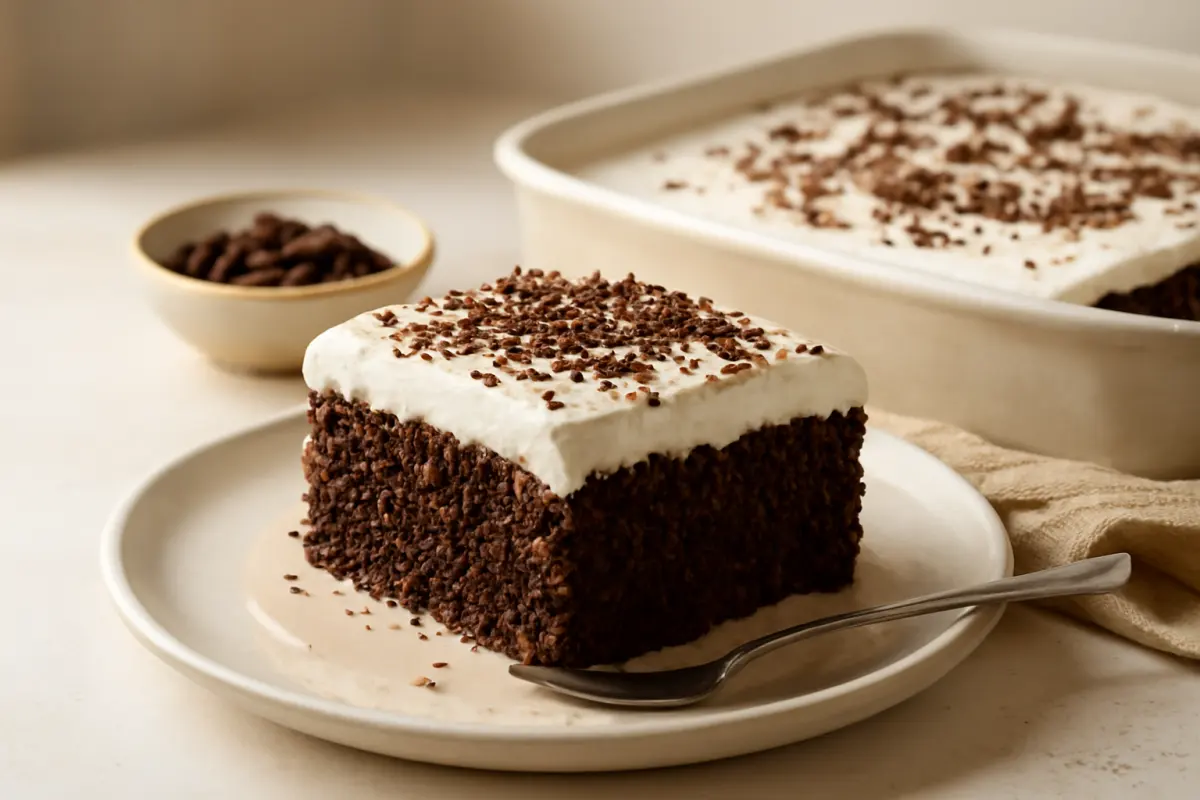
This chocolate tres leches cake has a tender cocoa sponge, a creamy three-milk soak, and a cloudlike whipped cream topping. It is easy to assemble ahead and tastes even better after chilling.
Overview
This chocolate tres leches cake combines a light cocoa sponge with a rich mixture of evaporated milk, sweetened condensed milk, and whole milk. The cake absorbs the soak gradually, becoming moist and creamy without turning stodgy when it is cooled properly.
Bake the sponge in a 9-by-13-inch pan, poke it while warm, and pour the milk mixture over it in stages. After several hours in the refrigerator, finish it with lightly sweetened whipped cream and a dusting of cocoa.
Ingredients
- For the chocolate sponge:
- 1 1/2 cups (188 g) all-purpose flour
- 1/2 cup (43 g) unsweetened natural cocoa powder
- 2 teaspoons baking powder
- 1/2 teaspoon fine salt
- 5 large eggs, separated, at room temperature
- 1 cup (200 g) granulated sugar, divided
- 1/2 cup (120 ml) whole milk
- 2 teaspoons vanilla extract
- For the three-milk soak:
- 1 can (12 ounces/354 ml) evaporated milk
- 1 can (14 ounces/397 g) sweetened condensed milk
- 1 cup (240 ml) whole milk
- 2 tablespoons unsweetened cocoa powder
- 1 teaspoon vanilla extract
- For the topping:
- 2 cups (480 ml) cold heavy whipping cream
- 1/4 cup (30 g) powdered sugar
- 1 teaspoon vanilla extract
- 1 tablespoon unsweetened cocoa powder, for dusting, optional
- Chocolate shavings, optional
How to make it
Prepare the pan and oven. Heat the oven to 350°F (175°C). Lightly grease a 9-by-13-inch metal baking pan, then line the bottom with parchment if you want easier serving. Leave the sides lightly greased so the batter can climb as it bakes.
Mix the dry ingredients. Whisk the flour, cocoa powder, baking powder, and salt in a medium bowl. Sifting the cocoa helps break up lumps, which is especially useful for the milk soak later.
Beat the egg yolks. Put the egg yolks in a large bowl with 3/4 cup of the sugar. Beat for 2 to 3 minutes, until the mixture is pale, thick, and falls from the whisk in a slow ribbon. Beat in the milk and 2 teaspoons vanilla.
Add the dry mixture. Fold the dry ingredients into the yolk mixture in two additions. Stop as soon as no dry streaks remain; overmixing at this stage can make the sponge firm.
Whip the egg whites. In a clean, grease-free bowl, beat the egg whites on medium speed until foamy. Increase to medium-high and gradually add the remaining 1/4 cup sugar. Continue beating until the whites form glossy medium-stiff peaks: the peak should stand up but curl slightly at the tip.
Fold in the whites. Fold one-third of the whipped whites into the cocoa batter to loosen it. Gently fold in the remaining whites in two additions, turning the spatula from the bottom of the bowl upward. A few faint white streaks are acceptable, but do not leave large pockets of egg white.
Bake the sponge. Spread the batter evenly in the prepared pan. Bake for 25 to 30 minutes, rotating once halfway through, until the center springs back when pressed lightly and a toothpick inserted in the middle comes out with a few moist crumbs rather than wet batter. Do not wait for a completely dry toothpick, or the cake may be less absorbent and dry around the edges.
Make the soak. While the cake bakes, whisk the evaporated milk, condensed milk, whole milk, cocoa powder, and 1 teaspoon vanilla in a large measuring jug. If the cocoa remains lumpy, blend briefly with an immersion blender or pour the mixture through a fine-mesh strainer.
Soak the cake. Let the cake cool in the pan for 10 minutes. Run a thin knife around the edges, then poke the surface all over with a skewer or fork, spacing the holes about 1 inch apart. Pour the milk mixture slowly over the cake in three additions, pausing between pours so it can absorb. Pay attention to the corners, which tend to stay drier. A small amount of liquid may remain visible on top at first; it should mostly disappear as the cake chills.
Chill thoroughly. Cover the pan and refrigerate for at least 4 hours, preferably overnight. The cake should feel cold and soft but still hold its shape when a slice is lifted.
Add the topping. Just before serving, beat the cold heavy cream, powdered sugar, and vanilla on medium-high speed until it holds firm peaks. Spread it over the chilled cake. Dust with cocoa powder and add chocolate shavings if desired.
Slice and serve. Use a serrated knife or a sharp chef's knife, wiping it between cuts for cleaner slices. Serve cold with a spoonful of any milk that has collected around the edges.
Expert tips
- Use natural unsweetened cocoa powder in both the sponge and soak. Dutch-process cocoa can work in the cake, but its different acidity may slightly change the rise when used with baking powder.
- Room-temperature eggs whip to greater volume. To warm them quickly, place the uncracked eggs in a bowl of warm—not hot—water for 5 minutes.
- Pouring the soak over a warm cake helps absorption, but do not pour it over a cake that is still hot from the oven; the crumb can collapse.
- If the surface looks saturated after the first pour, wait 5 to 10 minutes before adding more. The cake should absorb the liquid gradually rather than have it pool deeply in one area.
- For a less sweet topping, reduce the powdered sugar to 2 tablespoons. The condensed milk already provides most of the dessert's sweetness.
- If you enjoy making chocolate desserts, these homemade chocolate oatmeal cookies or chocolate coconut macaroons make simple additions to a dessert table.
Serving and storage
Keep the cake covered and refrigerated. It can be made up to 24 hours before serving, and the texture is usually best after an overnight chill. For the neatest topping, add the whipped cream shortly before serving, although a fully assembled cake will keep well for up to 3 days in the refrigerator.
Do not leave the cake at room temperature for more than 2 hours, or 1 hour if the room is above 90°F (32°C). Store leftovers in the pan or in an airtight container so the sponge does not absorb refrigerator odors. Freezing is not recommended after soaking because the milk mixture can separate and the whipped cream can become watery.
Frequently asked questions
Why did my chocolate tres leches cake turn soggy?
The sponge may have been underbaked, the soak may have been poured too quickly into one spot, or the cake may not have had enough time to chill and absorb evenly. Bake until the center springs back, poke holes across the entire surface, and add the soak in several gradual pours.
Can I make chocolate tres leches cake the day before?
Yes. In fact, chilling it overnight gives the milk mixture more time to distribute through the sponge. Cover the soaked cake tightly and add the whipped cream just before serving or up to a few hours ahead.
How do I keep the cake from becoming dry?
Do not overbake the sponge, and remove it when a toothpick shows a few moist crumbs. Also make sure the egg whites are folded gently so the batter keeps enough air to produce a light, absorbent crumb.
Can I use a different pan?
A 9-by-13-inch pan gives the best thickness and soaking time. Two 9-inch round pans can also work, but reduce the baking time and divide the soak evenly; begin checking the cakes around 20 minutes.
Can I use boxed chocolate cake mix?
You can, but choose a relatively light cake rather than a dense brownie-style mix. Prepare and bake it according to the package directions, then use the same soak and chilling method once the cake has cooled for about 10 minutes.