Desserts
Homemade Chocolate Oatmeal Cookies Recipe
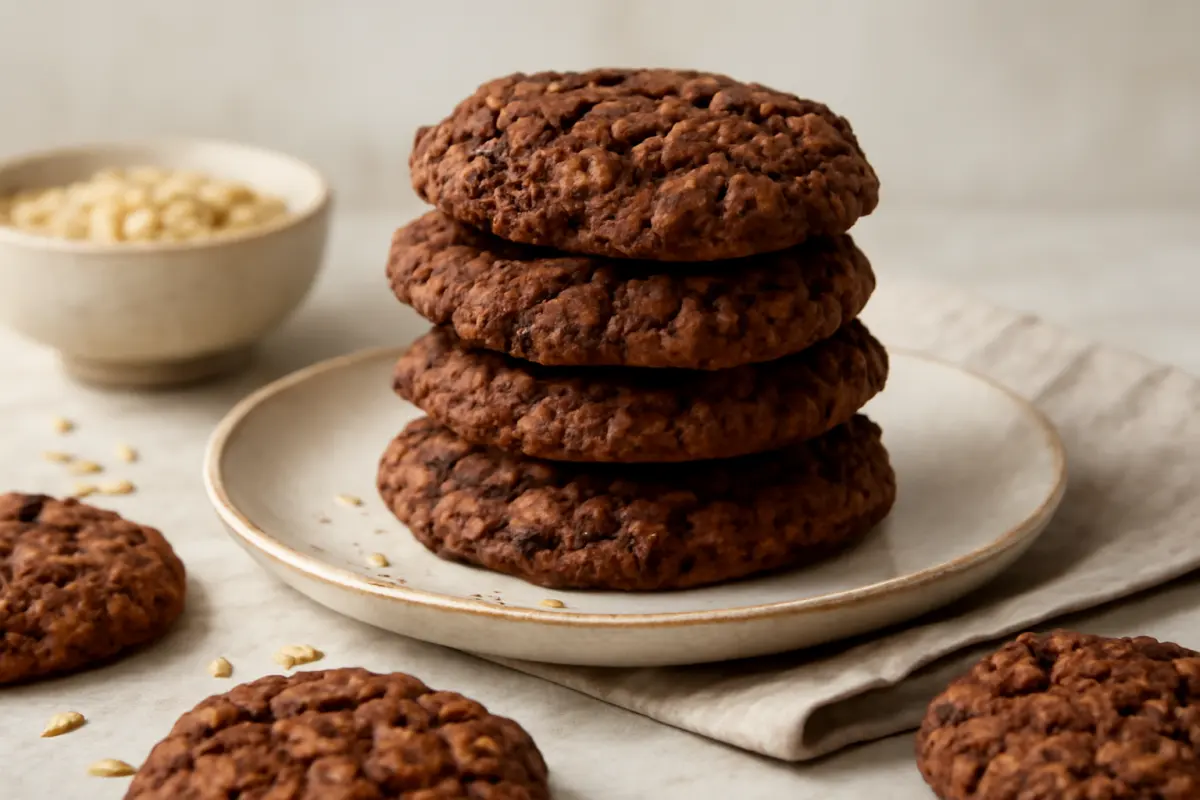
These homemade chocolate oatmeal cookies are chewy in the middle, lightly crisp at the edges, and rich with cocoa and chocolate chips. The dough comes together in one bowl and needs only a short chill before baking.
Overview
These homemade chocolate oatmeal cookies combine the hearty texture of rolled oats with cocoa powder, brown sugar, and semisweet chocolate chips. They bake into cookies with lightly crisp edges and soft, chewy centers.
The dough is straightforward, but a short chill makes a noticeable difference: it helps the cookies hold their shape instead of spreading too thinly. Bake them just until the edges look set while the centers still look slightly soft.
Ingredients
- 1 cup (226 g) unsalted butter, softened to cool room temperature
- 1 cup (200 g) packed light brown sugar
- 1/2 cup (100 g) granulated sugar
- 2 large eggs, at room temperature
- 2 teaspoons vanilla extract
- 1 1/2 cups (188 g) all-purpose flour
- 1/2 cup (43 g) unsweetened cocoa powder
- 1 teaspoon baking soda
- 1/2 teaspoon fine salt
- 2 cups (180 g) old-fashioned rolled oats
- 1 1/2 cups (255 g) semisweet chocolate chips
How to make it
Prepare the oven and pans. Heat the oven to 350°F (175°C). Line two baking sheets with parchment paper. If you are using dark baking sheets, reduce the temperature to 340°F (170°C) to help prevent over-browning on the bottoms.
Cream the butter and sugars. In a large bowl, beat the softened butter, brown sugar, and granulated sugar for 2 to 3 minutes, until the mixture looks lighter and creamy. A hand mixer works well, though a sturdy wooden spoon can also be used.
Add the eggs and vanilla. Beat in the eggs one at a time, scraping down the sides of the bowl after each addition. Mix in the vanilla. The mixture may look slightly loose, but it should be smooth and evenly combined.
Combine the dry ingredients. In a separate bowl, whisk together the flour, cocoa powder, baking soda, and salt. This distributes the cocoa and leavening so you do not get bitter or overly puffy patches in the baked cookies.
Make the dough. Add the dry mixture to the butter mixture in two additions, mixing on low speed or stirring by hand just until no dry flour remains. Fold in the oats and chocolate chips. Stop mixing as soon as the dough is uniform; overmixing can make the cookies firm rather than chewy.
Chill briefly. Cover the bowl and refrigerate the dough for 30 minutes. The chilled dough should be scoopable but firm enough to hold a rounded mound. If it becomes very hard, let it stand at room temperature for 5 to 10 minutes before scooping.
Scoop the cookies. Portion the dough into 2-tablespoon balls, about 35 g each, and place them 2 inches apart on the prepared baking sheets. Do not flatten them; they will spread as they bake. For more even-looking cookies, press a few extra chocolate chips into the tops before baking.
Bake. Bake one sheet at a time for 10 to 12 minutes, rotating the pan halfway through. The edges should look set, while the centers should still look slightly soft and moist. The cookies will continue cooking on the hot pan, so do not wait for the centers to look completely firm.
Cool. Leave the cookies on the baking sheet for 5 minutes. They should firm enough to lift without breaking but still feel tender. Transfer them to a wire rack to cool completely.
Expert tips
- Use old-fashioned rolled oats. They give the cookies a chewy texture. Quick oats can work in a pinch, but the cookies will be softer and less textured; avoid steel-cut oats.
- Measure flour accurately. Spoon it into a dry measuring cup and level the top, or weigh it. Too much flour can make the cookies dry and cakey.
- For thicker cookies, chill longer. Refrigerate the shaped dough for 1 to 2 hours, or freeze the dough balls for 20 to 25 minutes before baking.
- If the cookies spread too much, the butter may have been too warm or the dough may not have chilled long enough. Refrigerate the remaining dough for another 20 to 30 minutes.
- If the cookies stay domed and barely spread, the butter was likely too cold or there was too much flour. Let the dough sit for 10 minutes before baking the next batch, and check how the flour was measured.
- For a less sweet cookie, use bittersweet chocolate chips or reduce the chips to 1 cup. Do not reduce the brown sugar substantially, since it also contributes moisture and chewiness.
- For a dairy-free version, use a plant-based butter that is formulated for baking and dairy-free chocolate chips. The texture may vary slightly between brands.
- For a nutty variation, replace 1/2 cup of the chocolate chips with 1/2 cup chopped toasted walnuts or pecans. If you enjoy oat cookies with fruit, see this oatmeal raisin cookies recipe for a cinnamon-and-raisin variation.
Serving and storage
Serve the cookies warm after they have rested for a few minutes, or cool them completely for a firmer, chewier texture. They are especially good with cold milk, coffee, or tea.
Store cooled cookies in an airtight container at room temperature for up to 5 days. Place parchment between layers if the cookies are still slightly soft. For longer storage, freeze baked cookies in a sealed freezer container for up to 2 months; thaw them at room temperature. You can also freeze portioned, unbaked dough balls for up to 2 months. Bake them from frozen at 350°F (175°C), adding about 2 to 4 minutes to the baking time and checking for set edges with soft centers.
Frequently asked questions
Can I make these chocolate oatmeal cookies with quick oats?
Yes. Use the same 2 cups (180 g) by weight, but expect a softer, less chewy texture. Old-fashioned rolled oats provide more distinct oat texture and are the better choice for this recipe.
Why did my chocolate oatmeal cookies spread too much?
The butter may have been too warm, the dough may not have chilled long enough, or the baking sheet may have been warm. Chill the dough for another 20 to 30 minutes and place each batch on a cool, parchment-lined sheet.
Can I skip chilling the cookie dough?
You can, but the cookies will usually spread more and may be thinner. A 30-minute chill helps the dough hold its shape and produces thicker, chewier centers.
How do I know when chocolate cookies are done?
Look for edges that are set and slightly dry while the centers still look soft and a little glossy. The cookies will firm as they cool on the baking sheet for 5 minutes.