Recipes
Creamy Tomato Basil Gnocchi Recipe
This creamy tomato basil gnocchi is a comforting one-pan dinner with tender gnocchi, a silky tomato cream sauce, Parmesan, and fresh basil. It comes together quickly with no separate pot of boiling water required.
Overview
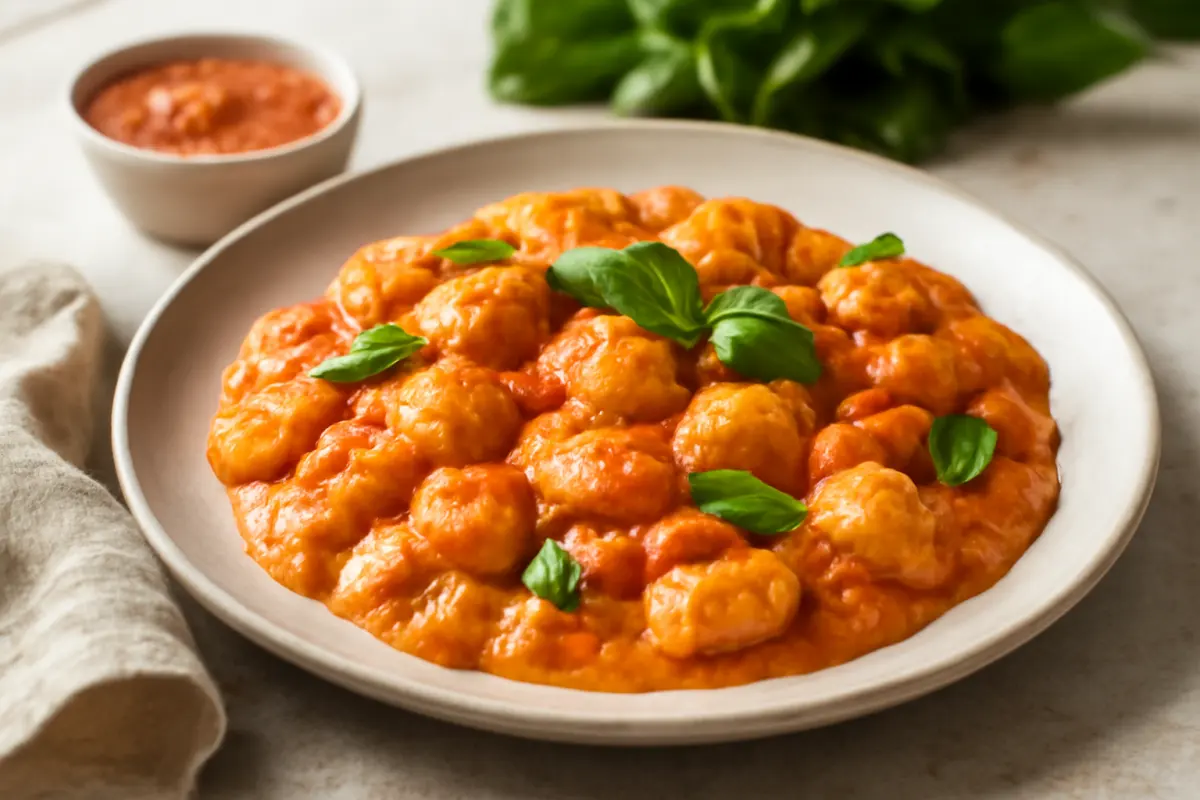
This creamy tomato basil gnocchi recipe turns shelf-stable or refrigerated gnocchi into a saucy, satisfying dinner in one skillet. The gnocchi cooks directly in the tomato cream sauce, absorbing flavor while releasing enough starch to help the sauce become glossy and clingy.
Use a wide skillet so the gnocchi sits in a fairly even layer. The finished dish is ready when the gnocchi is tender throughout, the sauce coats the back of a spoon, and the basil smells fresh and sweet rather than dull.
Ingredients
- 2 tablespoons olive oil
- 1 small yellow onion, finely diced, about 1 cup
- 3 garlic cloves, minced
- 1/2 teaspoon red pepper flakes, optional
- 1 can (14.5 ounces) crushed tomatoes
- 1 1/2 cups low-sodium vegetable or chicken broth
- 1/2 teaspoon Italian seasoning
- 1/2 teaspoon kosher salt, plus more to taste
- 1/4 teaspoon freshly ground black pepper
- 1 package (16 ounces) shelf-stable or refrigerated potato gnocchi
- 1/2 cup heavy cream
- 1/2 cup finely grated Parmesan cheese, plus more for serving
- 1/3 cup loosely packed fresh basil leaves, torn
How to make it
Soften the aromatics. Heat the olive oil in a large, deep skillet over medium heat. Add the onion and cook for 4 to 5 minutes, stirring occasionally, until it is soft and translucent but not browned. Add the garlic and red pepper flakes, if using, and cook for 30 seconds, just until fragrant.
Build the sauce. Stir in the crushed tomatoes, broth, Italian seasoning, salt, and black pepper. Bring the mixture to a gentle simmer. It should bubble lightly across the surface, not boil vigorously.
Cook the gnocchi in the skillet. Stir in the gnocchi and spread it into an even layer. Cover and simmer for 5 minutes. Uncover, stir, and continue cooking for 3 to 5 minutes, or until the gnocchi is plump and tender when cut in half. Stir once or twice during cooking so the pieces do not settle and stick.
Add the cream. Reduce the heat to low and stir in the heavy cream. Let the sauce warm for 1 to 2 minutes. Avoid a hard boil after adding the cream, which can make the sauce look grainy or cause it to reduce too quickly.
Finish with Parmesan and basil. Remove the skillet from the heat. Stir in the Parmesan a little at a time until melted and smooth, then fold in the basil. Taste and add more salt, pepper, or red pepper flakes if needed. If the sauce is thicker than you prefer, stir in 1 to 2 tablespoons of warm broth or water.
Serve immediately. Spoon the gnocchi into shallow bowls and finish with extra Parmesan, a few torn basil leaves, and a drizzle of olive oil if desired. The sauce will continue to thicken as it stands, so serve it while it is still loose and glossy.
Expert tips
- Choose the right pan: A 10- to 12-inch deep skillet gives the gnocchi room to cook evenly. A narrow saucepan can leave the pieces crowded and undercooked in the center.
- Check doneness by texture: Cut one gnocchi in half. It should be soft and evenly tender, without a firm, chalky center. If it is still firm, cover and simmer for another 1 to 2 minutes with a splash of broth.
- Prevent sticking: Stir after the first few minutes and again near the end. If the sauce becomes very thick before the gnocchi is tender, add 2 tablespoons of broth rather than turning up the heat.
- Make a lighter substitution: Replace the heavy cream with 3/4 cup evaporated milk. Add it over low heat and do not boil. The sauce will be slightly less rich but still creamy.
- Use frozen gnocchi carefully: Frozen gnocchi can go straight into the skillet, but it may need 2 to 4 additional minutes of covered cooking. Add a splash more broth if the sauce tightens too soon.
- For a richer tomato flavor: Stir in 1 tablespoon of tomato paste with the garlic and cook for 1 minute before adding the crushed tomatoes.
- Keep the Parmesan smooth: Finely grate it and add it off the heat. Pre-shredded cheese may not melt as evenly and can leave small lumps.
Serving and storage
Serve the gnocchi with a crisp green salad, steamed vegetables, or warm crusty bread for spooning up the sauce. A simple salad such as this vegetable couscous salad also adds a fresh, crunchy contrast.
Cool leftovers promptly and refrigerate them in a covered container for up to 3 days. Reheat gently in a skillet over low heat with 1 to 2 tablespoons of water or broth, stirring occasionally until hot throughout. The gnocchi will absorb sauce as it sits, so add liquid gradually until the texture is creamy again. Freezing is not recommended because the cream sauce may separate and the gnocchi can become soft.
Frequently asked questions
Can I use refrigerated gnocchi instead of shelf-stable gnocchi?
Yes. Use the same 16-ounce quantity and cook it directly in the sauce. Refrigerated gnocchi may become tender a little sooner, so begin checking it after 7 to 8 minutes of total simmering.
Why is my gnocchi still hard in the middle?
The sauce may not have been simmering steadily, or the skillet may be crowded. Cover the pan and cook for another 1 to 2 minutes with a small splash of broth. Test a piece by cutting it in half; it should be soft and evenly tender.
Can I make this recipe without heavy cream?
Yes. Use 3/4 cup evaporated milk for the closest lighter substitute, or use 1/2 cup whole milk for a thinner sauce. Add either over low heat and avoid boiling.
How can I thicken the tomato cream sauce?
Let the uncovered sauce simmer gently for 1 to 2 minutes before adding the Parmesan, or stir in a little extra finely grated Parmesan off the heat. Remember that the sauce thickens further as it cools.
Can I add vegetables or protein?
Yes. Stir in 2 cups of baby spinach with the cream and cook until wilted, or add 1 cup of cooked shredded chicken or sliced Italian sausage at the end. Keep additions fully cooked before mixing them into the finished sauce.