Recipes
Roasted Tomato Basil Pasta Recipe
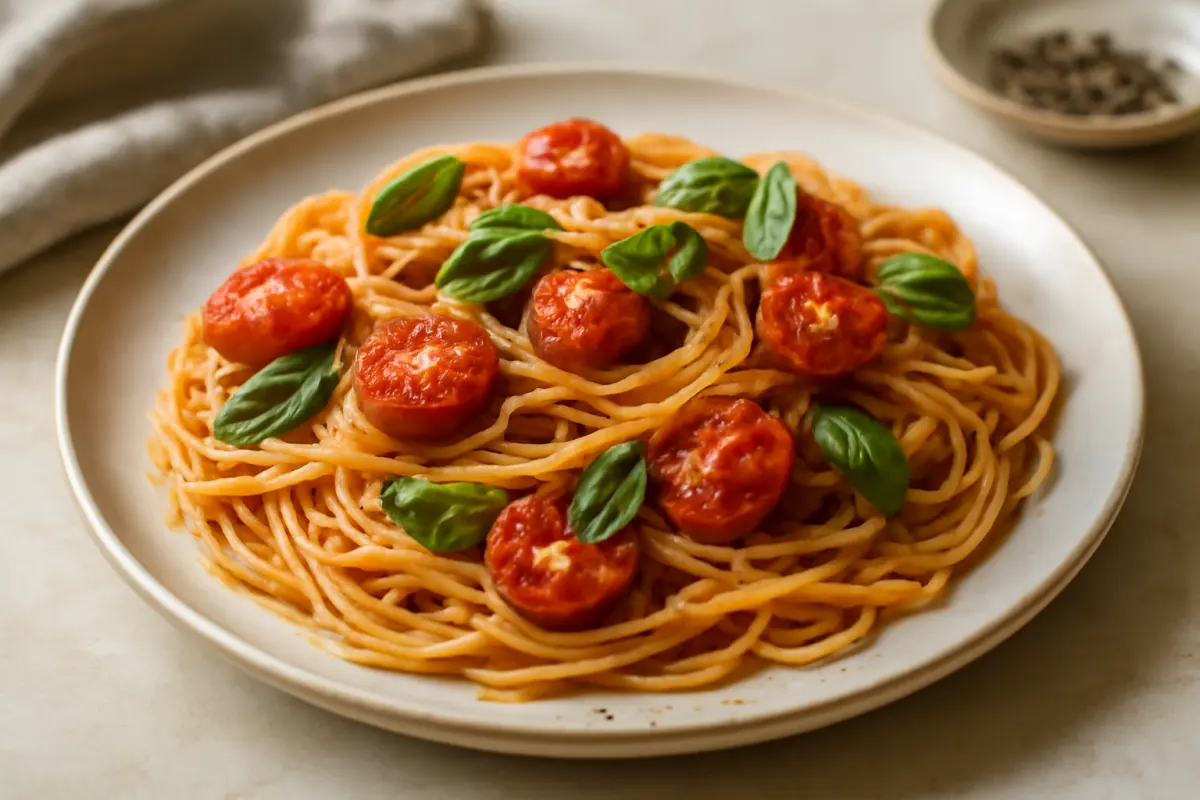
This roasted tomato basil pasta combines blistered cherry tomatoes, mellow roasted garlic, Parmesan, and fresh basil with pasta water for a glossy sauce that clings to every strand.
Overview
This roasted tomato basil pasta turns cherry tomatoes into a saucy, concentrated topping with only one sheet pan and one pot. As the tomatoes roast, their skins wrinkle and split, releasing sweet juices that combine with garlic and olive oil.
Toss the roasted tomatoes with hot pasta, Parmesan, basil, and reserved pasta water for a loose, glossy sauce. It is ready in about 40 minutes and works best with spaghetti, linguine, bucatini, or another shape with enough surface area to catch the tomato juices.
Ingredients
- 2 pints (about 680 g) cherry or grape tomatoes
- 5 tablespoons extra-virgin olive oil, divided
- 6 garlic cloves, peeled and lightly crushed
- 1 teaspoon kosher salt, plus more for the pasta water
- 1/2 teaspoon freshly ground black pepper
- 1/4 teaspoon red pepper flakes, optional
- 12 ounces (340 g) spaghetti, linguine, or bucatini
- 1/2 cup (45 g) finely grated Parmesan cheese, plus more for serving
- 1/2 cup loosely packed fresh basil leaves, torn
- 1 tablespoon fresh lemon juice, optional
How to make it
Heat the oven and prepare the tomatoes. Position a rack in the upper third of the oven and heat it to 425°F (220°C). Rinse and dry the tomatoes thoroughly; excess water will slow browning. Add them to a large rimmed sheet pan with the garlic, 3 tablespoons of the olive oil, salt, black pepper, and red pepper flakes if using. Toss until the tomatoes are evenly coated, then spread them in a single layer.
Roast until blistered and juicy. Roast for 25 to 30 minutes, stirring once halfway through. The tomatoes are ready when their skins are wrinkled and split, some edges are lightly browned, and the pan contains a pool of tomato juices. If the tomatoes have softened but the juices still look watery, roast for 5 more minutes. Keep the garlic on the pan; it should be soft enough to mash with the side of a fork, not dark brown or hard.
Boil the pasta. While the tomatoes roast, bring a large pot of water to a boil. Salt it generously—it should taste clearly seasoned—then cook the pasta until just shy of al dente according to the package timing. Before draining, scoop out 1 1/2 cups of the pasta water. Drain the pasta; do not rinse it.
Build the sauce. Return the hot pasta to the empty pot or place it in a large bowl. Add the roasted tomatoes and their juices. Mash two or three garlic cloves into the pasta with a fork, leaving the remaining cloves whole or adding them all for a stronger roasted-garlic flavor. Add the remaining 2 tablespoons olive oil and 1/2 cup pasta water.
Toss until glossy. Add the Parmesan and toss continuously for 1 to 2 minutes. Add more pasta water, 2 tablespoons at a time, until the cheese melts into a thin sauce that coats the pasta rather than pooling at the bottom. The pasta should be tender with a slight firmness in the center, and the tomatoes should remain in small juicy pieces.
Finish and serve. Fold in the basil and lemon juice if using. Taste and adjust with more salt, pepper, or red pepper flakes. Serve immediately with extra Parmesan and a drizzle of olive oil.
Expert tips
- Use dry tomatoes. Wet tomatoes steam instead of blistering, so pat them dry after rinsing.
- Do not skip pasta water. Its starch helps the tomato juices, olive oil, and Parmesan form a sauce that clings to the pasta.
- Add Parmesan off the direct heat. Very high heat can make cheese turn stringy or grainy. Toss it with the hot pasta after the pot is off the burner.
- If the sauce is watery, transfer the roasted tomatoes and juices to a skillet and simmer for 2 to 4 minutes before tossing with the pasta.
- If the pasta is dry, add warm pasta water gradually while tossing. A little olive oil can help loosen it, but water is what gives the sauce its body.
- For a richer variation, add 1/2 cup sliced Kalamata olives or 1 cup baby spinach with the basil. For another meatless pasta option, see this creamy mushroom pasta recipe.
- Substitutions: Canned whole tomatoes are not a direct swap for fresh cherry tomatoes because they release more liquid. If using canned tomatoes, drain 28 ounces well, roughly chop them, and roast for about 30 minutes, checking for concentrated juices. Pecorino Romano can replace Parmesan, but use less salt because it is saltier.
Serving and storage
Serve the pasta hot with extra basil, Parmesan, and a simple green salad or crusty bread. The roasted tomatoes can also be made up to 2 days ahead and refrigerated in an airtight container; rewarm them gently before tossing with freshly cooked pasta.
Refrigerate leftover pasta in a shallow airtight container within 2 hours of cooking and use it within 3 to 4 days. Reheat it in a skillet over medium-low heat with 1 to 2 tablespoons of water per serving, tossing until hot. The sauce may be less glossy after chilling, but additional water will loosen it. Freezing is not ideal because the tomatoes and cheese can become watery and grainy after thawing.
Frequently asked questions
Can I use regular tomatoes instead of cherry tomatoes?
Yes. Use about 1 1/2 pounds ripe tomatoes, cut into 1-inch pieces. Spread them in a single layer and roast until softened, browned at the edges, and surrounded by concentrated juices; this may take 30 to 40 minutes.
Why is my roasted tomato pasta watery?
The tomatoes may have released more liquid than expected, or they may not have roasted long enough. Simmer the tomato juices in a skillet for 2 to 4 minutes to concentrate them, then toss with the pasta. Also drain the pasta well and add pasta water gradually.
Can I make this recipe without Parmesan?
Yes. Omit the Parmesan and finish with an extra tablespoon of olive oil, additional basil, and lemon juice to taste. Nutritional yeast can add a savory note, but it will not create the same creamy emulsion as Parmesan.
What pasta shape works best?
Spaghetti, linguine, bucatini, rigatoni, and fusilli all work well. Long pasta catches the tomato juices, while ridged or twisted shapes hold the roasted tomato pieces.
Can I prepare the roasted tomatoes ahead of time?
Yes. Roast the tomatoes and garlic up to 2 days ahead, cool them promptly, and refrigerate them in an airtight container. Reheat gently before combining with freshly cooked pasta.