Recipes
Pesto Shrimp Pasta Recipe
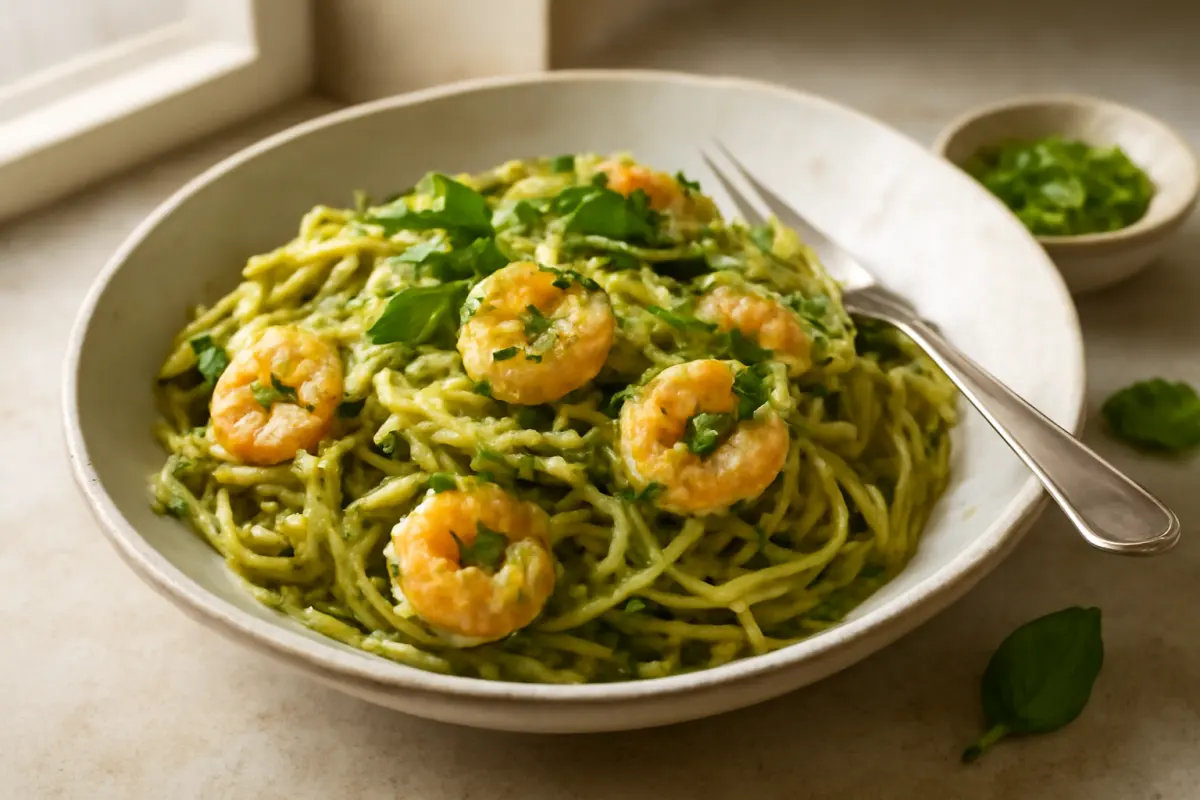
This pesto shrimp pasta combines tender garlic shrimp, basil pesto, Parmesan, and pasta in a quick, glossy sauce. Reserved pasta water keeps every bite silky without making the pesto heavy.
Overview
This pesto shrimp pasta recipe is a quick dinner built around tender shrimp, fragrant garlic, basil pesto, and Parmesan. The shrimp cook in just a few minutes, while a splash of reserved pasta water loosens the pesto into a light sauce that coats the noodles instead of sitting in clumps.
Use raw peeled shrimp for the most even cooking, and add the pesto after the pan comes off the heat. Gentle residual heat keeps the basil flavor fresh and helps prevent the sauce from turning oily or dull.
Ingredients
- 12 ounces spaghetti, linguine, or fettuccine
- 1 pound large raw shrimp, peeled and deveined; tails optional
- 1 teaspoon kosher salt, plus more for the pasta water
- 1/2 teaspoon freshly ground black pepper
- 2 tablespoons olive oil, divided
- 3 garlic cloves, finely minced
- 3/4 cup basil pesto, homemade or refrigerated store-bought
- 1/2 cup finely grated Parmesan cheese, plus more for serving
- 1/2 to 1 cup reserved pasta water
- 1 tablespoon fresh lemon juice
- 2 tablespoons chopped fresh basil, optional
- Red pepper flakes, optional, for serving
How to make it
Prepare the shrimp. Pat the shrimp dry with paper towels. Toss them with the kosher salt and black pepper. Dry shrimp sear more readily and are less likely to release enough water to steam in the skillet.
Boil the pasta. Bring a large pot of water to a rolling boil and salt it generously. Cook the pasta according to the package directions until just al dente. Before draining, scoop out at least 1 cup of the pasta water. Drain the pasta; do not rinse it.
Cook the shrimp. While the pasta cooks, heat 1 tablespoon of the olive oil in a large skillet over medium-high heat. Arrange the shrimp in a single layer. Cook for 1 to 2 minutes per side, turning once, until they are opaque, pink, and curled into loose C shapes. Remove them to a plate immediately. Tightly curled, rubbery shrimp have usually cooked too long.
Gently cook the garlic. Reduce the heat to medium and add the remaining tablespoon of olive oil. Add the garlic and cook for 30 to 45 seconds, stirring constantly, just until fragrant. Do not let it brown; browned garlic can make the finished pesto taste bitter.
Combine the pasta and pesto. Add the drained pasta to the skillet and turn off the heat. Add the pesto, Parmesan, lemon juice, and 1/2 cup of the reserved pasta water. Toss with tongs for 1 to 2 minutes, adding more pasta water a few tablespoons at a time until the sauce looks smooth and clings to the pasta. The skillet should be warm, not actively sizzling.
Finish with the shrimp. Return the shrimp and any juices from the plate to the skillet. Toss gently until the shrimp are warmed through, about 30 seconds. Taste before adding more salt because pesto and Parmesan vary in saltiness.
Serve. Divide the pasta among four bowls. Finish with extra Parmesan, chopped basil, and a pinch of red pepper flakes if desired. Serve immediately while the sauce is glossy and the shrimp are tender.
Expert tips
- Use smaller shrimp if needed: Medium shrimp work well, but reduce the cooking time and watch for the same opaque color and loose C shape.
- Frozen shrimp are fine: Thaw them completely in the refrigerator or under cold running water, then pat them very dry before seasoning.
- For a dairy-free version: Use dairy-free pesto and replace the Parmesan with a spoonful of nutritional yeast or omit it. Add a little extra lemon juice to balance the flavor.
- For nut-free pesto: Choose a pesto made with sunflower seeds or pumpkin seeds, or use a nut-free homemade pesto.
- If the sauce is oily: Toss in another splash of warm pasta water off the heat. The starch helps bring the pesto and liquid together.
- If the sauce is too thick: Add pasta water one tablespoon at a time rather than adding more oil. The pasta will continue absorbing sauce as it stands.
- If the shrimp release liquid: Transfer them to the plate, pour off excess liquid if necessary, and briefly heat the skillet before adding the pasta. Crowding the pan or using wet shrimp can cause steaming.
- For extra vegetables: Add 2 cups of halved cherry tomatoes, baby spinach, or thinly sliced zucchini. Cook tomatoes or zucchini with the garlic; stir spinach in with the pesto so it wilts from the residual heat.
Serving and storage
Serve the pasta with a crisp green salad or warm garlic bread. For another quick pasta dinner, compare it with this lemon garlic chicken pasta recipe, or try this roasted tomato basil pasta recipe when you want a meat-free option.
Refrigerate leftovers in a covered container within 2 hours of cooking and use them within 3 days. Reheat gently in a skillet over low heat with 1 to 2 tablespoons of water, stirring just until hot. Avoid high heat, which can make the shrimp tough and cause the pesto to separate. Freezing is not recommended because the pesto and cooked pasta may become oily and soft after thawing.
Frequently asked questions
Can I use cooked shrimp for pesto pasta?
Yes. Skip the skillet cooking step and add the cooked shrimp with the pesto at the end, tossing just until warmed through. Heating them for too long can make them chewy.
Why did my pesto pasta turn oily?
Pesto can separate when heated aggressively or when too much oil is added. Turn off the heat before adding it, then toss with reserved pasta water until the sauce looks emulsified and glossy.
Can I make pesto shrimp pasta ahead of time?
It is best served immediately, but you can cook the pasta and shrimp earlier in the day and refrigerate them separately. Warm the pasta gently with a splash of water, then add the pesto and shrimp at the end.
What pasta shape works best with pesto and shrimp?
Long shapes such as spaghetti, linguine, and fettuccine work well because the pesto coats their surface. Short shapes such as penne or fusilli are also suitable and hold small pieces of shrimp and sauce.