Recipes
Crispy Fish Sandwich Recipe
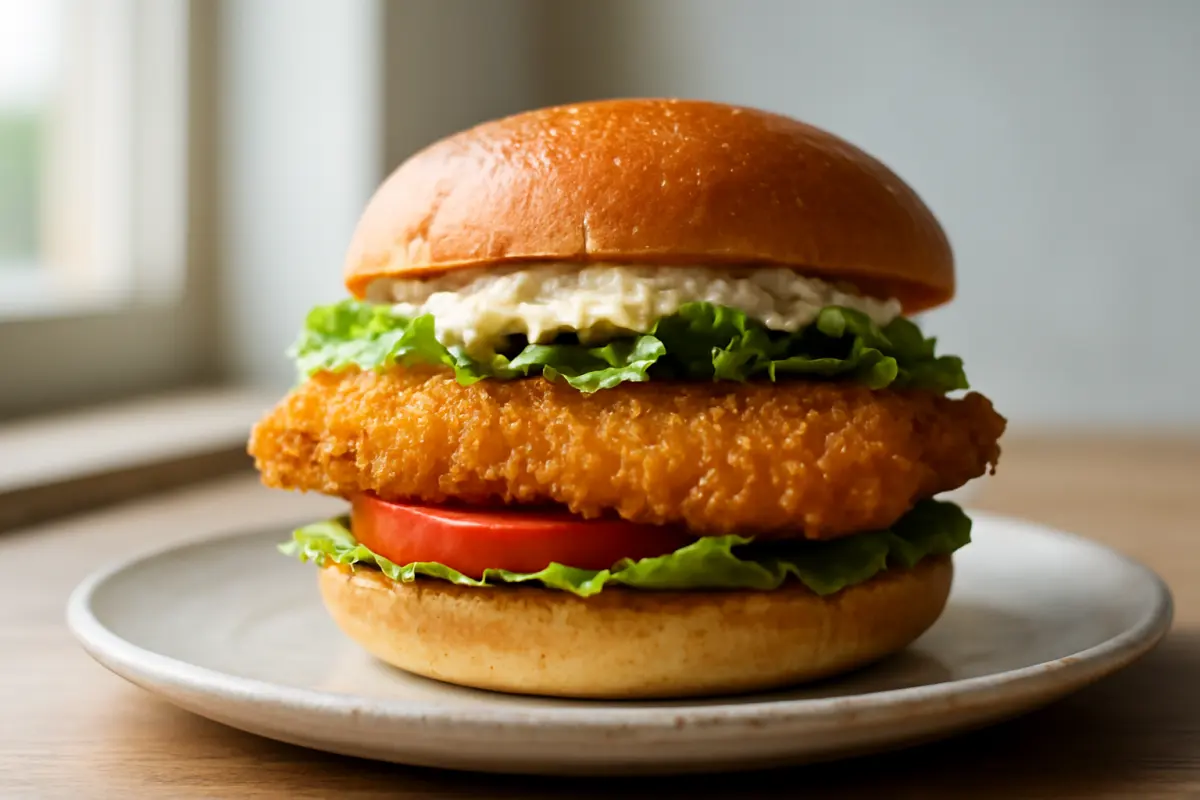
This crispy fish sandwich pairs flaky white fish with a crunchy panko coating, soft toasted buns, creamy tartar sauce, and fresh, crisp toppings. The fish fries quickly and stays tender inside when the fillets are cut evenly and the oil is hot enough.
Overview
This crispy fish sandwich recipe uses mild cod or haddock coated in seasoned flour, egg, and panko breadcrumbs. The fish fries into a deeply golden crust while the center stays moist and flakes easily with a fork.
A quick tartar sauce, toasted buns, shredded lettuce, and sliced pickles balance the rich coating with cool, crunchy texture. Prepare the sauce and toppings before frying so the fish can go straight from the pan to the sandwich.
Ingredients
- 4 skinless cod or haddock fillets, about 5 ounces (140 g) each and ¾ inch thick
- 1 teaspoon kosher salt, divided
- ½ teaspoon freshly ground black pepper, divided
- ½ cup (65 g) all-purpose flour
- 2 large eggs
- 1 tablespoon water
- 1 cup (100 g) panko breadcrumbs
- ½ teaspoon garlic powder
- ½ teaspoon paprika
- ¼ teaspoon cayenne pepper, optional
- ¾ cup (180 ml) mayonnaise
- 2 tablespoons finely chopped dill pickles
- 1 tablespoon pickle juice or fresh lemon juice
- 1 tablespoon finely chopped fresh dill or parsley
- 4 brioche or potato burger buns
- 1 tablespoon softened butter, for toasting the buns
- 2 cups finely shredded green cabbage or iceberg lettuce
- 8 dill pickle slices
- ½ medium lemon, cut into wedges, for serving
- 1½ to 2 cups (360 to 480 ml) neutral oil, such as canola or vegetable oil, for frying
How to make it
Make the tartar sauce. Stir the mayonnaise, chopped pickles, pickle juice or lemon juice, and dill or parsley together in a small bowl. Taste and add a pinch of the measured salt or pepper if needed. Refrigerate while you prepare the fish.
Dry and season the fish. Pat the fillets very dry with paper towels. Moisture on the surface can make the coating slide off and cause the oil to splatter. Season both sides with ½ teaspoon of the salt and ¼ teaspoon of the pepper. If the fillets are very large, cut them to fit the buns before coating.
Set up the coating station. Place the flour in one shallow bowl. Beat the eggs with 1 tablespoon water in a second bowl. In a third bowl, combine the panko, garlic powder, paprika, cayenne if using, the remaining ½ teaspoon salt, and remaining ¼ teaspoon pepper.
Coat the fillets. Dip each piece of fish in flour and turn it to cover all sides. Shake off the excess, dip it into the egg, and let the extra drip back into the bowl. Press the fish firmly into the seasoned panko so the crumbs adhere to every surface, including the edges. Put the coated fillets on a plate and leave them uncovered for 5 minutes; this helps the coating set.
Heat the oil. Pour 1½ to 2 cups oil into a large, heavy skillet so it reaches about ¼ inch up the sides. Heat over medium-high until the oil reaches 350°F (175°C). If you do not have a thermometer, drop in a few panko crumbs; they should sizzle immediately and turn golden in about 30 seconds, not burn at once.
Fry the fish in batches. Carefully lower two fillets into the oil, leaving space between them. Fry for 3 to 4 minutes on the first side, then turn gently with tongs or a fish spatula. Fry for another 2 to 4 minutes, adjusting the heat so the coating stays golden rather than dark brown. The fish is ready when the crust is crisp and the center is opaque and flakes easily; the thickest part should reach 145°F (63°C). Transfer to a wire rack set over a baking sheet. Fry the remaining fillets, bringing the oil back to 350°F between batches.
Toast the buns. While the last fillets cook, spread the cut sides of the buns with softened butter. Toast them cut-side down in a clean skillet over medium heat for 1 to 2 minutes, until lightly golden and warm. You can also toast them in the still-warm frying pan after carefully discarding the oil.
Assemble immediately. Spread tartar sauce over the toasted bun halves. Add cabbage or lettuce, a fried fish fillet, and two pickle slices to each bottom bun. Add another spoonful of sauce if desired, top with the bun, and serve with lemon wedges.
Expert tips
- Keep the fish evenly thick. Thin ends cook before the center. Tuck very thin sections under the fillet or trim them so each piece cooks at roughly the same rate.
- Do not skip drying the fillets. A damp surface makes the flour paste-like instead of giving the coating a crisp, even base.
- Avoid overcrowding the skillet. Too many fillets lower the oil temperature, leading to greasy, pale breading. Cook in two batches for four sandwiches.
- Use a wire rack, not a flat plate. A rack lets steam escape from the underside, preserving the crunch. Paper towels are useful underneath the rack to catch drips.
- If the crust browns before the fish is done, lower the heat. The oil is too hot. If the coating is pale and oily after several minutes, raise the heat slightly and wait for the oil to return to 350°F before continuing.
- Substitute panko with regular breadcrumbs if necessary. Use the same quantity, but expect a finer, slightly less rugged crust. For a gluten-free sandwich, use gluten-free flour, gluten-free panko, and buns labeled gluten-free.
- For a lighter option, bake instead of fry. Place the coated fish on an oiled wire rack over a baking sheet, spray or brush the coating with oil, and bake at 425°F (220°C) for about 15 to 20 minutes, turning once, until crisp and the center reaches 145°F. The crust will not be quite as deep or even as fried breading.
Serving and storage
Serve the sandwiches as soon as they are assembled, while the coating is crisp. They pair well with fries, coleslaw, or a simple green salad. For another fried-fish meal, see this fish and chips recipe.
Store cooked fish separately from the buns and toppings in a shallow airtight container in the refrigerator for up to 2 days. Cool it promptly rather than leaving it at room temperature. Reheat on a wire rack in a 400°F (200°C) oven or air fryer until hot and crisp, usually 6 to 10 minutes depending on thickness. Do not store assembled sandwiches, because the sauce and vegetables soften the coating. Reheat leftovers to 165°F (74°C), and discard fish that has been left unrefrigerated for more than 2 hours.
Frequently asked questions
What is the best fish for a crispy fish sandwich?
Cod and haddock are dependable choices because their mild flavor and firm, flaky texture hold up well to frying. Pollock, hake, or tilapia can also work; choose skinless fillets of similar thickness so they finish at the same time.
Why did the breading fall off my fish?
The fillets may have been wet, the flour or egg layers may have been too thick, or the coating may not have had time to set. Pat the fish dry, shake off excess flour, let excess egg drip away, press in the panko, and rest the coated fish for 5 minutes before frying.
How can I keep the fish sandwich crispy?
Fry at about 350°F (175°C), cook in batches, and drain the fish on a wire rack rather than directly on a plate. Assemble the sandwiches just before serving, and keep wet toppings such as sauce and pickles away from the crust until then.
Can I make the crispy fish ahead of time?
You can coat the fish up to 1 hour ahead and refrigerate it uncovered on a rack or plate, but it is crispiest when fried just before serving. Cooked fish can be refrigerated for up to 2 days and reheated in an oven or air fryer.