Recipes
Hummus Recipes: A Creamy Base Recipe Plus Easy Flavor Variations
Learn how to make smooth, balanced hummus at home, then turn the basic recipe into roasted garlic, roasted red pepper, herb, or spicy hummus with simple additions.
Overview
This flexible hummus recipe makes about 2 cups of creamy dip from canned chickpeas, tahini, lemon juice, garlic, and olive oil. The key to a smooth texture is blending the tahini and lemon first, then processing the chickpeas long enough for the mixture to become creamy rather than grainy.
Use the base as a dip for warm pita, sliced vegetables, or crackers, or spread it into sandwiches and wraps. Once the texture is right, you can keep the seasoning classic or add roasted garlic, roasted red peppers, herbs, or spices.
Ingredients
- 1 can (15 ounces) chickpeas, drained and rinsed
- 1/2 cup tahini, stirred well before measuring
- 1/4 cup fresh lemon juice, from about 2 lemons
- 1 small garlic clove, peeled
- 1/2 teaspoon fine salt, plus more to taste
- 1/4 teaspoon ground cumin
- 3 tablespoons extra-virgin olive oil, plus more for serving
- 1/3 to 1/2 cup ice-cold water, added as needed
- 2 tablespoons chopped fresh parsley, optional, for serving
- 1/4 teaspoon paprika or sumac, optional, for serving
Optional flavor variations
- Roasted garlic hummus: Add 3 to 4 soft roasted garlic cloves and reduce the fresh garlic to 1/2 clove or omit it.
- Roasted red pepper hummus: Add 1/2 cup drained jarred roasted red peppers and use 2 tablespoons of water to start.
- Herb hummus: Add 1/4 cup packed parsley, cilantro, or a mixture of soft herbs.
- Spicy hummus: Add 1/2 teaspoon smoked paprika, 1/4 teaspoon cayenne, or 1 tablespoon harissa.
- Extra-lemon hummus: Add 1 tablespoon more lemon juice after blending if you prefer a sharper dip.
How to make it
Prepare the chickpeas. Drain and rinse the chickpeas under cool running water. Pick out any loose skins if you want an especially smooth result, though removing every skin is not necessary. Shake off excess water.
Blend the tahini mixture. Add the tahini, lemon juice, garlic, salt, and cumin to a food processor. Process for 30 to 45 seconds, stopping once to scrape down the bowl. The mixture may become thick and slightly grainy at first; that is normal.
Add cold water gradually. With the processor running, pour in 1/3 cup ice-cold water in a thin stream. Blend for another 30 seconds. The tahini should loosen into a pale, smooth sauce. Add another tablespoon or two of water if it still looks stiff.
Process the chickpeas. Add the chickpeas and process for 1 minute. Scrape down the sides, then blend for 2 to 3 minutes more. The hummus is ready when it looks smooth and thick enough to hold soft ridges from a spoon. If it remains dense or gritty, add cold water 1 tablespoon at a time and keep blending.
Add the olive oil. Pour in 2 tablespoons of olive oil and process for 20 to 30 seconds. Taste the hummus. Add more salt for a flat flavor, lemon juice for brightness, cumin for warmth, or water if the dip is difficult to spread.
Adjust the texture. For a dip that holds its shape, stop when the hummus is thick but spreadable. For a softer, silkier consistency, blend in water 1 tablespoon at a time. The hummus will firm slightly when chilled, so avoid making it overly thick before refrigeration.
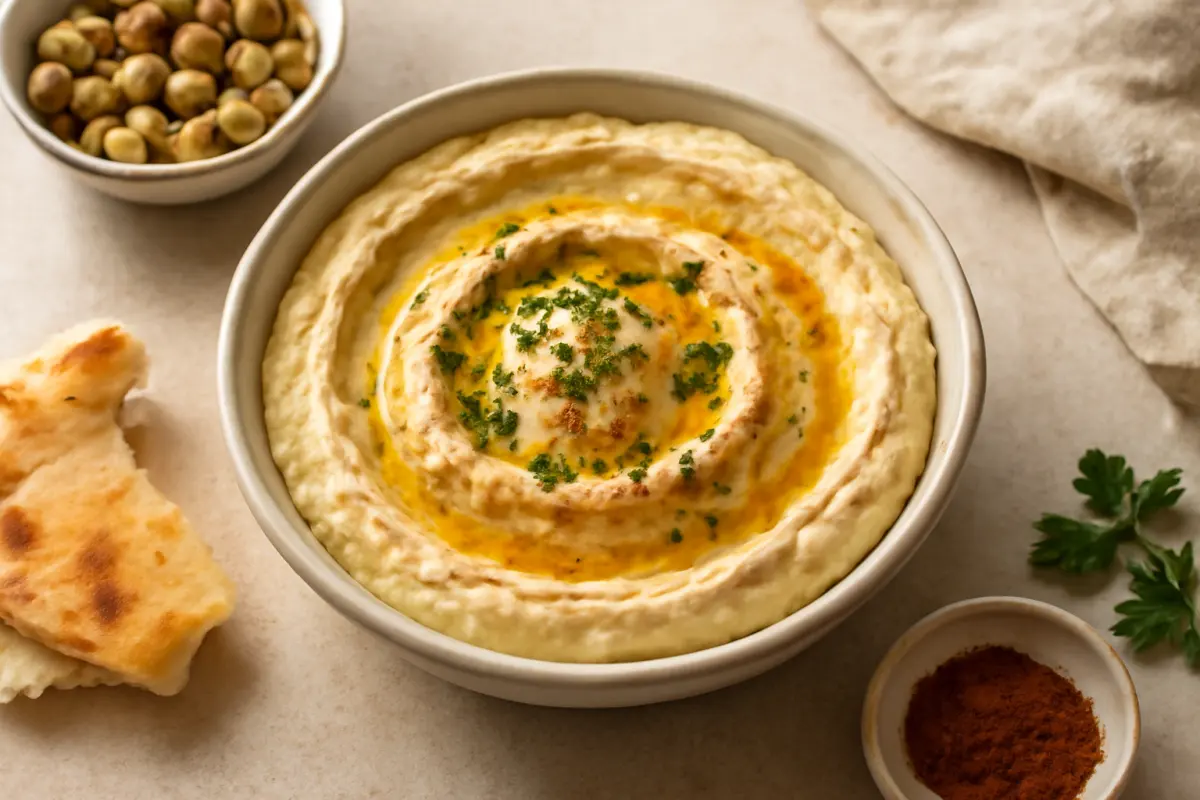
Serve. Spoon the hummus into a shallow bowl and make a wide swirl with the back of a spoon. Drizzle with the remaining 1 tablespoon olive oil and finish with parsley, paprika, or sumac. Serve immediately with pita, flatbread, cucumbers, carrots, peppers, or toasted bread.
Make a variation. Add any optional flavor ingredients during the final 30 to 60 seconds of blending. Taste again after adding them because roasted vegetables, herbs, and spicy pastes vary in salt and intensity.
Expert tips
- For smoother hummus, use very tender chickpeas. Canned chickpeas work well, but simmering them in water for 10 to 15 minutes until they are soft enough to crush easily between your fingers can improve the texture. Cool and drain them before blending.
- Do not add all the water at once. The amount needed depends on how thick the tahini is and how well the chickpeas were drained.
- Tahini can separate in the jar. Stir it thoroughly from the bottom before measuring so the hummus does not turn oily or uneven.
- A bitter taste usually comes from the tahini or too much raw garlic. Add more chickpeas, lemon juice, and a little water to rebalance it. Do not try to cover strong bitterness with a large amount of oil.
- If the hummus tastes dull, adjust in small steps. Add 1/8 teaspoon salt or 1 teaspoon lemon juice, blend, and taste before adding more.
- If your food processor is small, work in batches. A crowded bowl may leave the chickpeas under-blended and make the motor struggle.
- For a chunkier hummus, blend for less time. Stop when the dip is mostly smooth but still has small chickpea pieces, then stir in any herbs or toppings by hand.
- For dried chickpeas, soak 1 cup overnight, drain, and simmer in fresh water until very tender, usually 60 to 90 minutes. The cooked yield varies, so measure 1 1/2 cups cooked chickpeas for this recipe and reserve a little cooking water for thinning.
Serving and storage
Serve hummus at cool room temperature for the best flavor and easiest spreading. If it has been refrigerated, let it sit for 15 to 20 minutes, then stir in a teaspoon or two of cold water if it has thickened.
Store hummus in an airtight container in the refrigerator and use it within 4 days. Keep the serving bowl chilled when serving it outdoors or in a warm room, and discard hummus that has been left at room temperature for more than 2 hours, or more than 1 hour in very hot conditions. Stir before serving and add fresh toppings just before eating.
Frequently asked questions
Why is my homemade hummus grainy?
The chickpeas may not be tender enough, or the hummus may need more blending. Process it for another 2 to 3 minutes, adding cold water 1 tablespoon at a time. For future batches, simmer canned chickpeas for 10 to 15 minutes until they crush easily before blending.
Can I make hummus without tahini?
Yes. Replace the tahini with 2 tablespoons extra-virgin olive oil and 2 tablespoons plain Greek yogurt, or use 3 to 4 tablespoons olive oil for a tahini-free version. The flavor will be less nutty and the texture may be slightly lighter.
How do I make hummus less bitter?
Strong tahini or too much raw garlic can create bitterness. Blend in a few more chickpeas, then adjust with lemon juice, water, and salt. Add the seasonings gradually so the flavor stays balanced.
Can I use dried chickpeas instead of canned?
Yes. Soak 1 cup dried chickpeas overnight, drain, and simmer them in fresh water for 60 to 90 minutes, or until very soft. Drain and measure 1 1/2 cups cooked chickpeas for the recipe; reserve some cooking water for thinning.
How long does homemade hummus last?
Keep it covered in the refrigerator and use it within 4 days. Stir it before serving, and do not leave it at room temperature for more than 2 hours, or more than 1 hour in very hot conditions.