Recipes
Gobi Paratha Recipe
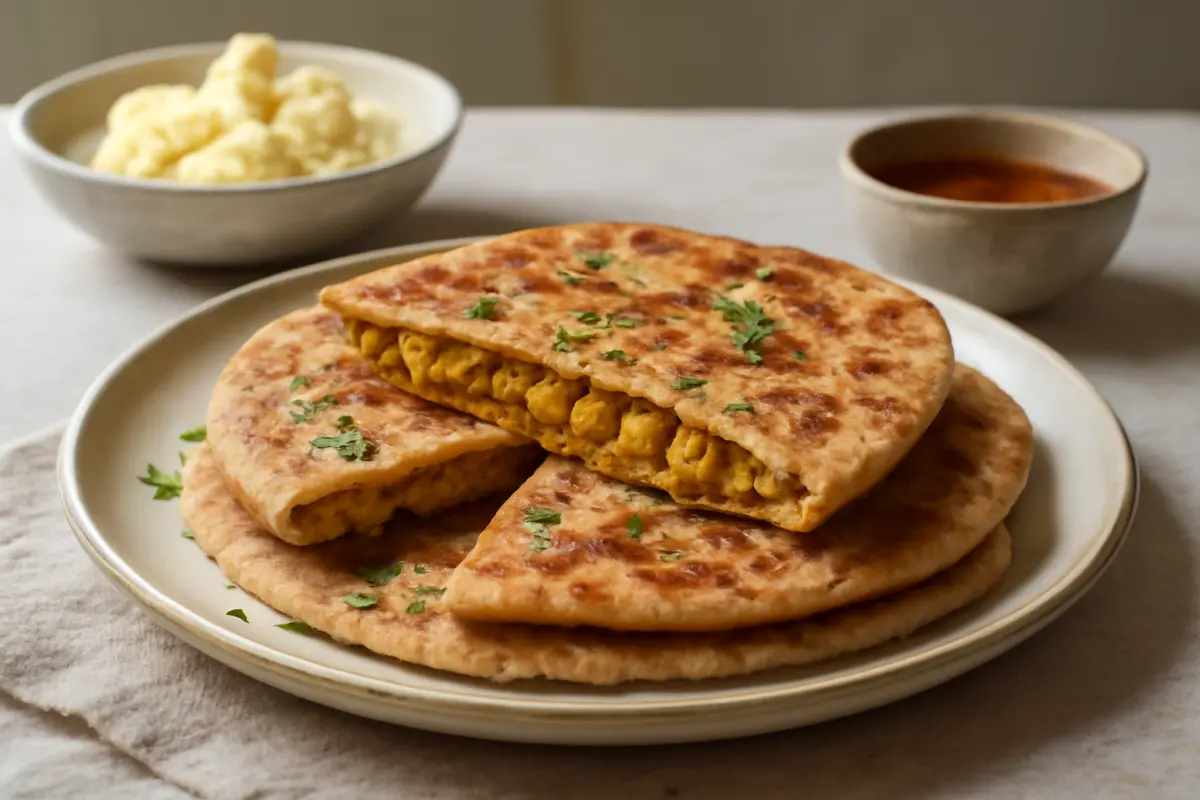
This gobi paratha recipe makes six crisp-edged, tender flatbreads filled with finely grated cauliflower, ginger, green chile, and warm spices. The filling is cooked until dry so the parathas roll without tearing or turning soggy.
Overview
Gobi paratha is a North Indian flatbread filled with seasoned cauliflower. The key to an easy-to-roll paratha is a filling that is finely chopped, well seasoned, and completely dry before it goes into the dough.
This method makes six parathas with tender layers and lightly crisp, browned surfaces. Serve them hot with yogurt, pickle, or a fresh chutney. If you enjoy stuffed flatbreads, the shaping method is similar to this aloo paratha recipe, while cauliflower also works nicely as part of a vegetable-forward meal alongside aloo gobi.
Ingredients
- 300 g (about 2½ cups) whole-wheat flour, plus extra for rolling
- ¾ teaspoon fine salt, divided
- 2 tablespoons neutral oil or melted ghee, divided
- 170 ml warm water, plus up to 2 tablespoons more if needed
- 400 g cauliflower florets, trimmed
- 1 tablespoon finely grated fresh ginger
- 1 green chile, finely chopped; remove the seeds for less heat
- 2 tablespoons finely chopped fresh cilantro
- 1 teaspoon ground coriander
- ½ teaspoon ground cumin
- ½ teaspoon Kashmiri chilli powder or mild paprika
- ¼ teaspoon garam masala
- ¼ teaspoon ajwain, lightly crushed between your fingers
- 1 teaspoon lemon juice
- 2 tablespoons ghee or neutral oil, for cooking
How to make it
Mix and rest the dough. Add the flour and ½ teaspoon of the salt to a bowl. Stir in 1 tablespoon of the oil or ghee, then add 170 ml warm water gradually, mixing until a shaggy dough forms. Knead for 6–8 minutes, until smooth and soft. The dough should feel supple and slightly tacky but should not cling heavily to your fingers. Add the remaining water 1 teaspoon at a time only if dry patches remain. Rub the remaining 1 tablespoon oil over the dough, cover, and rest for 20–30 minutes.
Prepare the cauliflower. Rinse the florets and dry them thoroughly. Pulse them in a food processor in short bursts until they resemble fine couscous. Do not blend them into a paste. Alternatively, grate the florets using the large holes of a box grater. Excess water makes the filling difficult to seal, so pat the grated cauliflower dry with a clean towel if it feels wet.
Cook the filling. Heat 1 tablespoon of the cooking ghee or oil in a wide skillet over medium heat. Add the cauliflower, remaining ¼ teaspoon salt, ginger, green chile, coriander, cumin, chilli powder, garam masala, and ajwain. Cook for 7–10 minutes, stirring often, until the cauliflower is tender and no visible moisture remains in the pan. It should be crumbly rather than glossy or wet.
Finish and cool the filling. Turn off the heat and stir in the cilantro and lemon juice. Spread the mixture on a plate in a thin layer and let it cool completely. Warm filling can soften the dough and cause the stuffed parathas to split. Taste once cool and adjust the salt or lemon if needed.
Divide the dough and filling. Knead the rested dough briefly, then divide it into 6 equal pieces. Divide the cooled cauliflower filling into 6 portions. Keep both covered with a cloth while you work so the dough does not dry out.
Fill one portion. Roll one dough piece into a smooth ball and flatten it. Dust lightly with flour and roll it into a 12 cm (5-inch) circle, leaving the center slightly thicker than the edges. Place one portion of filling in the middle, leaving about 2 cm around the rim. Bring the edges up over the filling, pinch them together firmly, and flatten the sealed ball.
Roll the paratha. Dust the filled dough lightly with flour and roll gently from the center outward, turning it a quarter turn after every few strokes. Aim for a 16–18 cm (6½–7-inch) round about 3–4 mm thick. If a small crack appears, dust it with flour and press it closed rather than forcing the rolling pin over it. Avoid using excess flour, which can burn in the pan.
Cook until browned and cooked through. Heat a heavy skillet or tawa over medium-high heat. Place the rolled paratha on the dry pan. Cook for 30–45 seconds, until the top changes from shiny to matte and small bubbles appear. Flip it, brush the cooked side with a little ghee or oil, and cook for 45–60 seconds. Flip again, brush the second side, and press gently around the edges with a spatula. Cook for another 30–60 seconds per side, turning as needed, until both sides have golden-brown spots and the center feels dry and flexible rather than doughy. Repeat with the remaining dough and filling.
Keep them tender. Stack the cooked parathas in a clean tea towel or an insulated container. Resting them covered for a few minutes lets the steam soften the layers without making the surface soggy.
Expert tips
- Keep the filling dry: If the cauliflower releases water, continue cooking until the skillet looks dry. A wet filling is the most common cause of torn parathas.
- Cool before stuffing: Spread the filling out rather than leaving it in a hot pile. It will cool faster and remain crumbly.
- Roll gently: Pressing hard near the sealed edge can push filling through the dough. Use short strokes and turn the paratha often.
- Control the heat: If the surface darkens before the center cooks, reduce the heat to medium. If the paratha stays pale and greasy, increase the heat slightly.
- Substitutions: Use finely chopped spring onion in place of some of the cilantro, or replace the green chile with ¼ teaspoon extra mild chilli powder. Whole-wheat flour can be replaced with atta if available; plain flour is not a direct substitute because it produces a different dough and texture.
- If the dough tears: Patch a hole with a small piece of dough, dust lightly, and roll over it gently. Do not add wet filling to the exposed area.
Serving and storage
Serve gobi paratha hot with plain yogurt, mango pickle, or mint chutney. A small knob of butter or ghee can be brushed over each one just before serving.
Cool leftovers completely, then refrigerate them in an airtight container for up to 3 days. Separate them with parchment if stacking. Reheat in a dry skillet over medium heat until hot and flexible, or warm them in a covered skillet with a few drops of water. For longer storage, freeze cooled parathas with parchment between them for up to 2 months; reheat from frozen in a covered skillet, turning occasionally, until heated through.
Frequently asked questions
Why does my gobi paratha filling make the dough tear?
The filling is usually too wet, too warm, or too coarsely chopped. Cook the grated cauliflower until the pan is dry, cool it completely, and pulse or grate it finely before stuffing the dough.
Can I make gobi paratha without a food processor?
Yes. Grate the cauliflower on the large holes of a box grater, then chop any long strands with a knife. Fine, even pieces are easier to seal and roll.
How do I know when gobi paratha is cooked?
Both sides should have scattered golden-brown spots, the edges should look set, and the center should feel flexible and dry rather than soft or doughy when pressed with a spatula.
Can I prepare the filling ahead of time?
Yes. Cook the filling, cool it promptly, and refrigerate it in an airtight container for up to 2 days. Bring it close to room temperature before stuffing so it does not chill and stiffen the dough.