Recipes
Homemade Blueberry Pancakes Recipe
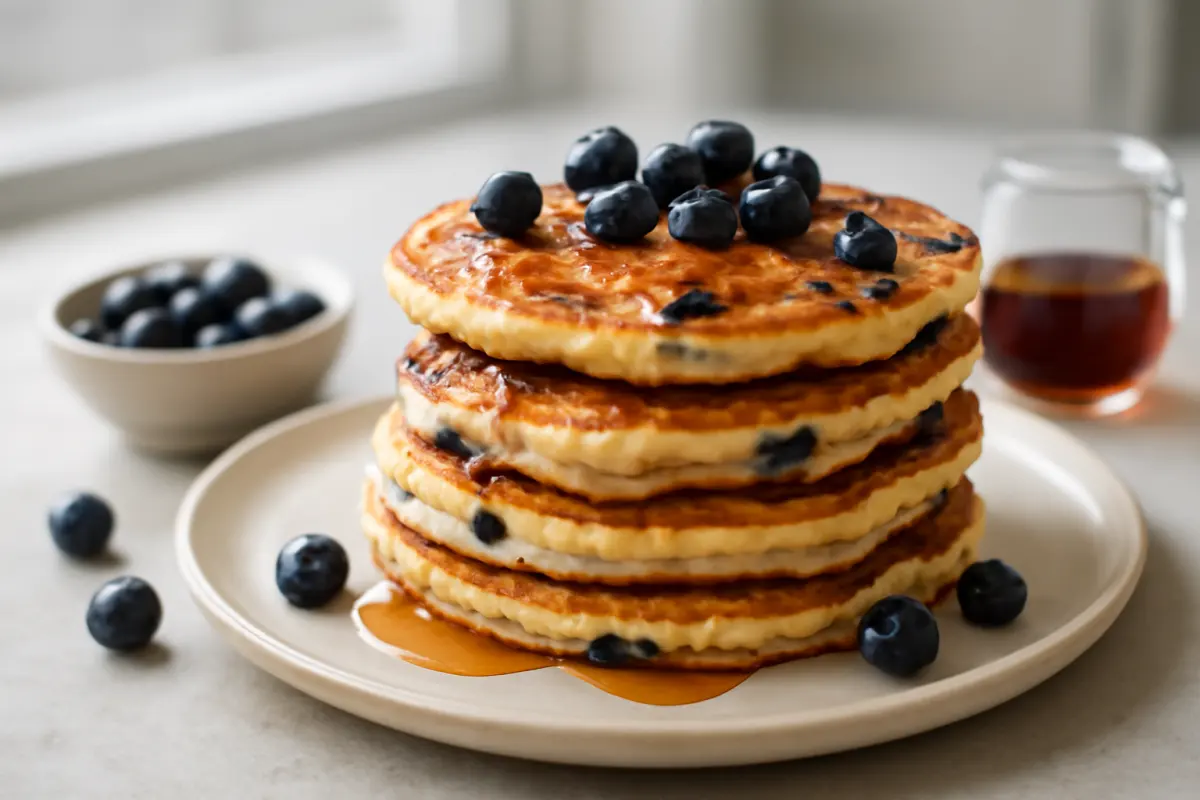
These homemade blueberry pancakes are fluffy in the center, lightly crisp at the edges, and packed with juicy blueberries. The batter comes together quickly, and the method includes clear cues for cooking each pancake without burning the berries.
Overview
These homemade blueberry pancakes are soft and tender inside, lightly golden around the edges, and filled with warm, juicy blueberries. A little melted butter adds richness, while buttermilk gives the pancakes a gentle tang and helps keep the crumb light.
The recipe makes about 10 medium pancakes, enough for 3 to 4 people. Fresh or frozen blueberries work well; frozen berries can go straight into the batter, so there is no need to thaw them first.
Ingredients
- 2 cups (250 g) all-purpose flour
- 2 tablespoons granulated sugar
- 2 teaspoons baking powder
- 1/2 teaspoon baking soda
- 1/2 teaspoon fine salt
- 2 large eggs
- 1 3/4 cups (420 ml) buttermilk
- 4 tablespoons (56 g) unsalted butter, melted and cooled slightly, plus more for the pan
- 1 teaspoon vanilla extract
- 1 cup (150 g) fresh or frozen blueberries
- Maple syrup, for serving
How to make it
Prepare the batter. In a large bowl, whisk together the flour, sugar, baking powder, baking soda, and salt. In a second bowl or large measuring jug, whisk the eggs, buttermilk, melted butter, and vanilla until smooth.
Combine the wet and dry ingredients. Pour the buttermilk mixture into the flour mixture. Stir with a whisk or spatula just until no large dry patches remain. A few small lumps are fine; overmixing can make the pancakes dense and chewy.
Add the blueberries. Gently fold in the blueberries. If using frozen berries, add them while still frozen and fold only a few times to limit streaking in the batter.
Heat the pan. Place a large nonstick skillet or griddle over medium heat. Let it heat for about 3 minutes, then lightly grease it with butter. The pan is ready when a small drop of batter sizzles gently on contact without browning immediately. If the butter turns dark as soon as it hits the pan, reduce the heat.
Cook the first side. Scoop about 1/4 cup of batter for each pancake, leaving space between them. Cook for 2 to 3 minutes, until the edges look set, the surface is covered with bubbles, and the bubbles near the center begin to stay open. If blueberries are exposed on the surface, they may release some juice; that is normal.
Flip and finish. Slide a wide spatula fully under each pancake and turn it over in one confident motion. Cook for 1 to 2 minutes more, until the second side is golden and the center springs back lightly when pressed. A fully cooked pancake should not look wet or glossy along the sides.
Repeat. Lightly grease the pan again as needed and continue with the remaining batter. Adjust the heat between batches: lower it if the outside browns before the center cooks, or raise it slightly if the pancakes remain pale after several minutes.
Serve. Serve the pancakes immediately with maple syrup and extra blueberries if desired. For another berry topping, spoon over a little homemade berry jam.
Expert tips
- Do not press the pancakes after flipping. Pressing pushes out the steam that helps keep them fluffy.
- Use a consistent scoop. A 1/4-cup measure produces evenly sized pancakes that finish cooking at about the same time.
- Avoid a purple batter. Frozen blueberries can tint the mixture if stirred too vigorously. Fold them in at the end, and do not thaw them first.
- For a buttermilk substitute, combine 1 3/4 cups milk with 1 tablespoon lemon juice or white vinegar. Let it stand for 5 minutes before using. The flavor will be slightly less tangy but the pancakes will still work.
- For dairy-free pancakes, use an unsweetened plant-based milk mixed with 1 tablespoon lemon juice or vinegar, and replace the melted butter with a neutral oil such as canola oil.
- If the batter seems unusually thick, add 1 tablespoon of buttermilk at a time until it slowly flows from the spoon. Flour absorbs liquid differently, so a small adjustment is normal.
- If the pancakes brown too quickly, the pan is too hot. Lower the heat and give the skillet a minute to cool before cooking the next batch.
- If they spread thinly, the batter may have been overmixed or the pan may not be hot enough. Let the mixed batter rest for 5 minutes, then cook on a properly preheated surface.
Serving and storage
Serve the pancakes hot with maple syrup, butter, yogurt, or additional berries. Keep finished pancakes warm for up to 20 minutes in a 200°F (95°C) oven, arranged in a single layer on a baking sheet so they do not steam and soften.
Cool leftovers completely, then refrigerate them in an airtight container for up to 3 days. Reheat in a toaster, toaster oven, or skillet until hot throughout. To freeze them, place cooled pancakes in a single layer until firm, then transfer them to a freezer-safe bag or container for up to 2 months. Reheat from frozen in a toaster or toaster oven, or warm them in a covered skillet over low heat.
Frequently asked questions
Can I use frozen blueberries in homemade pancakes?
Yes. Add frozen blueberries directly to the batter without thawing them. Fold them in gently at the end to reduce bleeding, and expect the pancakes to need roughly 30 seconds more cooking time per side.
Why are my blueberry pancakes raw in the middle?
The pan is likely too hot, so the outside browns before the center sets, or the pancakes may be too large. Lower the heat to medium-low and use about 1/4 cup of batter per pancake. Wait until the bubbles remain open and the edges look set before flipping.
Can I make the pancake batter ahead of time?
For the best texture, cook the batter soon after mixing because the leavening begins working once it meets the buttermilk. You can mix the dry and wet ingredients separately several hours ahead, refrigerate them, and combine them just before cooking.
How do I keep pancakes warm without making them soggy?
Place cooked pancakes in a single layer on a baking sheet in a 200°F (95°C) oven for up to 20 minutes. Avoid stacking them tightly or covering them with foil, which traps steam against the surface.