Recipes
Honey Sesame Roasted Carrots Recipe
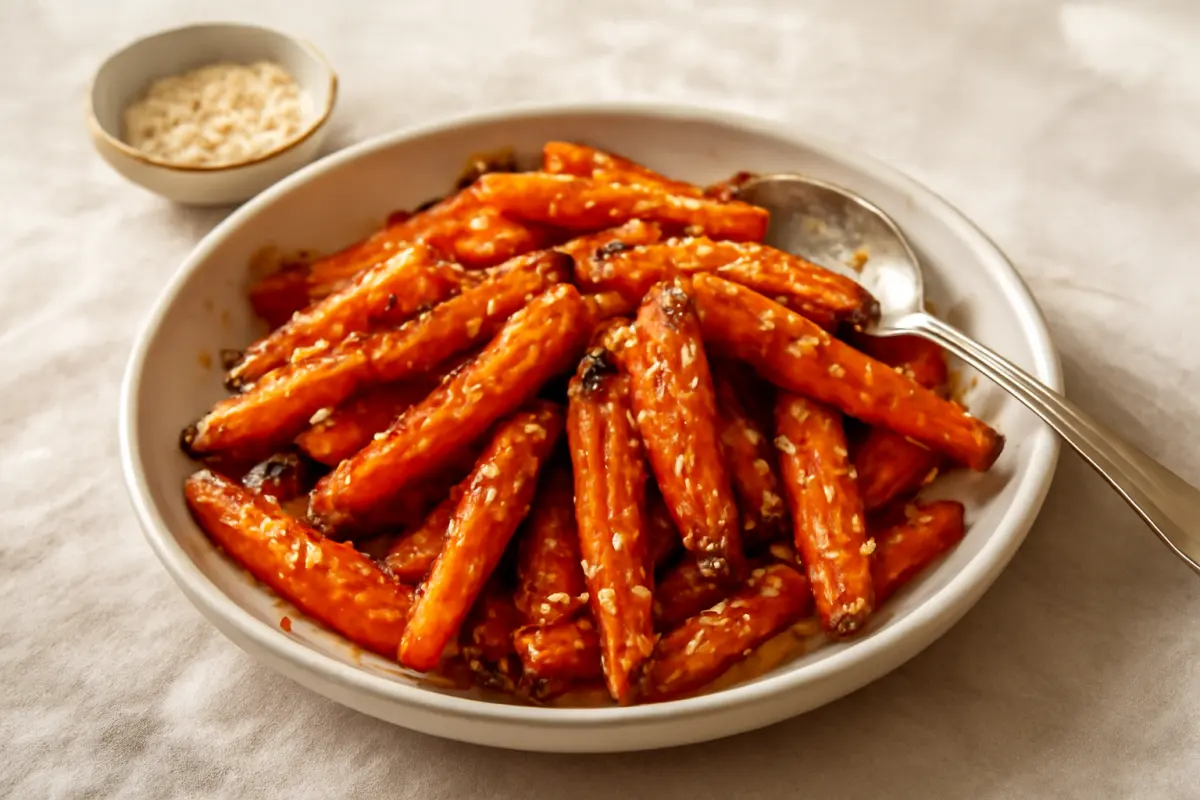
These honey sesame roasted carrots are tender inside, caramelized at the edges, and finished with a glossy honey-sesame glaze. They make an easy side dish for weeknight dinners, holidays, or grain bowls.
Overview
These honey sesame roasted carrots are tender in the center with browned, caramelized edges and a lightly sticky glaze. Honey adds sweetness, while toasted sesame oil, sesame seeds, and a little soy sauce keep the flavor savory and balanced.
Cut the carrots into evenly sized pieces so they finish at the same time. The honey glaze goes on partway through roasting rather than at the beginning, which helps it cling to the carrots without scorching.
Ingredients
- 1 1/2 pounds carrots, peeled if desired and cut into 2-inch pieces; halve thick carrots lengthwise
- 1 tablespoon neutral oil, such as avocado, canola, or grapeseed oil
- 1/2 teaspoon kosher salt, plus more to taste
- 1/4 teaspoon freshly ground black pepper
- 2 tablespoons honey
- 1 tablespoon low-sodium soy sauce or tamari
- 1 teaspoon toasted sesame oil
- 1 small garlic clove, finely grated or minced
- 1 teaspoon finely grated fresh ginger, optional
- 1 tablespoon sesame seeds, preferably toasted
- 1 scallion, thinly sliced, optional for serving
How to make it
Heat the oven and prepare the pan. Position a rack in the center of the oven and heat it to 425°F. Line a large, rimmed baking sheet with parchment for easier cleanup, if desired. Use a pan large enough to hold the carrots in one layer with a little space between pieces; crowding will make them steam instead of brown.
Season the carrots. Add the carrots to the baking sheet and toss with the neutral oil, kosher salt, and black pepper. Spread them cut-side down where possible. Roast for 20 minutes, or until the carrots are beginning to soften and the bottoms have developed light brown patches.
Mix the glaze. While the carrots roast, stir the honey, soy sauce, sesame oil, garlic, and ginger, if using, in a small bowl. If the honey is thick, warm the bowl briefly in a pan of warm water or microwave it for about 5 seconds so the glaze is easy to whisk. Do not make it hot.
Glaze the carrots. Remove the baking sheet from the oven. Drizzle the glaze over the carrots and toss carefully with a spatula until each piece is coated. Return the carrots to the oven and roast for 8 to 12 minutes more, turning once halfway through, until they are glossy, browned at the edges, and tender when pierced with a fork. The glaze should look sticky rather than watery, but it should not be blackened.
Finish and serve. Sprinkle the hot carrots with the sesame seeds and sliced scallion, if using. Taste one carrot and add a small pinch of salt if needed. Serve immediately while the edges are caramelized and the glaze is still glossy.
Expert tips
- Choose similar-sized carrots. Very thick pieces can stay firm while thin pieces soften too quickly. Cut large carrots into lengthwise halves or quarters so the pieces are close in size.
- Keep the carrots in one layer. If they touch in a crowded pan, use two baking sheets. Rotate the pans between oven racks halfway through the initial roast.
- Add the honey later. Honey can darken quickly at high heat. Applying it after the carrots have started roasting gives you caramelized edges without an overly bitter glaze.
- Toast the sesame seeds for more flavor. Place them in a dry skillet over medium-low heat for 2 to 4 minutes, stirring often, until pale golden and fragrant. Transfer them to a plate immediately so they do not continue cooking in the hot pan.
- For a vegan version, replace the honey with an equal amount of maple syrup. The glaze may brown a little differently, so begin checking the carrots after 7 minutes.
- For a gluten-free version, use certified gluten-free tamari instead of regular soy sauce.
- If the carrots are browning before they are tender, loosely cover the pan with foil and continue roasting until a fork slides into the thickest piece. Uncover for the final 2 to 3 minutes to restore some surface color.
- If the finished carrots taste too sweet, add a few drops of rice vinegar or lemon juice and a pinch of salt before serving. Stir the acid into the glaze on the pan or toss it with the hot carrots.
Serving and storage
Serve these carrots as a side dish with roasted chicken, pork, fish, tofu, or a bowl of rice and greens. They also pair well with another roasted vegetable, such as roasted asparagus with Parmesan, or with the sweet-savory flavors of honey mustard chicken thighs.
Refrigerate leftovers in a covered container within 2 hours of cooking and use them within 3 to 4 days. Reheat on a baking sheet at 375°F until hot, about 8 to 12 minutes, or warm them in a skillet over medium heat with a splash of water. The carrots can be eaten cold or at room temperature, but the glaze will be less glossy after chilling. Do not leave leftovers at room temperature for extended periods.
Frequently asked questions
Can I use baby carrots for this recipe?
Yes. Use about 1 1/2 pounds of baby carrots and leave small ones whole, halving any thick pieces lengthwise. Begin checking them after the initial 20-minute roast because small carrots may finish sooner.
Can I make honey sesame roasted carrots ahead of time?
Roast the carrots through the first 20 minutes, cool them, and refrigerate them in a covered container for up to 1 day. Toss with the glaze and roast at 425°F for 10 to 15 minutes, until hot, tender, and browned at the edges.
Why did my glaze burn?
The baking sheet may have been too hot, the carrots may have been left under the broiler, or the glaze may have roasted too long. Apply the honey mixture only after the first roast, check it after 8 minutes, and remove the carrots when the glaze is amber and sticky rather than dark brown.
Can I make the carrots without soy sauce?
Yes. Replace the soy sauce with 1 teaspoon of salt-free rice vinegar plus an extra pinch of salt, or use 1 tablespoon of coconut aminos for a soy-free alternative. Taste before adding more salt because coconut aminos vary in saltiness.