Kitchen Guides
How to Cook Hummus: A Smooth, Creamy Homemade Method
Hummus is not cooked after it is blended, but the chickpeas must be tender enough to create a smooth dip. This method uses canned chickpeas for convenience, with clear options for cooking dried chickpeas and fixing hummus that is too thick, bitter, or grainy.
Overview
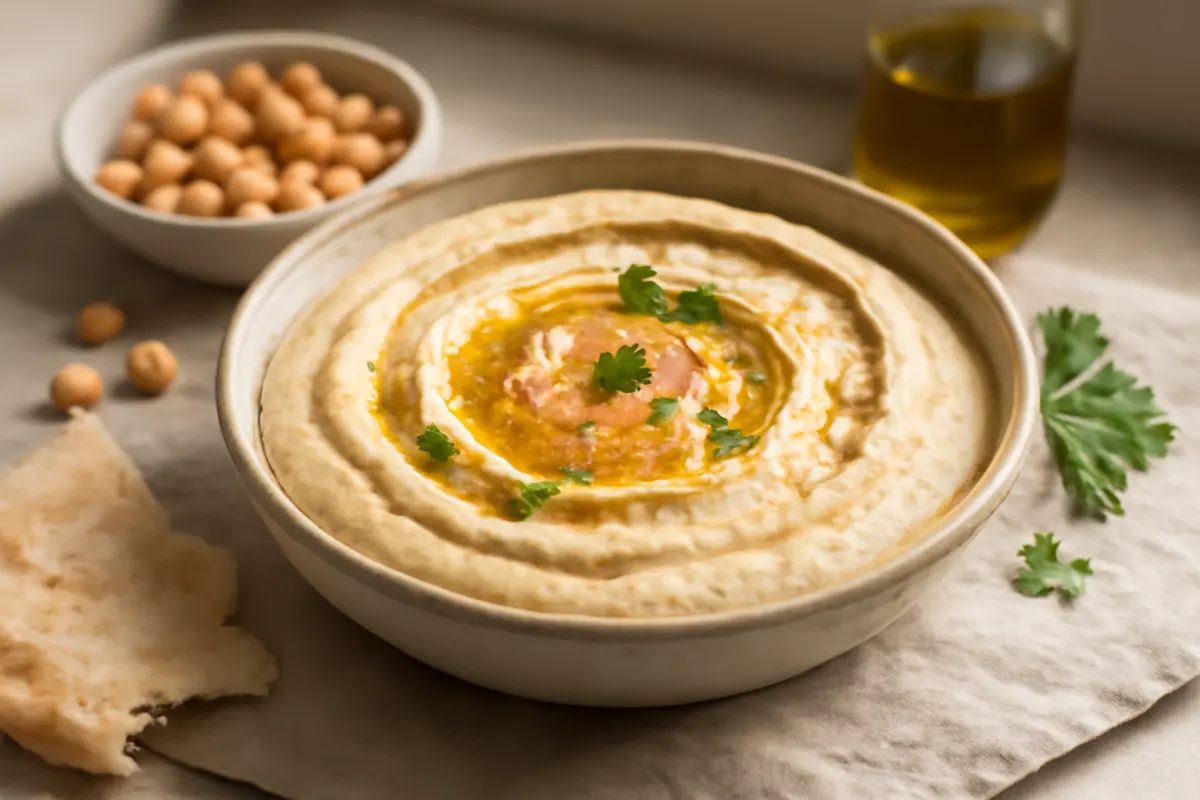
Hummus is made by blending cooked chickpeas with tahini, lemon juice, garlic, salt, and water until creamy. The finished dip does not need to be baked or simmered; the most important cooking step is making sure the chickpeas are very tender before blending.
For the smoothest texture, simmer canned chickpeas briefly with a little baking soda, then blend them while they are warm. Serve the hummus with olive oil, paprika, herbs, warm pita, sliced vegetables, or as a spread in sandwiches and wraps.
Ingredients
- 2 cans (15 ounces each) chickpeas, about 3 cups drained, rinsed, and drained again
- 1/2 teaspoon baking soda, for simmering the chickpeas
- 1/2 cup tahini, stirred well before measuring
- 1/3 cup fresh lemon juice, from about 2 large lemons
- 1 small garlic clove, peeled
- 1 teaspoon fine salt, plus more to taste
- 1/2 teaspoon ground cumin
- 1/2 cup ice-cold water, plus 1 to 3 tablespoons more if needed
- 2 tablespoons extra-virgin olive oil, plus more for serving
- 1 tablespoon chopped fresh parsley, optional
- 1/4 teaspoon paprika, optional for serving
How to make it
Prepare the chickpeas. Drain and rinse the chickpeas under cool running water. Add them to a medium saucepan with the baking soda and enough water to cover them by about 1 inch. Bring the water to a boil, then reduce the heat and simmer for 15 to 20 minutes, until the chickpeas are very soft. A chickpea should mash easily between your fingers or against the side of the pan.
Drain thoroughly. Drain the chickpeas in a colander and rinse away any loose skins and baking soda. Let them drain for a minute or two. The chickpeas can remain warm; warm chickpeas usually blend more smoothly than cold ones.
Blend the lemon, garlic, and tahini. Add the lemon juice and garlic to a food processor. Process for about 30 seconds. Add the tahini, salt, and cumin, then process for 1 minute. Scrape down the bowl if needed. The mixture may become thick or look slightly curdled at this stage, which is normal.
Add cold water. With the food processor running, slowly pour in 1/2 cup ice-cold water. Process for another 30 to 60 seconds, until the tahini mixture is pale, loose, and creamy. Adding the water before the chickpeas helps prevent a dense final texture.
Blend in the chickpeas. Add the warm chickpeas and olive oil. Process for 2 to 3 minutes, stopping once or twice to scrape the sides and check the texture. The hummus should be thick enough to hold a shallow swirl but soft enough to spread easily. If it is stiff or grainy, add cold water 1 tablespoon at a time and process for another 30 seconds after each addition.
Taste and adjust. Taste the hummus with a clean spoon. Add more salt for a flat flavor, lemon juice for brightness, or a little water for a softer texture. Blend for another 30 seconds after each adjustment so the flavor and consistency even out.
Serve. Spoon the hummus into a shallow bowl. Use the back of a spoon to make a wide swirl, then drizzle with olive oil. Sprinkle with paprika and parsley if using. Serve immediately with pita, flatbread, cucumbers, carrots, bell peppers, or crackers.
Using dried chickpeas
For a batch made from dried chickpeas, soak 1 cup dried chickpeas in plenty of water for 8 to 12 hours. Drain, cover with fresh water, and simmer for 60 to 90 minutes, or until the chickpeas are extremely tender and their skins are beginning to split. Drain and use about 3 cups of the cooked chickpeas in the recipe. Cooking time varies with the age of the beans, so use tenderness rather than the clock as the doneness test.
Expert tips
- Do not skip the extra simmer. Canned chickpeas are ready to eat, but simmering them with baking soda softens their skins and makes the finished hummus smoother.
- Use well-stirred tahini. Oil often separates in the jar. Stir from the bottom until the tahini is uniform before measuring; thick, unmixed tahini can make the hummus heavy or bitter.
- Add water gradually. The amount needed varies with the thickness of the tahini and the moisture in the chickpeas. Add it slowly rather than trying to correct an overly loose hummus.
- For a milder garlic flavor, use half a small clove or replace the raw garlic with 1/4 teaspoon garlic powder. Raw garlic becomes more noticeable as hummus rests.
- If the hummus tastes bitter, add 1 to 2 tablespoons more lemon juice and a pinch of salt, then blend again. Very bitter tahini may be the cause, so changing the balance will only partly correct it.
- If the hummus is grainy, keep processing before adding more liquid. If it remains grainy, blend in cold water 1 tablespoon at a time. Under-cooked chickpeas are difficult to fully smooth.
- If it is too thin, blend in a few more chickpeas or 1 tablespoon tahini at a time. Chill it for 30 minutes as well; hummus firms slightly when cold.
Serving and storage
Serve hummus at room temperature or slightly cool. If it has been refrigerated, let it sit for 10 to 15 minutes and stir before serving; the texture will loosen as it warms.
Store hummus in an airtight container in the refrigerator and use it within 4 to 5 days. Keep it chilled rather than leaving it at room temperature for extended periods. A thin film of olive oil on top can help limit surface drying, but it is not a substitute for refrigeration. Hummus can also be frozen in a sealed container for up to 3 months. Thaw it in the refrigerator, stir thoroughly, and add a teaspoon or two of water or olive oil if the texture seems stiff.
Frequently asked questions
Is hummus cooked or blended?
Hummus is blended rather than cooked after it is assembled. The chickpeas must be cooked first, and simmering canned chickpeas for 15 to 20 minutes makes them soft enough for a smoother dip.
Can I make hummus with canned chickpeas?
Yes. Canned chickpeas are convenient and work well. Drain and rinse them, then simmer them with 1/2 teaspoon baking soda until very soft before blending.
Why is my homemade hummus grainy?
The chickpeas may not be soft enough, or the mixture may need more processing. Blend longer, then add cold water 1 tablespoon at a time. For consistently smooth hummus, simmer the chickpeas before blending.
How can I make hummus without tahini?
You can replace the tahini with 2 to 3 tablespoons of smooth peanut butter, sunflower seed butter, or additional olive oil, although the flavor will be different. For a tahini-free hummus, start with less substitute and adjust after blending.
How long does homemade hummus last?
Keep homemade hummus covered in the refrigerator and use it within 4 to 5 days. Discard it if it develops an unusual smell, flavor, or appearance.