Kitchen Guides
How To Cook Pad Thai
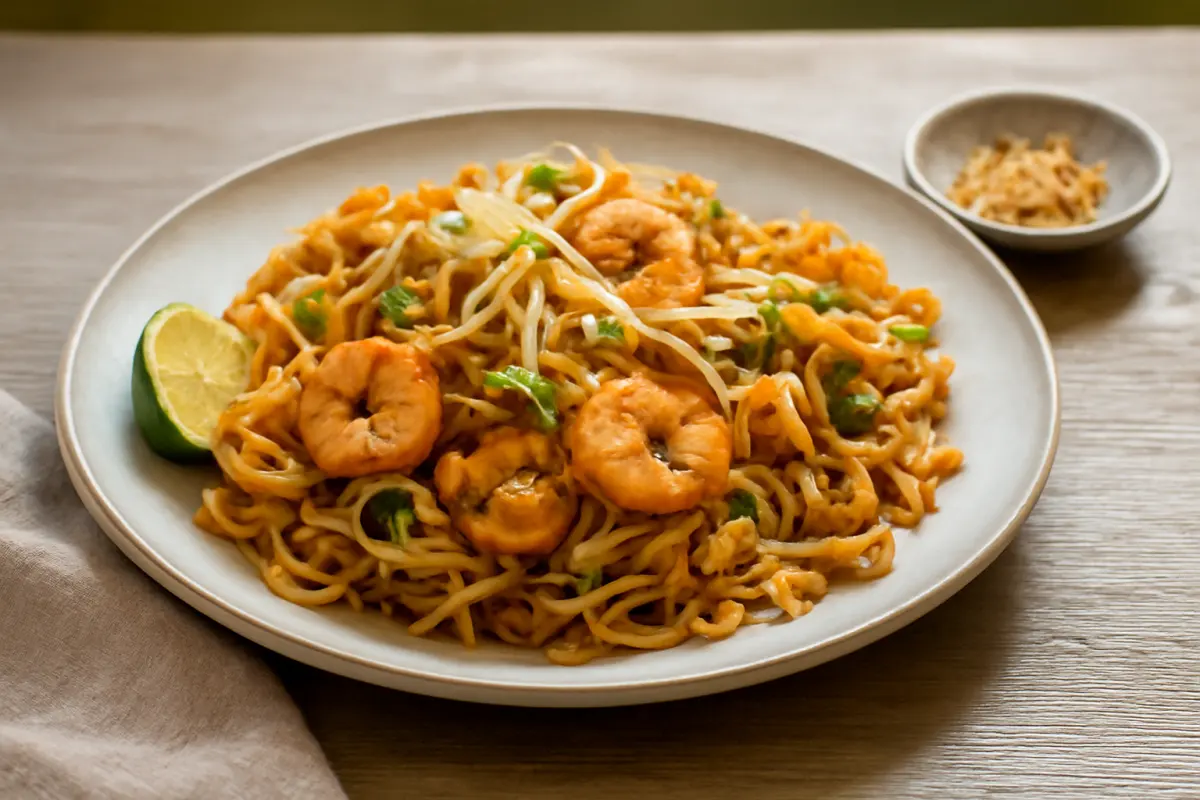
Make balanced pad Thai at home with soaked rice noodles, a tangy-sweet tamarind sauce, crisp bean sprouts, egg, tofu, and shrimp. The key is preparing every ingredient before the wok gets hot and cooking in batches so the noodles stay springy rather than mushy.
Overview
Pad Thai cooks quickly, so the most important preparation happens before you turn on the stove. Soak the rice noodles until flexible but still firm, mix the sauce in advance, and arrange the vegetables, protein, and garnishes within easy reach.
This method makes two generous portions in a large skillet or wok. The noodles finish cooking in the sauce, where they absorb the tamarind, fish sauce, and palm sugar while remaining chewy. Cook in two batches if your pan is small; a crowded pan steams the ingredients and makes the noodles harder to toss.
Ingredients
- 180 g (6 oz) dried flat rice noodles, about 3–5 mm wide
- 2 tablespoons tamarind concentrate or tamarind paste
- 2 tablespoons fish sauce
- 1½ tablespoons palm sugar, finely grated or firmly packed brown sugar
- 1 tablespoon water, plus more if needed
- 2 tablespoons neutral oil, such as canola or grapeseed, divided
- 2 garlic cloves, finely chopped
- 2 tablespoons finely chopped shallot
- 115 g (4 oz) extra-firm tofu, cut into 1 cm cubes
- 115 g (4 oz) raw peeled shrimp, tails removed, or thinly sliced chicken breast
- 2 large eggs
- 2 tablespoons finely chopped preserved sweet radish, optional
- 2 tablespoons roasted unsalted peanuts, roughly chopped, plus more to serve
- 1 cup fresh bean sprouts, divided
- 3 green onions, cut into 4 cm lengths
- 1 lime, cut into wedges
- ¼ teaspoon crushed red pepper flakes, optional
How to make it
Soak the noodles. Put the rice noodles in a large bowl and cover them with room-temperature water. Soak for 30–45 minutes, depending on the thickness and brand. They should bend easily but still feel firm in the center when bitten. Drain thoroughly. Do not boil them; fully soft noodles are likely to turn mushy in the wok.
Mix the sauce. Stir the tamarind, fish sauce, palm sugar, and 1 tablespoon water in a small bowl. If the sugar is firm, microwave the mixture for 10–15 seconds or warm it briefly in a small saucepan so it dissolves. Taste a drop: it should be tangy, salty, and sweet, without any one flavor completely dominating. Add another teaspoon of water if the sauce is too thick to pour.
Prepare the cooking station. Place the drained noodles, sauce, garlic, shallot, tofu, shrimp or chicken, eggs, peanuts, sprouts, and green onions beside the stove. Once cooking begins, the ingredients need to go into the pan in quick succession.
Cook the tofu and protein. Heat a large wok or 30 cm skillet over medium-high heat until a drop of water evaporates quickly. Add 1 tablespoon oil. Add the tofu and cook for 2–3 minutes, turning occasionally, until the edges are lightly golden. Add the shrimp and cook for about 1 minute per side, until pink and opaque, or cook the sliced chicken for 3–4 minutes until no longer pink in the center. Transfer the tofu and protein to a plate. If using only tofu, brown it for 3–4 minutes and set it aside.
Soften the aromatics. Add the remaining 1 tablespoon oil to the pan. Add the garlic and shallot and stir-fry for 20–30 seconds, just until fragrant. Keep them moving so the garlic does not darken or taste bitter.
Add the noodles and sauce. Add the drained noodles and pour the sauce over them. Toss continuously for 1–2 minutes. The noodles will look stiff at first, then become glossy and pliable as they absorb the sauce. If they remain firm or stick to the pan, add 1 tablespoon water at a time and keep tossing. Stop adding water as soon as the noodles are chewy and flexible; excess liquid can make them soft.
Cook the eggs. Push the noodles to one side of the pan. Add the eggs to the empty space and scramble for 30–45 seconds, until mostly set but still slightly glossy. Fold them through the noodles rather than stirring them vigorously into small crumbs.
Finish the stir-fry. Return the tofu and shrimp or chicken to the pan. Add the preserved radish, if using, and toss for 30–60 seconds. Add half the bean sprouts, the green onions, peanuts, and red pepper flakes. Toss just until the sprouts are warmed but still crisp. Remove the pan from the heat while the noodles are still springy; they will continue to soften slightly as they stand.
Serve immediately. Divide the pad Thai between two bowls or plates. Serve with the remaining bean sprouts, chopped peanuts, and lime wedges. Squeeze lime over each portion just before eating. Add more red pepper flakes at the table rather than making the whole pan hotter.
Expert tips
- Use the noodle texture as your guide. Soaked noodles should be flexible but not tender enough to eat. They finish cooking in the sauce.
- Do not overcrowd the pan. For a smaller wok or skillet, cook the recipe in two batches and combine everything for the final 30 seconds.
- Adjust the sauce carefully. If the finished noodles taste flat, add a few drops of fish sauce or lime. If they are too sharp, add a pinch of sugar. If they are too salty, toss with a small splash of water and a few extra bean sprouts.
- Avoid burning the sugar. If the pan becomes dry or the sauce catches on the bottom, lower the heat and add 1 tablespoon water before continuing.
- Make it vegetarian. Replace the fish sauce with vegetarian fish sauce or soy sauce, and use tofu instead of shrimp or chicken. Check that the tamarind paste and other condiments are suitable for your diet.
- Use chicken safely. Slice it thinly so it cooks quickly, and cook it until the center is no longer pink. Shrimp should be opaque and firm, not translucent.
Serving and storage
Pad Thai is best served immediately, while the noodles are glossy and the bean sprouts are still crisp. A lime wedge, extra peanuts, and additional chili flakes let each person adjust the finished plate.
Cool leftovers promptly, transfer them to a covered container, and refrigerate within 2 hours. Eat within 3 days. Reheat one portion in a skillet over medium heat with 1–2 teaspoons of water, tossing until hot throughout. The noodles may be softer after refrigeration, so add fresh bean sprouts and lime after reheating rather than before.
If you enjoy the same quick stir-fry style with thicker noodles and a darker savory sauce, try this vegetable pad see ew recipe.
Frequently asked questions
Why are my pad Thai noodles mushy?
They were probably soaked too long, boiled before stir-frying, or cooked with too much liquid. Soak them only until flexible but firm, drain them well, and add water during cooking one tablespoon at a time.
Can I make pad Thai without a wok?
Yes. Use the widest skillet you have over medium-high heat. Cook in two batches if the noodles and fillings cannot sit in a fairly even layer.
What can I use instead of tamarind paste?
Tamarind gives pad Thai its characteristic sourness. If you cannot find it, use 1 tablespoon lime juice plus 1 teaspoon rice vinegar as an emergency substitute, then adjust the sugar and fish sauce to taste. The flavor will not be identical.
Can I prepare pad Thai ahead of time?
You can mix the sauce, chop the vegetables, soak and drain the noodles, and cook the tofu ahead. Stir-fry the noodles just before serving because they lose their best texture when held for a long time.