Recipes
Lemon Herb Roasted Chicken Recipe
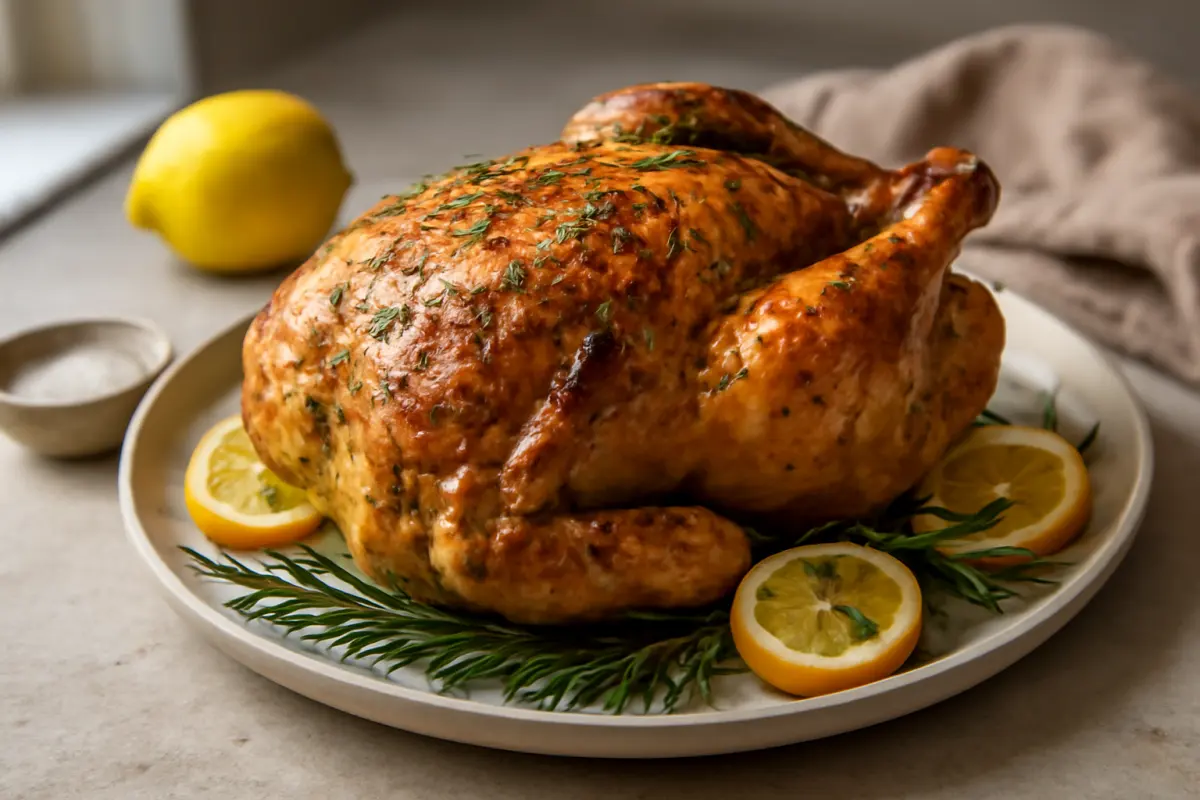
This lemon herb roasted chicken is rubbed with garlic herb butter, roasted with lemon and onion, and finished when the skin is deeply golden and the juices run clear.
Overview
This lemon herb roasted chicken has crisp, bronzed skin and tender meat seasoned with lemon, garlic, parsley, thyme, and rosemary. Rubbing the herb butter under the breast skin seasons the meat directly while helping the skin brown.
The method is straightforward: dry the chicken thoroughly, roast it at two temperatures, and rely on an instant-read thermometer rather than the clock alone. A 4- to 4½-pound chicken usually takes about 1 hour 15 minutes to 1 hour 30 minutes, including the initial high-heat stage and the lower-temperature roasting time.
Ingredients
- 1 whole chicken, 4 to 4½ pounds, giblets removed
- 2 teaspoons kosher salt, plus more for the cavity
- 1 teaspoon freshly ground black pepper
- 4 tablespoons unsalted butter, softened
- 1 tablespoon finely chopped fresh parsley
- 2 teaspoons finely chopped fresh thyme
- 1 teaspoon finely chopped fresh rosemary
- 4 garlic cloves, finely grated or minced
- 1 lemon
- 1 small yellow onion, quartered
- ½ cup water or low-sodium chicken stock
- 1 tablespoon olive oil
How to make it
Prepare the chicken. Remove the chicken from its packaging and take out the giblets. Pat the chicken very dry with paper towels, including the cavity. Place it breast-side up on a rack set inside a roasting pan or on a sturdy rimmed baking sheet. Let it stand at room temperature for 30 minutes while the oven heats. Do not leave it out for longer than 2 hours.
Heat the oven and mix the butter. Heat the oven to 425°F. In a small bowl, mix the softened butter with the parsley, thyme, rosemary, garlic, 1 teaspoon of the kosher salt, and ½ teaspoon of the pepper. The mixture should be soft enough to spread but not melted.
Season under and over the skin. Gently loosen the skin over each breast with your fingers, taking care not to tear it. Push about half of the herb butter under the skin and spread it evenly over the breasts. Rub the remaining butter over the legs, thighs, and breast skin. Drizzle the olive oil over the outside, then sprinkle the chicken with the remaining 1 teaspoon salt and ½ teaspoon pepper.
Fill the cavity. Cut the lemon in half. Squeeze one half lightly over the chicken, then place both lemon halves and the onion quarters inside the cavity. Tuck the wing tips underneath the body. Tie the legs together loosely with kitchen twine if you want a neater shape; do not pull them tightly against the chicken, or the thighs may cook more slowly.
Add liquid to the pan. Pour the water or chicken stock into the bottom of the roasting pan, keeping it below the rack. This helps catch drippings and reduces the chance of scorched juices. It should not touch the chicken skin.
Start roasting at high heat. Roast the chicken at 425°F for 20 minutes. The skin should begin to turn golden, and the fat around the legs should start rendering.
Lower the temperature and continue cooking. Reduce the oven temperature to 375°F and roast for another 50 to 70 minutes. Begin checking after 45 minutes at the lower temperature. The chicken is ready when an instant-read thermometer inserted into the thickest part of the breast reaches 165°F and the thickest part of the thigh also reaches at least 165°F without touching bone. For more tender dark meat, the thigh may register around 175°F to 185°F.
The skin should be deeply golden and crisp, the leg should move fairly easily when nudged, and the juices near the thigh should look clear rather than pink. If the skin is darkening too quickly before the meat is ready, loosely tent the breast and any very dark areas with foil.
Rest before carving. Transfer the chicken to a cutting board and let it rest for 15 to 20 minutes. The juices will settle, and the meat will be easier to slice without flooding the board. Spoon the pan juices over the carved chicken, or strain them into a small jug to serve alongside.
Carve and serve. Remove the legs first, separating the drumsticks from the thighs if desired. Slice each breast against the grain, then arrange the pieces on a platter with the roasted lemon and onions. Taste the pan juices before serving; add a pinch of salt or a squeeze of the remaining lemon half if they need more brightness.
Expert tips
- Dry skin matters. Patting the chicken thoroughly dry gives the butter and oil a better chance to brown the skin instead of steaming it.
- Use a thermometer in two places. The breast and thigh do not always finish at the same time. Check both before removing the chicken from the oven.
- No fresh herbs? Use 1 teaspoon dried thyme and ½ teaspoon dried rosemary in the butter. Fresh parsley can be replaced with 1 teaspoon dried parsley, though the flavor will be less vibrant.
- No unsalted butter? Use salted butter and reduce the added kosher salt by about ½ teaspoon.
- If the meat is cooking slowly, make sure the thermometer is in the thickest part and not touching the cavity or bone. A cold, larger chicken or a crowded oven can also add cooking time.
- If the skin is pale, move the pan to a higher oven rack for the final 5 to 10 minutes, watching closely. Do not use the broiler unless you can monitor it continuously.
- If the pan drippings burn, carefully add another ¼ cup of water or stock to the pan. Keep the liquid below the chicken so the skin stays crisp.
Serving and storage
Serve the chicken with roasted potatoes, rice, green beans, or a crisp salad. The pan juices are especially useful for spooning over the breast meat, which is leaner than the dark meat.
Refrigerate leftover chicken in shallow, covered containers within 2 hours of cooking. Use it within 3 to 4 days. Remove the meat from the bones before storing if you want it to cool quickly and reheat evenly. Reheat portions covered with a little stock or pan juice until steaming hot throughout, or use the cold meat in sandwiches and salads. Freeze tightly wrapped chicken for up to 3 months for best quality, then thaw it in the refrigerator.
Frequently asked questions
How long does a 4-pound chicken take to roast?
At 425°F for 20 minutes followed by 375°F, a 4- to 4½-pound chicken commonly takes another 50 to 70 minutes. Start checking early and use an instant-read thermometer: the breast and thigh should both reach at least 165°F.
Should I cover lemon herb roasted chicken while it cooks?
Leave it uncovered so the skin can brown and crisp. If the skin becomes dark before the center is cooked, loosely cover only the breast or other dark areas with foil.
Can I prepare the chicken ahead of time?
Yes. Season and butter the chicken, then refrigerate it uncovered on a rack for up to 24 hours. Bring it out while the oven heats, pat away any surface moisture, and roast as directed. The chicken should not sit at room temperature for more than 2 hours.
Why is my roasted chicken skin not crisp?
Excess surface moisture is the most common reason. Pat the chicken very dry before seasoning, avoid covering it during roasting, and keep any stock below the rack rather than letting it touch the skin.
Can I use chicken pieces instead of a whole chicken?
Yes, use bone-in, skin-on breasts and thighs. Roast them at 425°F until the breast pieces reach 165°F and the thighs reach at least 165°F; the pieces will usually finish sooner than a whole chicken, so begin checking after about 35 minutes.