Recipes
Lemon Meringue Pie Recipe
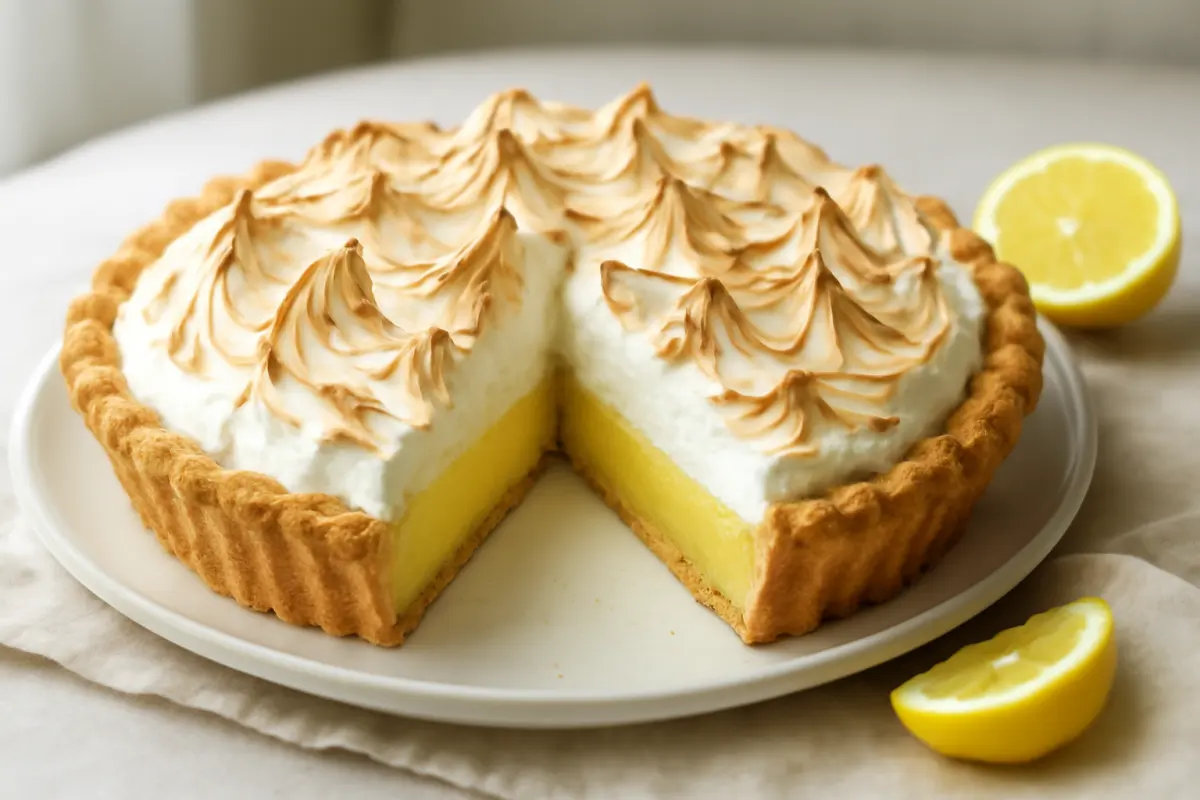
This lemon meringue pie has a crisp baked crust, bright lemon custard, and a soft, billowy meringue with golden peaks. Follow the temperature and doneness cues for a clean slice and a topping that stays put.
Overview
This lemon meringue pie combines a crisp, fully baked 9-inch pie crust with a smooth lemon custard and a soft meringue topping. The filling is cooked on the stovetop until thick enough to coat a spoon, then the meringue is spread over the hot custard so it can adhere and seal the edges.
For the best texture, let the finished pie cool completely before slicing. The filling needs time to set, while the meringue should be lightly browned and firm at the peaks without becoming dry.
Ingredients
- 1 fully baked and cooled 9-inch pie crust, homemade or store-bought
- 1 1/2 cups granulated sugar, divided
- 1/3 cup cornstarch
- 1/4 teaspoon fine salt
- 1 1/2 cups water
- 4 large egg yolks, lightly beaten
- 1/2 cup fresh lemon juice, from about 3 to 4 lemons
- 1 tablespoon finely grated lemon zest
- 2 tablespoons unsalted butter, cut into small pieces
- 4 large egg whites, at room temperature
- 1/2 teaspoon cream of tartar
- 1 teaspoon vanilla extract
How to make it
Prepare the crust and equipment. Make sure the pie crust is fully baked and completely cooled before beginning. Separate the eggs while they are cold, then leave the whites at room temperature for about 20 to 30 minutes. Heat the oven to 350°F.
Mix the dry ingredients. In a medium saucepan, whisk together 1 cup of the sugar, the cornstarch, and the salt. Whisk in the water gradually, making sure no dry cornstarch remains in the corners of the pan.
Cook the lemon base. Set the saucepan over medium heat and cook, whisking frequently, until the mixture comes to a full simmer and turns noticeably thick. Once bubbling, cook for 1 minute while whisking continuously. It should look glossy and hold soft ridges from the whisk.
Temper the egg yolks. Remove the saucepan from the heat. Slowly whisk about 1 cup of the hot mixture into the beaten egg yolks. Add this yolk mixture back to the saucepan in a thin stream while whisking constantly. This gradual step warms the yolks without scrambling them.
Finish the filling. Return the saucepan to medium-low heat. Cook for 2 to 3 minutes, whisking constantly, until the custard is thick, glossy, and bubbling slowly. Do not let it boil aggressively. Remove it from the heat and whisk in the lemon juice, lemon zest, and butter until smooth. Pour the hot filling into the cooled crust and smooth the surface.
Make the meringue. In a clean, dry mixing bowl, beat the egg whites and cream of tartar on medium speed until foamy. Increase the speed to medium-high and gradually add the remaining 1/2 cup sugar, about 1 tablespoon at a time. Continue beating until the meringue is bright white, holds firm peaks, and feels smooth rather than gritty when rubbed between clean fingertips. Beat in the vanilla.
Top the hot pie. Spoon the meringue over the hot lemon filling. Spread it all the way to the crust edge, pressing gently to create a complete seal. Use the back of a spoon to make soft swirls or peaks. Covering the filling while it is still hot helps the meringue bond to it.
Brown the topping. Bake at 350°F for 12 to 15 minutes, rotating the pie once if your oven browns unevenly. The meringue is ready when the peaks are lightly golden and the surface looks set. If the crust edge is already dark, cover it loosely with a strip of foil while the meringue browns.
Cool before slicing. Transfer the pie to a rack and cool at room temperature for 1 hour. Refrigerate for at least 2 more hours, until the center is chilled and firm. Use a sharp knife wiped clean between slices for neater portions.
Expert tips
- Use fresh lemon juice. Bottled juice can taste flat or harsh in a pie where lemon is the main flavor. Zest the lemons before juicing them.
- Avoid a runny filling. Cornstarch thickens only after the mixture reaches a simmer. If the custard is still loose, continue cooking for another 30 to 60 seconds after bubbling begins, whisking constantly.
- Keep the meringue away from moisture. A grease-free bowl is essential. Any yolk in the whites can prevent them from reaching firm peaks.
- Prevent weeping. Spread the meringue onto the filling while it is hot and seal it against the crust edge. Cool the pie gradually rather than placing a hot pie straight into the refrigerator.
- If you do not have cream of tartar, use 1 teaspoon of fresh lemon juice instead. The meringue may be slightly less stable, so spread and bake it promptly.
- For a softer, less sweet topping, reduce the meringue sugar to 6 tablespoons. The topping will still work, but it may not hold its shape as firmly.
- If the meringue browns too quickly, lower the oven temperature to 325°F and continue baking until the surface is set. A quick blast under a broiler is less forgiving and can burn the peaks before the topping firms.
Serving and storage
Serve the pie chilled or cool, using a sharp knife to cut through the meringue and custard in one motion. Wipe the knife between slices for cleaner cuts.
Refrigerate leftovers, loosely covered, for up to 3 days. The crust will gradually soften and the meringue may release a little moisture over time, so the pie is best served on the day it is made or the next day. Do not leave the finished pie at room temperature for more than 2 hours.
Frequently asked questions
Why is my lemon meringue pie filling runny?
The custard may not have reached a full simmer, or it may not have cooked long enough after thickening. Bring it to a gentle bubble and cook for 1 to 2 minutes while whisking constantly before pouring it into the crust. Also allow the pie to chill for at least 2 hours before judging the final texture.
How do I stop meringue from separating from the filling?
Spread the meringue over the lemon filling while the filling is still hot, and press it gently all the way to the crust edge to create a seal. Cooling the pie gradually also helps reduce separation.
Can I make lemon meringue pie ahead of time?
Yes. Make it up to 1 day ahead and refrigerate it loosely covered. The topping and crust are usually at their best during the first 24 hours.
Why does my meringue become watery?
Watery meringue can result from underbeaten whites, undissolved sugar, a greasy bowl, or moisture released during storage. Beat the whites to firm, glossy peaks, add sugar gradually, and make sure the bowl and beaters are completely clean and dry.
Can I use a graham cracker crust instead?
Yes. Use a fully baked and cooled 9-inch graham cracker crust. Its sweeter, more crumbly texture pairs well with the tart filling, but it may soften a little more quickly than pastry crust.