Recipes
Makki Ki Roti Recipe
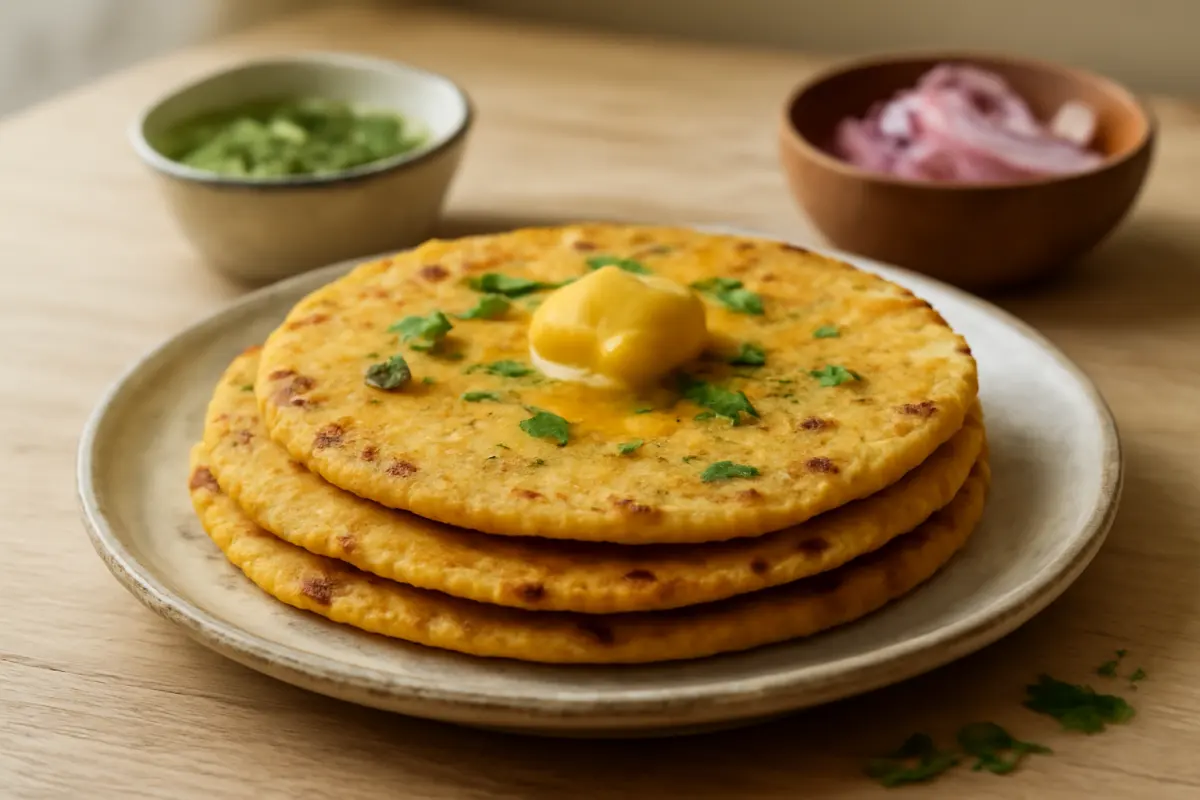
This makki ki roti recipe makes rustic, tender Punjabi-style cornmeal flatbreads with crisp golden spots and a buttery finish. The step-by-step method shows how to knead, shape, cook, and handle the dough without cracking it.
Overview
Makki ki roti is a rustic Indian flatbread made with makki atta, or finely ground cornmeal. It has a distinctive corn flavor, tender crumb, and lightly crisp browned spots when cooked on a hot tawa or skillet.
Because cornmeal has no gluten, the dough does not stretch like wheat-flour roti dough. Warm water, gentle kneading, and hand-shaping are the keys to keeping the breads together. Serve them hot with saag and a little ghee or butter.
Ingredients
- 2 cups (240 g) finely ground makki atta, plus extra for dusting
- 1/2 teaspoon fine salt
- 1 1/4 to 1 1/2 cups hot water, added gradually
- 2 teaspoons ghee or neutral oil, plus more for cooking and serving
How to make it
Mix the dough. Add the makki atta and salt to a wide bowl. Pour in 1 cup of the hot water and stir with a spoon. When the mixture is cool enough to handle, knead it with your hands, adding more hot water 1 tablespoon at a time until the dough is soft and holds together. It should feel moist and pliable, not wet or sticky.
Knead and rest. Knead the dough in the bowl for 3 to 4 minutes, pressing and folding it until it looks evenly hydrated. Cover it with a damp kitchen towel and rest for 10 minutes. The dough should become easier to shape but will still be more fragile than wheat-flour dough.
Divide the dough. Grease your hands lightly with ghee or oil. Divide the dough into 6 equal portions, about 70 g each, and roll each portion into a smooth ball. Keep the dough balls covered so their surfaces do not dry out.
Shape the first roti. Place one dough ball between two pieces of parchment paper or a cut-open food-safe plastic bag. Press it gently with your palm, then pat it outward into a round about 5 to 6 inches wide and 1/8 to 3/16 inch thick. Rotate the paper as you work. If the edges crack badly, gather the dough, knead in 1 teaspoon warm water, and try again.
Heat the pan. Warm a cast-iron tawa, griddle, or heavy skillet over medium-high heat. It is ready when a few drops of water sizzle and evaporate quickly, but the surface is not smoking.
Cook the roti. Peel away the top paper, place the roti on your palm, and gently lay it on the hot pan. Cook for 45 to 60 seconds, until the top changes from raw and glossy to matte and the underside has a few pale golden spots.
Turn and finish. Flip the roti and cook the second side for 60 to 90 seconds. Press gently around the edges with a spatula. Flip once more and cook until both sides show deeper golden-brown patches and the center feels set. For a more toasted surface, cook another 15 to 20 seconds per side, watching closely so the cornmeal does not burn.
Add ghee and serve. Transfer the roti to a plate and brush with about 1/2 teaspoon ghee or butter. Cover with a clean towel while shaping and cooking the remaining rotis. Serve immediately while warm.
Expert tips
- Use finely ground makki atta rather than coarse cornmeal. Coarse meal makes the dough harder to shape and gives the roti a gritty texture.
- Keep the water hot throughout mixing. If the dough cools and becomes firm, add a tablespoon of hot water and knead again.
- Shape one roti at a time. Cornmeal dough dries quickly, and uncovered dough is more likely to crack.
- If you prefer easier handling, replace 2 tablespoons of the makki atta with whole-wheat flour. The roti will be slightly more flexible, but it will no longer be made entirely with cornmeal.
- Do not use excessive dry flour while shaping. It can make the finished roti dry and cause cracks during cooking.
- If the underside darkens before the center is cooked, lower the heat to medium. A hot pan is helpful, but a smoking pan will scorch the surface.
Serving and storage
Serve makki ki roti hot with ghee, butter, yogurt, pickle, or a bowl of saag. The breads are best on the day they are made, when the edges are tender and the browned spots are still slightly crisp.
Cool leftover rotis completely, stack them in an airtight container or zip-top bag, and refrigerate for up to 2 days. Reheat them in a covered skillet over medium-low heat with a few drops of water, or warm them briefly in the microwave under a damp paper towel. Brush with ghee after reheating if desired. For longer storage, separate the cooled rotis with parchment, freeze them in an airtight bag, and reheat directly in a covered skillet until hot throughout.
Frequently asked questions
Why does my makki ki roti crack while shaping?
The dough is usually too dry or too cool. Knead in warm water 1 teaspoon at a time, rest it for a few minutes, and shape it between parchment or plastic. Keep unused dough covered with a damp towel.
Can I make makki ki roti without a tawa?
Yes. Use a heavy cast-iron or nonstick skillet. Heat it over medium-high heat and cook the roti using the same timing and visual cues: a matte top, golden spots underneath, and a set center.
Can I prepare the dough ahead of time?
For the best texture, shape and cook the dough soon after mixing. If necessary, cover it tightly and refrigerate it for up to 12 hours. Let it sit at room temperature briefly, then knead in a little warm water if it feels dry or stiff.
How do I keep makki ki roti soft?
Use enough hot water to make a soft dough, avoid overcooking, and cover each cooked roti with a clean towel. Brushing the hot roti with ghee also helps keep the surface from drying out.
What can I use instead of parchment for shaping?
A clean, food-safe plastic bag cut open along the sides works well. You can also shape the roti directly on a lightly greased plate, but parchment or plastic makes lifting and transferring the fragile dough easier.