Recipes
Saag Recipe
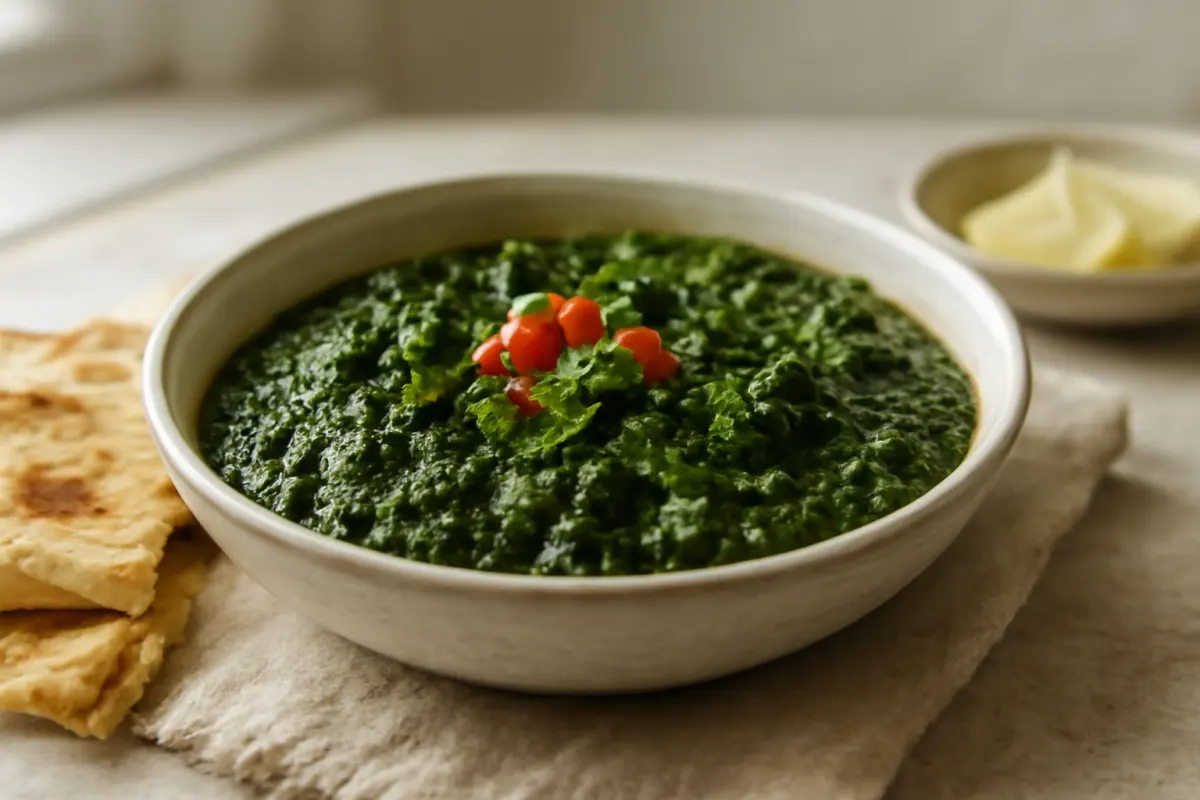
This saag recipe combines mustard greens and spinach with ginger, garlic, green chili, and warming spices. The greens are cooked until silky, blended to your preferred texture, and finished with a fragrant tempering of ghee and cumin.
Overview
This saag recipe makes a thick, savory greens dish with mustard greens for a pleasantly earthy bite and spinach for softness and color. Ginger, garlic, green chili, cumin, and coriander add warmth without masking the greens.
The method is straightforward: cook the greens until completely tender, blend them partially or smoothly, then simmer until thick and finish with a sizzling ghee tempering. Serve it with roti, naan, or rice for a comforting meal.
Ingredients
- 450 g mustard greens, thick stems removed, washed well, and roughly chopped
- 225 g fresh spinach, washed and roughly chopped
- 1 medium yellow onion, finely chopped, about 150 g
- 4 garlic cloves, finely chopped
- 2 teaspoons grated fresh ginger
- 1 green chili, finely chopped; use half for less heat
- 2 tablespoons cornmeal or fine maize flour
- 250 ml water, plus more if needed
- 2 tablespoons neutral oil, such as sunflower or canola oil
- 1 teaspoon cumin seeds
- 1 medium tomato, finely chopped, about 120 g
- 1 teaspoon ground coriander
- 1/2 teaspoon ground cumin
- 1/2 teaspoon Kashmiri chili powder or mild paprika
- 3/4 teaspoon fine salt, plus more to taste
- 1 tablespoon ghee, for finishing
- 1/4 teaspoon garam masala
- 1 teaspoon lemon juice, optional
How to make it
Prepare the greens. Separate any tough mustard-green stems from the leaves. Wash the mustard greens and spinach in several changes of cold water, then drain well. A little water clinging to the leaves is fine, but remove excess water so the pot does not become unnecessarily thin.
Wilt the greens. Put the mustard greens, spinach, and 250 ml water in a large heavy-based pot over medium heat. Cover and cook for 8 minutes, stirring once or twice. The greens should collapse substantially and look dark green, with the mustard stems soft enough to pierce easily with a fork.
Add the cornmeal. Stir in the cornmeal, cover again, and cook for 12–15 minutes over low heat. Stir every few minutes to prevent the bottom from catching. The mixture is ready when the greens are very soft and the cornmeal has thickened the liquid slightly. If the pot looks dry before the greens are tender, add 2 tablespoons water at a time.
Blend the greens. Use an immersion blender to blend the greens to a coarse, spoonable puree, or pulse briefly in a countertop blender in batches. Leave some texture if you like a rustic saag. For a smoother finish, blend until no noticeable strands remain. Do not fill a blender more than halfway with hot food, and loosen the lid slightly while covering it with a folded towel so steam can escape.
Cook the masala. Heat the oil in a wide skillet or the same pot over medium heat. Add the cumin seeds and cook for 20–30 seconds, until fragrant. Add the onion and cook for 6–8 minutes, stirring occasionally, until soft and lightly golden. Add the garlic, ginger, and green chili; cook for 1 minute.
Add the tomato and spices. Stir in the chopped tomato, ground coriander, ground cumin, chili powder, and salt. Cook for 6–8 minutes, stirring often, until the tomato has broken down into a thick mixture and the oil begins to show around the edges. If the mixture sticks, reduce the heat and add 1 tablespoon water.
Combine and simmer. Add the blended greens to the masala and stir thoroughly. Simmer uncovered over low heat for 15–20 minutes, stirring every few minutes. The finished saag should mound softly on a spoon rather than run like soup, while remaining loose enough to spread over bread. Taste and adjust the salt.
Finish with the tempering. Warm the ghee in a small pan over medium heat. When it melts and becomes hot, add the garam masala and immediately pour the ghee over the saag. Stir once or twice. Add the lemon juice if you want a brighter, slightly tangy finish, then serve hot.
Expert tips
- For a milder saag: Replace the mustard greens with an equal weight of additional spinach, or use half mustard greens and half collard greens. Collards need a few extra minutes of cooking to become tender.
- For a richer finish: Replace the oil in the masala with ghee, but keep the finishing tablespoon of ghee if you enjoy a pronounced buttery flavor.
- Do not rush the greens: If mustard greens still feel fibrous after blending, simmer the puree for another 10 minutes with 2–3 tablespoons water. Tough stems or insufficient cooking are usually the cause.
- Fix thin saag: Simmer uncovered over low heat, stirring frequently, until excess moisture evaporates. Avoid adding a large amount of cornmeal at the end, which can make the texture pasty.
- Fix thick saag: Stir in hot water 1 tablespoon at a time until it reaches a thick but spoonable consistency, then simmer for 2 minutes so the added water blends in.
- Control bitterness: Very mature mustard greens can be assertive. Use more spinach, add the optional lemon juice at the end, and check the salt before adding extra spice.
Serving and storage
Serve saag hot with roti, naan, paratha, or steamed basmati rice. It also works well as part of a meal with lentils; pair it with daal chawal for rice and a separate lentil dish.
Cool leftovers promptly and refrigerate them in a covered container for up to 3 days. Reheat gently in a saucepan over medium-low heat, stirring occasionally, and add a splash of water if the saag has tightened. Reheat only the portion you plan to eat. For longer storage, freeze cooled saag in airtight containers for up to 2 months and thaw it overnight in the refrigerator before reheating.
Frequently asked questions
Can I make saag without mustard greens?
Yes. Use 675 g spinach for a milder, softer saag, or replace the mustard greens with collard greens, kale, or turnip greens. Tougher greens may need 5–10 extra minutes of cooking before blending.
Why is my saag bitter?
Mustard greens naturally have a peppery, slightly bitter flavor, especially when mature. Use a higher proportion of spinach, make sure the masala is properly cooked, and finish with a little lemon juice and enough salt to balance the flavor.
Should saag be smooth or chunky?
Either texture works. Blend briefly for a rustic saag with visible flecks of greens, or blend longer for a smooth, thick puree. In both cases, simmer the blended mixture afterward so the flavors come together.
Can I use frozen spinach?
Yes. Use about 450 g thawed frozen spinach in place of the fresh spinach, and squeeze out excess water before adding it. The saag may be softer and darker, so simmer it uncovered until it reaches the desired thickness.
How do I stop saag from sticking to the pot?
Cook it over low heat after blending, use a heavy-based pot, and stir every few minutes. If it begins to catch, move it to a clean pan and add 1–2 tablespoons hot water before continuing.