Recipes
Moong Dal Recipe
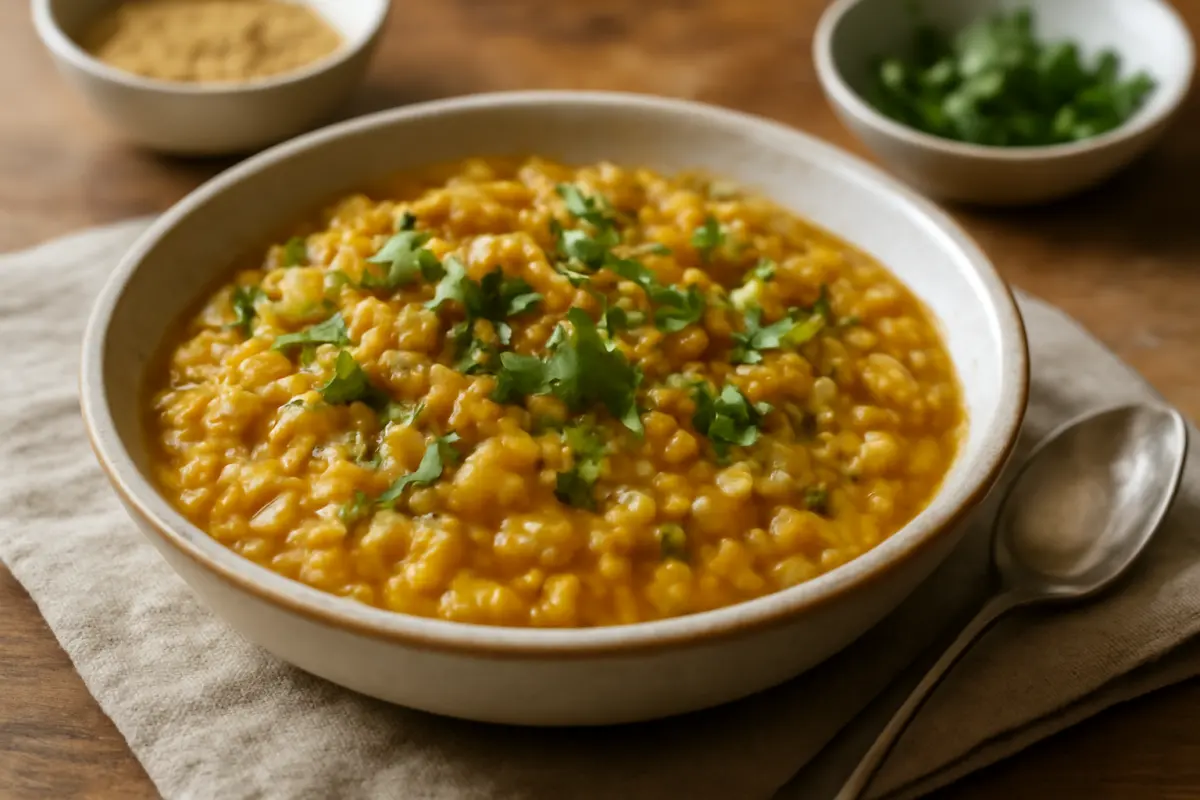
This moong dal recipe makes a light, comforting bowl of yellow lentils with a silky texture, gentle spices, and a sizzling garlic-cumin tadka. Serve it with rice, roti, or warm puri.
Overview
This moong dal recipe uses split yellow moong dal, tomatoes, turmeric, and a simple garlic-cumin tempering. The lentils cook until soft and creamy, while the final tadka adds a warm, savory finish without making the dish heavy.
You can cook the dal on the stovetop or use a pressure cooker for a faster method. Adjust the water at the end to make it thick enough to spoon over rice or loose enough to serve as a soup-style dal.
Ingredients
- 1 cup (200 g) split yellow moong dal, rinsed until the water runs mostly clear
- 3 cups water for stovetop cooking, plus more as needed
- 1 medium tomato, finely chopped, about ¾ cup
- ½ medium yellow onion, finely chopped, about ½ cup
- 2 garlic cloves, finely chopped
- 1 teaspoon finely grated fresh ginger
- 1 green chili, slit lengthwise, optional
- ½ teaspoon ground turmeric
- 1 teaspoon kosher salt, plus more to taste
- 1 tablespoon lemon juice, added at the end
- 2 tablespoons chopped fresh cilantro, for serving
For the tempering
- 2 tablespoons ghee or neutral oil
- 1 teaspoon cumin seeds
- ½ teaspoon brown or black mustard seeds, optional
- 2 dried red chilies, broken into pieces, optional
- 4 garlic cloves, thinly sliced
- ¼ teaspoon red chili powder or Kashmiri chili powder
- ⅛ teaspoon asafoetida, optional
How to make it
Rinse the dal. Place the moong dal in a bowl and rinse it under cool water three or four times, rubbing the grains lightly between your fingers. Drain well. Soaking is not required, but a 15-minute soak can shorten the cooking time slightly.
Start the dal. Add the rinsed dal, 3 cups water, chopped tomato, onion, ginger, green chili, and turmeric to a medium saucepan. Bring the mixture to a boil over medium-high heat, then reduce the heat to low.
Simmer until soft. Partly cover the pan and simmer for 25–35 minutes, stirring every 8–10 minutes so the lentils do not catch on the bottom. Skim off any foam during the first few minutes if you like. The dal is ready when the grains have broken down and crush easily against the side of the pan with the back of a spoon.
Season and adjust the texture. Stir in the salt. For a smooth dal, whisk it vigorously for 30–60 seconds; for a more textured finish, stir only until combined. Add ¼ cup hot water at a time if it is thicker than you want. Simmer for another 2–3 minutes after adjusting.
Make the tempering. Heat the ghee or oil in a small skillet over medium heat. Add the cumin seeds and mustard seeds, if using. When they begin to sizzle and the mustard seeds start to pop, add the dried red chilies and sliced garlic.
Cook the garlic carefully. Stir for 30–45 seconds, until the garlic is pale golden and fragrant. Do not let it turn dark brown, as it will taste bitter. Remove the skillet from the heat and immediately stir in the chili powder and asafoetida, if using.
Finish the dal. Pour the hot tempering over the cooked dal and stir once or twice. Add the lemon juice and half of the cilantro. Taste and add more salt or lemon juice if needed. Scatter the remaining cilantro over the top and serve hot.
Pressure cooker option. Add the rinsed dal, tomato, onion, ginger, green chili, turmeric, salt, and 2½ cups water to a pressure cooker. Cook at high pressure for 6 minutes, then allow a natural release for 10 minutes before releasing any remaining pressure. Whisk the dal, adjust with hot water, and finish with the tempering as directed.
Expert tips
- For a creamier dal: Whisk the cooked lentils while they are hot. Split yellow moong dal becomes creamy without needing a blender.
- For more pronounced tomato flavor: Cook the chopped tomato with the onion and spices for 3–4 minutes before adding the water and dal. The tomato should soften but does not need to brown.
- If the dal is watery: Simmer it uncovered for 5–10 minutes, stirring occasionally. Avoid adding dry lentils at this stage because they will not cook evenly in the finished dal.
- If the dal is too thick: Stir in hot water gradually. Cold water can interrupt the simmer and make the texture less even.
- If the tempering burns: Discard it and start again in a clean skillet. Bitter garlic or spices will affect the whole pot, so it is better not to mix a burnt tempering into the dal.
- Substitutions: Use unsalted butter with 1 teaspoon oil in place of ghee, or use entirely neutral oil. Red lentils can replace moong dal, but they usually cook faster and produce a softer, more orange-colored dal; begin checking them after 15 minutes.
- For a milder bowl: Leave out the green chili and dried red chilies, then add black pepper or extra lemon juice at the table if desired.
Serving and storage
Serve the dal with steamed basmati rice, roti, or puri. A spoonful of plain yogurt, sliced onion, or extra cilantro works well on the side. For another lentil-based meal, compare it with this masoor dal recipe, which uses red lentils and a tomato-garlic base.
Cool leftovers promptly and refrigerate them in a covered container for up to 3 days. The dal will thicken as it chills, so reheat it gently on the stovetop with a splash of water, stirring until steaming hot throughout. Add fresh lemon juice or a small new tempering after reheating to revive the flavor. Freeze cooled dal in an airtight container for up to 2 months; thaw it in the refrigerator before reheating.
Frequently asked questions
Do I need to soak moong dal before cooking?
No. Split yellow moong dal cooks well without soaking. A 15-minute soak can reduce the cooking time slightly, but it is optional.
Why is my moong dal still firm after simmering?
The dal may need more water or more cooking time. Add hot water if the pan is dry, cover it partly, and continue simmering until the grains crush easily with a spoon. Older lentils can take longer to soften.
Can I make moong dal without onion or garlic?
Yes. Omit both and continue with the tomato, ginger, turmeric, and salt. The cumin, chili, and lemon tempering will still provide plenty of flavor.
How much water should I use for moong dal?
For a spoonable dal, start with 3 cups water for 1 cup of split yellow moong dal on the stovetop. Add hot water near the end if you prefer a thinner consistency.
Can I use whole green moong instead of split yellow moong dal?
Yes, but whole green moong takes much longer to cook and has a firmer, more earthy texture. Soak it for several hours and increase the cooking time until the beans are tender.