Recipes
Mutton Karahi Recipe
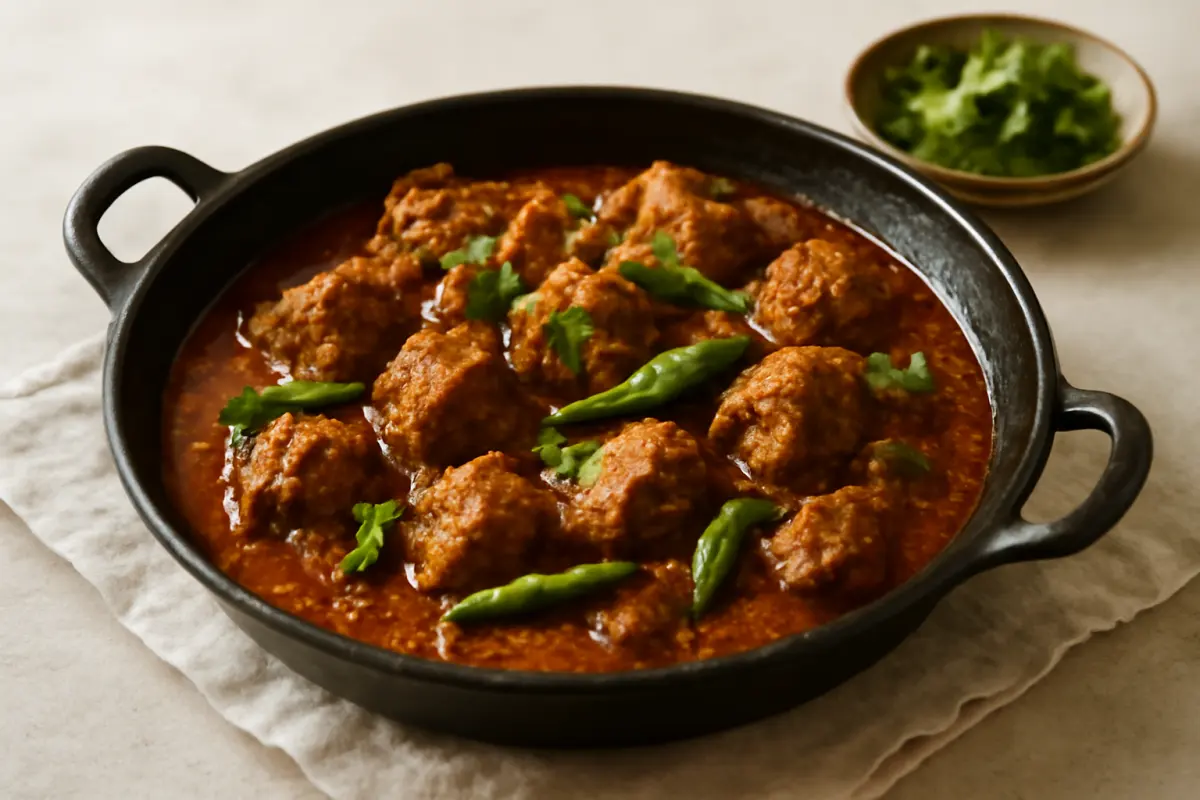
This mutton karahi recipe makes tender, richly spiced meat in a thick tomato sauce. The mutton cooks slowly until succulent, then finishes with ginger, green chilies, cilantro, and a glossy layer of oil.
Overview
This mutton karahi uses bone-in goat or lamb, ripe tomatoes, ginger, garlic, green chilies, and a short list of warming spices. There is no need for a separate curry base: the tomatoes break down in the same pan and become a thick, clingy sauce around the meat.
Plan for about 1 hour 45 minutes on the stovetop, depending on the cut and age of the mutton. The meat is ready when a fork slides into the thickest piece with only slight resistance, while the sauce looks glossy and the oil begins to separate at the edges.
Ingredients
- 1 kg bone-in mutton, cut into 4–5 cm pieces; goat or lamb both work
- 80 ml neutral oil or ghee
- 2 tablespoons finely grated fresh ginger, divided
- 1 tablespoon finely grated garlic
- 1 teaspoon fine salt, plus more to taste
- 1 teaspoon ground cumin
- 1 teaspoon ground coriander
- 1 teaspoon Kashmiri chili powder or mild paprika
- ½ teaspoon freshly ground black pepper
- ½ teaspoon turmeric
- 750 g ripe tomatoes, finely chopped or crushed
- 120 ml water, plus more only if needed
- 2–4 green chilies, slit lengthwise
- 1 teaspoon crushed dried fenugreek leaves, optional
- 1 teaspoon garam masala
- ½ teaspoon freshly ground black pepper, for finishing
- 2 tablespoons chopped fresh cilantro
- 1 tablespoon julienned fresh ginger, for finishing
- 1 lemon, cut into wedges, for serving
How to make it
Prepare the mutton. Pat the mutton dry with paper towels. Trim away only large, hard pieces of fat; a little fat helps the karahi stay flavorful. If using frozen meat, thaw it completely in the refrigerator and pat it dry before cooking.
Brown the meat. Heat the oil or ghee in a wide, heavy-bottomed karahi, Dutch oven, or deep skillet over medium-high heat. Add the mutton in a single layer, working in two batches if necessary. Brown for 8–10 minutes, turning occasionally, until the pieces have a deep golden surface. They do not need to be cooked through. Transfer the browned meat to a bowl.
Cook the aromatics and spices. Reduce the heat to medium. Add 1 tablespoon of the grated ginger and all of the garlic to the same pan. Stir for 30–45 seconds, just until fragrant. Add the cumin, coriander, chili powder, black pepper, and turmeric. Stir for 15 seconds so the spices coat the oil without scorching.
Build the tomato base. Add the chopped tomatoes and salt. Stir well, scraping up any browned bits from the bottom. Cook uncovered for 12–18 minutes, stirring every few minutes, until the tomatoes are soft and jammy rather than watery. The oil should begin to show around the edges. If the tomatoes catch before softening, reduce the heat and add 1–2 tablespoons of water.
Simmer the mutton. Return the browned mutton and any juices to the pan. Pour in 120 ml water and bring the mixture to a gentle boil. Cover with a tight-fitting lid, reduce the heat to low, and simmer for 70–95 minutes. Stir every 15–20 minutes and check the liquid level. Add 60 ml hot water if the bottom looks dry, but avoid flooding the pan; karahi should finish with a thick sauce.
Check for tenderness. Test the largest piece with a fork or the tip of a knife. It should yield easily and pull away from the bone, with no chewy resistance in the center. If it is still firm, cover and continue cooking in 10–15 minute intervals. Goat may need longer than young lamb.
Reduce the sauce. Once the meat is tender, remove the lid and raise the heat to medium. Cook for 5–10 minutes, stirring gently, until the sauce clings to the mutton and looks glossy. Do not reduce it until dry; there should be enough tomato sauce to coat each piece and spoon over bread.
Finish the karahi. Stir in the green chilies, crushed dried fenugreek leaves if using, garam masala, the remaining 1 tablespoon grated ginger, and the finishing black pepper. Cook for 2 minutes. Taste and adjust the salt. Scatter over the cilantro and sliced ginger, then rest the karahi for 5 minutes before serving with lemon wedges.
Expert tips
- Use a wide pan so the meat browns instead of steaming. If the pan is crowded, brown the mutton in batches.
- For a milder dish, remove the seeds from the green chilies or use only one. Kashmiri chili powder adds color with less heat than hot chili powder.
- If the sauce tastes sharp, cook it for a few extra minutes rather than adding sugar. Ripe tomatoes become rounder and sweeter as they reduce.
- If the meat is tender but the sauce is thin, remove the lid and reduce it over medium heat. If the sauce is too thick before the meat is tender, add hot water a few tablespoons at a time.
- Lamb shoulder or neck can replace goat. Lamb often becomes tender sooner, so begin checking after about 55–60 minutes.
- For a pressure cooker, follow the browning and tomato steps in the cooker, add only 180 ml water, then cook at high pressure for 25 minutes. Let the pressure release naturally for 15 minutes, check the meat, and reduce the uncovered sauce afterward.
Serving and storage
Serve hot with naan, roti, or steamed rice. A cool side such as cucumber raita balances the spice, while plain naan is useful for scooping up the thick tomato sauce.
Cool leftovers promptly in a shallow container and refrigerate within 2 hours. Keep covered in the refrigerator for up to 3 days. Reheat gently in a saucepan with a splash of water until steaming hot throughout; stir occasionally so the sauce does not catch. Freeze cooled karahi in airtight portions for up to 2 months, thaw overnight in the refrigerator, and reheat thoroughly before serving.
Frequently asked questions
Can I make mutton karahi with boneless meat?
Yes. Use 750–800 g boneless mutton in place of 1 kg bone-in meat, cut into 4 cm pieces. Boneless meat may cook faster, so begin checking after about 45–55 minutes of covered simmering. The sauce may be slightly less rich because bones contribute flavor and body.
Why is my mutton still tough after cooking?
It usually needs more gentle cooking time, not higher heat. Add a few tablespoons of hot water if the pan is dry, cover it again, and simmer in 10–15 minute intervals until a fork enters the meat easily. Toughness can also result from large pieces or an older goat, both of which take longer.
How do I make the karahi less spicy?
Use mild Kashmiri chili powder or paprika, remove the seeds from the green chilies, and start with one chili. Do not reduce the ginger, garlic, or tomatoes unless you also want a milder overall flavor.
Can I use canned tomatoes?
Yes. Replace the fresh tomatoes with two 400 g cans of whole or chopped tomatoes, drained slightly if very watery. Crush them in the pan and cook until thick and jammy before adding the water and mutton.
How thick should mutton karahi be?
The finished sauce should be thick enough to cling to the meat, with a glossy surface and a little oil visible around the edges. It should not be as loose as a broth-based curry. Reduce uncovered at the end if it is too thin.