Recipes
Lemon Garlic Chicken Pasta Recipe
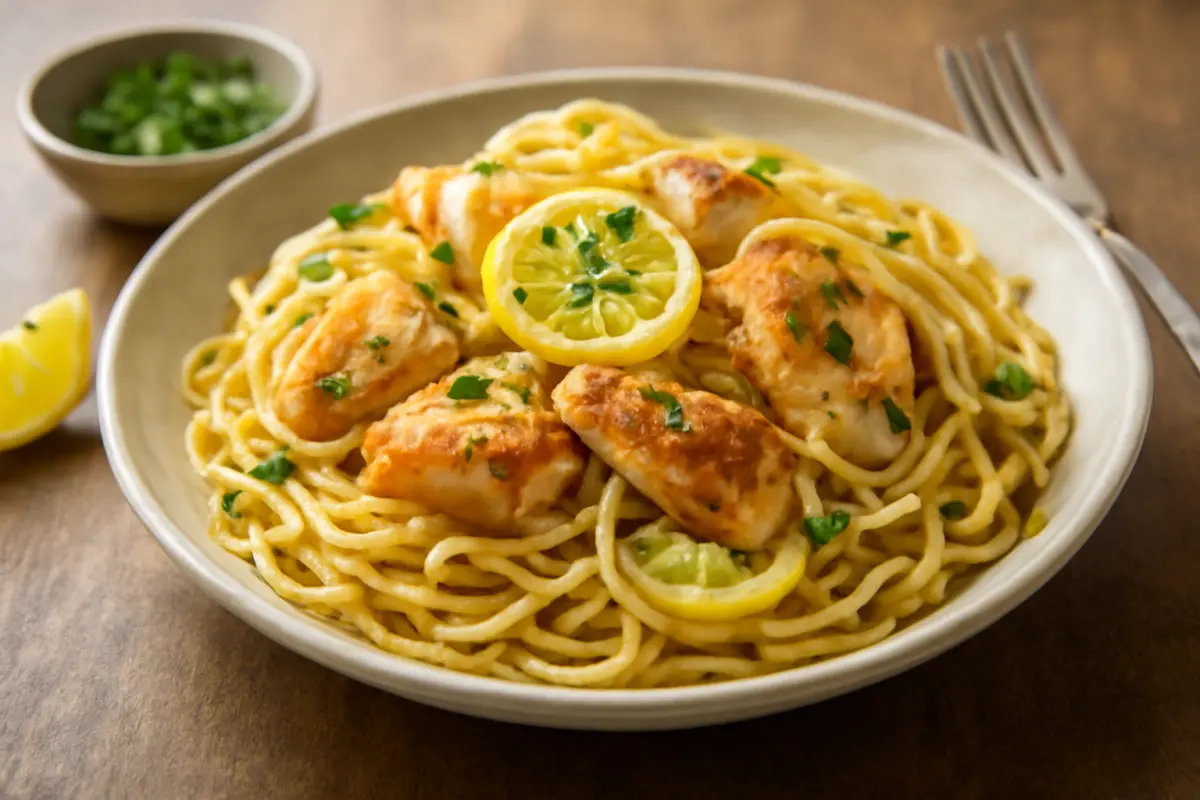
This lemon garlic chicken pasta combines golden chicken, tender pasta, garlic, lemon, Parmesan, and reserved pasta water in a glossy sauce. It is a practical weeknight dinner ready in about 30 minutes.
Overview
This lemon garlic chicken pasta brings together bite-size pieces of golden chicken, al dente pasta, plenty of garlic, fresh lemon, and Parmesan. A little reserved pasta water helps the sauce turn smooth and cling to the noodles instead of pooling at the bottom of the pan.
The recipe makes four servings and comes together in about 30 minutes. Cook the chicken until the center reaches 165°F, then finish the pasta gently so the lemon stays bright and the Parmesan melts without becoming grainy.
Ingredients
- 12 ounces spaghetti, linguine, or fettuccine
- 1 1/4 pounds boneless, skinless chicken breasts or thighs
- 1 teaspoon kosher salt, divided, plus more for the pasta water
- 1/2 teaspoon black pepper, divided
- 1/2 teaspoon Italian seasoning
- 2 tablespoons olive oil, divided
- 4 tablespoons unsalted butter, divided
- 6 garlic cloves, finely minced
- 1/2 cup low-sodium chicken broth
- 1/2 cup heavy cream
- 1 teaspoon finely grated lemon zest
- 3 tablespoons fresh lemon juice, plus more to taste
- 3/4 cup finely grated Parmesan cheese, about 2 1/2 ounces
- 2 tablespoons chopped fresh parsley, optional
- Lemon wedges, for serving, optional
How to make it
Prepare the chicken. Pat the chicken dry and cut it into bite-size pieces, about 1 inch across. Season with 1/2 teaspoon of the salt, 1/4 teaspoon of the pepper, and the Italian seasoning. Cutting the pieces evenly helps them cook at the same rate.
Boil the pasta. Bring a large pot of water to a strong boil. Salt it generously, add the pasta, and cook according to the package directions until al dente. Before draining, scoop out at least 1 cup of pasta water. Drain the pasta; do not rinse it.
Brown the chicken. While the pasta cooks, heat 1 tablespoon of olive oil and 1 tablespoon of butter in a large skillet over medium-high heat. Add the chicken in a single layer. Cook for 3 to 4 minutes, turning occasionally, until the pieces are browned and no longer pink in the center. The thickest piece should reach 165°F. Transfer the chicken to a plate.
Soften the garlic. Reduce the heat to medium. Add the remaining 1 tablespoon of olive oil and 2 tablespoons of butter to the skillet. Add the garlic and cook for 30 to 45 seconds, stirring constantly, until fragrant but not browned. If the garlic starts to darken, lower the heat immediately; browned garlic can taste bitter.
Build the sauce. Pour in the chicken broth and scrape up the browned bits from the bottom of the skillet. Simmer for 1 to 2 minutes, until the broth has reduced slightly. Stir in the heavy cream, lemon zest, lemon juice, remaining 1/2 teaspoon salt, and remaining 1/4 teaspoon pepper. Warm for about 1 minute; the sauce should be hot and lightly thickened, but it does not need to boil hard.
Combine everything. Add the drained pasta and chicken to the skillet. Toss continuously for 1 to 2 minutes, adding the reserved pasta water 2 tablespoons at a time until the sauce looks glossy and coats the noodles. You may not need the full cup. The finished sauce should cling to the pasta while remaining loose enough to toss easily.
Add the Parmesan off the heat. Remove the skillet from the burner and sprinkle in the Parmesan. Toss until melted and smooth. If the sauce becomes too thick, add another splash of pasta water. If it seems thin, let the pasta stand in the warm skillet for 1 minute while tossing once or twice; the cheese will help it tighten.
Taste and serve. Taste before adding more salt because Parmesan varies in saltiness. Add extra lemon juice for a sharper finish, then scatter over the parsley. Serve immediately with lemon wedges and additional Parmesan if desired.
Expert tips
- Use chicken thighs for extra moisture. Boneless, skinless thighs can replace the breasts at the same weight. They may need an extra minute or two, depending on the size of the pieces.
- Grate Parmesan finely. Finely grated cheese melts more smoothly. Pre-shredded Parmesan can leave the sauce slightly gritty because of its coating.
- Keep the heat moderate after adding lemon and cream. A gentle simmer gives you a smoother sauce; vigorous boiling can make a cream sauce look separated.
- Do not skip the pasta water. Its starch helps bind the butter, cream, broth, and cheese into a sauce that coats the pasta.
- For a lighter substitution, use whole milk instead of heavy cream, but expect a thinner sauce. Add the milk over low heat and use a little extra Parmesan if needed.
- For a dairy-free version, replace the butter with more olive oil and omit the cream and Parmesan. Use an unsweetened, unflavored dairy-free cooking cream if you want a closer creamy texture, then adjust the salt and lemon.
- If using pre-cooked chicken, add about 2 1/2 cups sliced or shredded chicken with the pasta in step 6 and heat just until warmed through.
Serving and storage
Serve the pasta as soon as it is finished, while the sauce is glossy and loose. A simple green salad, steamed broccoli, or roasted vegetables makes an easy accompaniment. For another chicken-centered dinner, see this lemon herb roasted chicken recipe.
Refrigerate leftovers in a shallow, covered container within 2 hours of cooking. They keep for up to 3 days. Reheat gently in a skillet over low to medium-low heat with 1 to 2 tablespoons of water or broth per serving, tossing until hot. The sauce will thicken when chilled, so gradual reheating and added liquid help restore a smoother texture. Avoid reheating the pasta repeatedly.
Frequently asked questions
Can I make lemon garlic chicken pasta without heavy cream?
Yes. Replace the heavy cream with 1/2 cup whole milk for a lighter, thinner sauce, or use 1/2 cup reserved pasta water and an extra 2 tablespoons of Parmesan for a creamless version. Keep the heat low when adding the cheese.
Why did my lemon garlic pasta sauce turn grainy?
The skillet was likely too hot when the Parmesan was added, or the cheese was not grated finely enough. Remove the pan from the heat before adding Parmesan, toss it in gradually, and loosen the sauce with warm pasta water.
Can I use chicken thighs instead of chicken breast?
Yes. Use 1 1/4 pounds boneless, skinless chicken thighs, cut into 1-inch pieces. Cook until browned and until the thickest piece reaches 165°F; thighs may take slightly longer than breast meat.
How do I keep the sauce from becoming dry?
Reserve pasta water before draining and add it gradually while tossing the pasta with the sauce. If leftovers are dry, reheat them gently with a splash of water or broth.
Can I prepare this pasta ahead of time?
It is best served immediately because the sauce thickens as it cools. You can chop the chicken, mince the garlic, zest and juice the lemon, and grate the Parmesan ahead of time, then cook the pasta and sauce just before serving.