Recipes
Ras Malai Recipe
This ras malai recipe makes tender chenna discs soaked in fragrant, creamy rabri. Follow the curdling, kneading, cooking, and soaking cues for ras malai that stays soft instead of dense or rubbery.
Overview
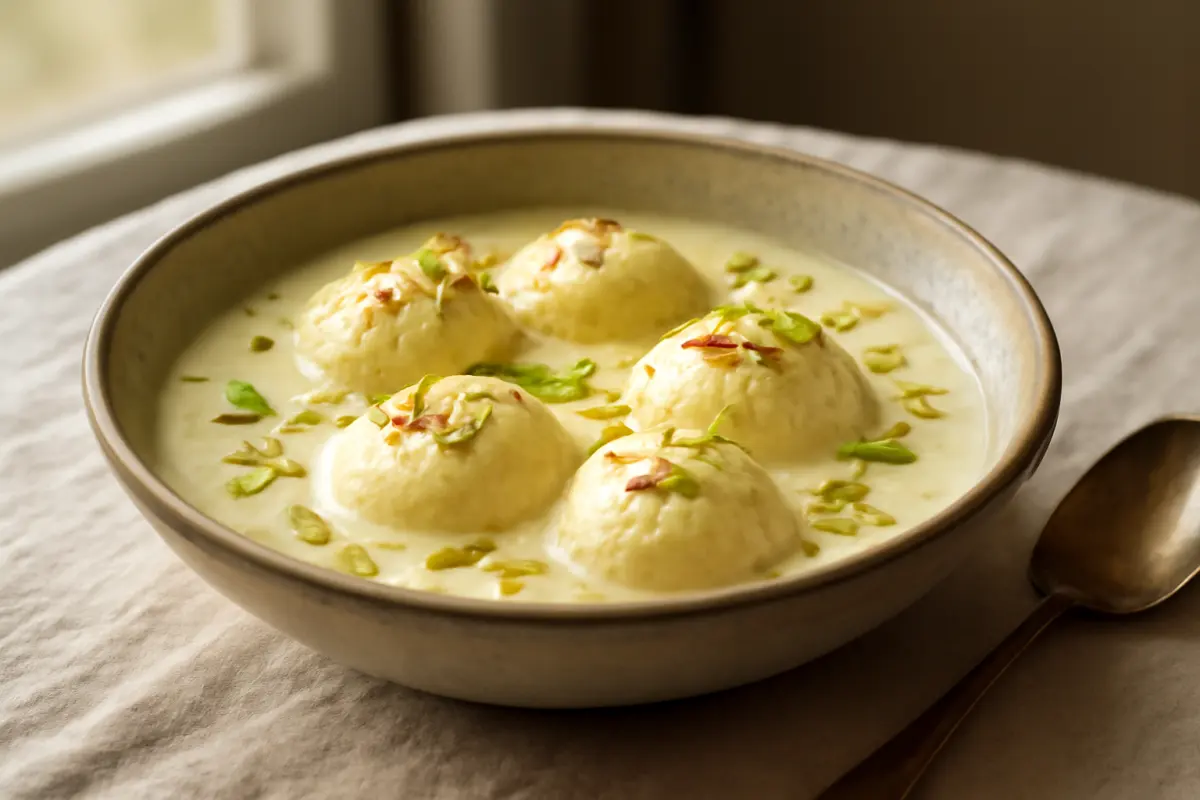
Ras malai is made from fresh chenna, shaped into small discs, cooked in a thin sugar syrup, and soaked in sweetened reduced milk. The finished discs should be soft enough to yield easily when pressed with a spoon, while the rabri should be creamy and pourable rather than stiff.
This recipe makes about 10–12 pieces. Plan ahead: the chenna needs to drain and rest, and the finished ras malai is best after at least 4 hours in the refrigerator so the discs can absorb the rabri.
Ingredients
- 1.5 litres full-fat milk, for the chenna
- 3 tablespoons lemon juice, mixed with 3 tablespoons water
- 1 litre full-fat milk, for the rabri
- 100 g granulated sugar, divided: 300 g for the cooking syrup and 100 g for the rabri
- 1.2 litres water, for the cooking syrup
- 4 green cardamom pods, seeds finely crushed
- 10–12 saffron strands
- 2 tablespoons thinly sliced pistachios
- 1 tablespoon thinly sliced almonds
- 1 teaspoon fine semolina, optional, for helping the chenna hold its shape
How to make it
Make the chenna. Pour 1.5 litres of full-fat milk into a heavy-bottomed saucepan and bring it to a boil over medium heat, stirring occasionally so it does not scorch. Turn off the heat and wait 1 minute. Add the diluted lemon juice gradually, stirring gently after each addition. Stop as soon as the milk separates into pale greenish whey and soft white curds; you may not need all the lemon mixture.
Strain and rinse. Line a large colander with clean muslin or cheesecloth and pour in the curdled milk. Rinse the curds under cool running water for 20–30 seconds to remove the lemon flavor and stop the cooking. Gather the cloth, squeeze gently, and hang or rest the chenna in the colander for 30 minutes. It should feel moist and crumbly, not wet or dripping.
Knead the chenna. Transfer the drained chenna to a clean work surface. Knead with the heel of your palm for 8–10 minutes, smearing the curds across the surface until the mixture becomes smooth, soft, and slightly glossy. There should be no visible grainy lumps. If the chenna feels sticky, knead in the semolina; if it feels dry and cracks immediately, add 1 teaspoon water and knead again.
Shape the discs. Divide the chenna into 10–12 equal portions. Roll each portion into a smooth ball, then flatten it into a disc about 1 cm thick. Smooth any cracks around the edges, since cracks can cause the discs to split during cooking. Keep the shaped discs covered with a damp cloth while you prepare the syrup.
Prepare the cooking syrup. Combine 300 g sugar and 1.2 litres water in a wide saucepan. Bring to a full boil, stirring until the sugar dissolves. The syrup should be thin and bubbling freely, not thick like a dessert syrup. Use a pan wide enough for the discs to expand without crowding.
Cook the chenna discs. Carefully slide the discs into the boiling syrup. Cover the pan and cook over medium-high heat for 12 minutes. Keep the syrup at a steady boil; gentle bubbling is needed for the discs to puff. After cooking, turn off the heat and leave them covered for 5 minutes. They should look swollen and feel springy when pressed very gently with a spoon.
Make the rabri. While the discs cook, pour 1 litre milk into a clean heavy-bottomed saucepan. Bring it to a simmer over medium heat, then reduce the heat to medium-low. Cook for 25–35 minutes, stirring and scraping the base and sides every few minutes, until the milk reduces to about 650–700 ml. Stir in 100 g sugar, the crushed cardamom, and saffron. Simmer for 3 more minutes, then remove from the heat. The rabri should coat a spoon lightly but still be pourable; it thickens further as it cools.
Squeeze and soak. Use a slotted spoon to transfer the cooked discs to a bowl of room-temperature water for 2 minutes. Lift each one and press it gently between your palms or between two flat spoons to remove excess syrup. Do not squeeze hard, or the discs may break. Arrange them in the cooled or lukewarm rabri and spoon the milk over the top.
Chill and finish. Cover and refrigerate for at least 4 hours, preferably overnight. The discs will absorb some rabri and become more flavorful and tender. Scatter the pistachios and almonds over the top just before serving. Serve chilled.
Expert tips
- Use full-fat milk for both the chenna and rabri. Lower-fat milk usually produces less tender, less rich results.
- Add the lemon mixture gradually and stop curdling as soon as the whey turns pale green. Excess acid can leave the chenna firm and tangy.
- Drain the chenna by texture, not only by time. If it is waterlogged, the discs may break; if it is dry, they can turn dense.
- Kneading is the key step. Properly kneaded chenna feels smooth and pliable, with no cracks when rolled.
- Do not crowd the syrup pan. The discs usually expand significantly while cooking, so leave space around each one.
- If you prefer a less sweet dessert, reduce the sugar in the rabri to 75 g. Keep the sugar in the cooking syrup unchanged because it helps the discs cook and absorb liquid properly.
- If using packaged paneer instead of homemade chenna, choose a soft, fresh block and crumble it finely. The texture is less predictable, so homemade chenna gives the most reliable result.
Serving and storage
Serve ras malai cold, topped with sliced pistachios and almonds. Keep it covered in the refrigerator and use it within 3 days. Do not leave it at room temperature for more than 2 hours, or 1 hour in very hot conditions. Store the discs submerged in rabri so they do not dry out.
Troubleshooting
- The discs broke in the syrup: The chenna was probably too wet, not kneaded enough, or shaped with cracks. Drain it longer, knead until smooth, and seal the edges before cooking.
- The discs are hard or rubbery: The chenna may have been over-acidified, overcooked while curdling, or too dry. Use less lemon mixture, turn off the heat as soon as the milk splits, and avoid squeezing the drained chenna aggressively.
- The discs stayed flat: The syrup may not have been boiling steadily, or the pan may have been overcrowded. Use a wide pan and maintain a lively simmer while keeping the lid on.
- The rabri became too thick: Whisk in 2–4 tablespoons warm milk until it reaches a pourable consistency. Add the nuts after adjusting the texture.
- The rabri tastes lemony: The chenna was not rinsed thoroughly. Rinse the curds longer next time; for the current batch, serve with extra cardamom and nuts to balance the flavor.
Frequently asked questions
Why did my ras malai discs become hard?
Hard discs usually come from dry chenna, too much lemon juice, or overcooking. Drain the chenna until moist but not wet, stop adding acid as soon as the milk separates, and cook the discs only until they puff and feel springy.
How do I know when chenna is ready to shape?
After kneading, the chenna should be smooth, soft, and slightly glossy. It should roll into a ball without visible cracks but should not feel sticky or leave wet patches on your hands.
Can I make ras malai ahead of time?
Yes. Make it up to 1 day ahead and refrigerate it covered. The chenna discs absorb more rabri as they rest, so the texture is often best after several hours of chilling.
Can I use vinegar instead of lemon juice?
Yes. Replace the lemon juice with an equal amount of clear white vinegar diluted with the same amount of water. Add it gradually and rinse the curds thoroughly so the finished chenna does not taste sharp.
Why did my ras malai discs not absorb the rabri?
They may not have been pressed gently enough after cooking, or the rabri may have been too thick. Remove excess cooking syrup carefully and loosen thick rabri with a little warm milk before soaking.