Recipes
Roti Recipe
This roti recipe makes soft, flexible whole-wheat flatbreads with a simple dough and a reliable stovetop method. Learn how to knead, roll, cook, and store roti without drying it out.
Overview
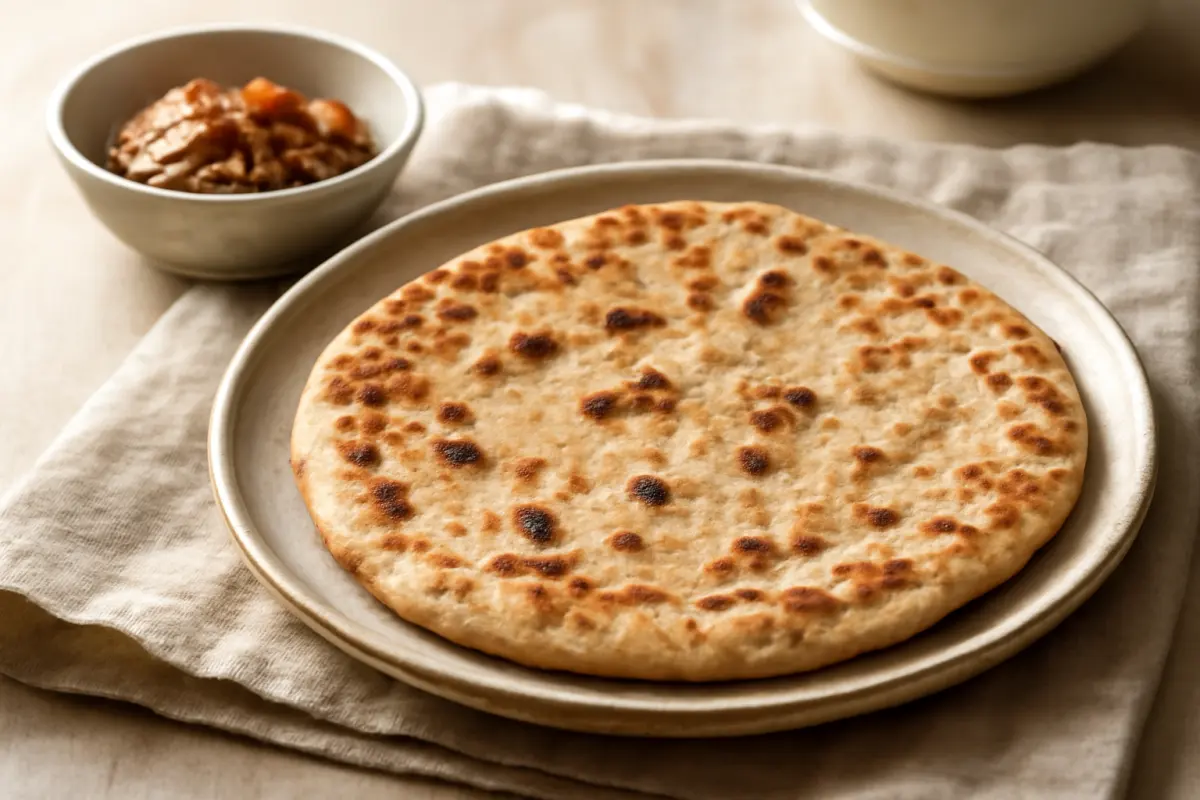
This roti recipe makes 8 soft, flexible flatbreads from whole-wheat flour, water, salt, and a little oil. The dough should feel smooth and pliable, while the cooked roti should show brown spots and puff in places on a properly heated tawa.
The most important details are adding the water gradually, resting the dough, and keeping the rolled roti thin and even. Use a cast-iron skillet, traditional tawa, or heavy nonstick pan, and cook each roti one at a time so the surface stays hot.
Ingredients
- 240 g (2 cups) whole-wheat atta, plus 30–45 g (¼–⅓ cup) more for rolling
- ½ teaspoon fine salt, optional
- 1 teaspoon neutral oil or melted ghee, plus more for brushing if desired
- 170–190 ml (⅔–¾ cup) warm water, added gradually
How to make it
Mix the dough. Put the atta and salt in a wide bowl. Add the oil and rub it through the flour with your fingertips. Pour in 170 ml of the warm water a little at a time, mixing with your fingers until a shaggy dough forms. Add the remaining water, 1 teaspoon at a time, only if dry flour remains. The dough should be soft and slightly tacky but not wet.
Knead until smooth. Transfer the dough to a clean work surface and knead for 6–8 minutes. Push the dough away with the heel of your hand, fold it back, and turn it as you work. It is ready when the surface looks mostly smooth and the dough springs back slowly when pressed. If it feels stiff or cracks, knead in 1 teaspoon water at a time. If it is sticky, dust the surface with a small amount of atta rather than adding a lot at once.
Rest the dough. Shape the dough into a ball, place it in the bowl, and cover it with a damp kitchen towel or a plate. Rest for 20–30 minutes at room temperature. This makes the dough easier to roll and helps prevent the edges from cracking.
Divide and shape. Knead the rested dough briefly, then divide it into 8 equal pieces, about 52–55 g each. Roll each piece into a smooth ball by tucking the edges underneath. Keep the dough balls covered while you work so they do not form a dry skin.
Heat the pan. Set a tawa or heavy skillet over medium-high heat for 4–5 minutes. It is ready when a few drops of water flicked onto the surface evaporate quickly, but do not leave water in the pan. A pan that is smoking heavily is too hot; reduce the heat slightly.
Roll one roti. Flatten a dough ball and coat it lightly with atta. Roll from the center outward, turning the dough a quarter turn after each few strokes. Aim for a round about 15–16 cm (6–6½ inches) across and roughly 2 mm thick. Use only enough flour to prevent sticking. Excess dry flour can burn on the pan and make the roti taste dusty.
Cook the first side. Lift the roti, shake off excess flour, and place it on the hot pan. Cook for about 20–30 seconds, until the top changes from shiny to matte and small bubbles begin to appear.
Cook the second side. Turn the roti with tongs or a spatula. Cook for 30–45 seconds, until light brown spots develop underneath. The surface may begin to puff in several places.
Finish the roti. Turn it again and press lightly around the edges with a clean folded cloth or spatula. On a gas flame, you can transfer the roti directly to a medium flame for 5–10 seconds per side; watch closely because it can scorch quickly. On an electric or induction cooktop, keep it on the pan and press gently until it puffs. The roti is done when it has scattered brown spots, looks dry rather than doughy, and feels soft when folded.
Keep it soft. Place the cooked roti in a clean tea towel or covered container. Brush with a little ghee only if you want a richer finish. Continue rolling and cooking the remaining dough, adjusting the heat if the brown spots appear before the center cooks.
Expert tips
- For softer roti: The dough should be softer than you might expect, but it must still hold its shape. Firm dough produces thick, chewy edges.
- For even cooking: Roll from the center and turn the dough often. Thick patches stay doughy while thin patches become crisp.
- If the dough keeps shrinking: Cover it and rest it for another 10–15 minutes. The gluten needs more time to relax.
- If roti sticks to the pan: The pan may not be hot enough, or the uncooked side may be damp from too much water. Preheat the pan fully and use a light dusting of flour.
- If the roti turns hard: It was likely cooked too long, rolled too thin, or made with a stiff dough. Keep each side on the heat only until brown spots appear, then cover it immediately.
- If it will not puff: Check that the roti is evenly rolled and that the pan is properly hot. Uneven thickness, a cool pan, or small tears can let steam escape.
- Substitutions: Whole-wheat atta gives the most tender, flexible result. Regular whole-wheat flour can work, but it may need slightly more water and a longer rest. For a softer but less traditional texture, replace up to 2 tablespoons of the flour with plain flour; do not replace all of the atta.
Serving and storage
Serve roti warm with dal, vegetable pulao, chicken curry, or Pakistani chicken karahi. It is also useful for scooping up saucy dishes such as Pakistani chicken karahi. For a rice-based meal, pair it with vegetable pulao or use it alongside chicken biryani if you want an additional flatbread option.
Cool leftover roti briefly, then stack it in an airtight container or sealable bag. Refrigerate for up to 3 days. To reheat, sprinkle each roti lightly with water, wrap it in a clean damp paper towel, and microwave for 15–20 seconds, or warm it in a covered skillet over low heat. For longer storage, separate the rotis with parchment, freeze them in a sealed bag for up to 1 month, and reheat from frozen in a covered skillet until soft and hot.
Frequently asked questions
Why is my roti hard instead of soft?
The dough may have been too stiff, or the roti may have stayed on the pan too long. Add water gradually until the dough is soft and pliable, rest it for at least 20 minutes, and cook each roti only until brown spots appear. Keep finished rotis covered immediately.
Can I make roti without oil?
Yes. Omit the teaspoon of oil from the dough and use the same amount of water, adding it gradually. The roti may be slightly less tender, but it will still cook successfully.
Why does my roti not puff?
Uneven rolling, a cool pan, or tears in the dough can stop puffing. Roll the roti to an even thickness, preheat the pan properly, and press gently around the edges during the final cooking stage.
Can I use regular whole-wheat flour instead of atta?
Yes, although regular whole-wheat flour often absorbs water differently and can produce a slightly less delicate roti. Start with 170 ml water, add more by the teaspoon as needed, and give the dough a full 30-minute rest.
How far ahead can I make roti?
Roti is best served immediately, but you can make it up to 3 days ahead and refrigerate it in an airtight container. Reheat gently in a covered skillet or wrapped in a lightly damp paper towel so it does not dry out.