Recipes
Savory Cheddar Herb Biscuits Recipe
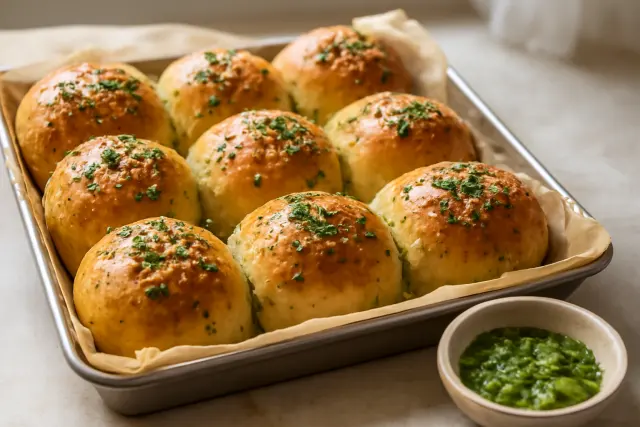
These savory cheddar herb biscuits are tender in the center, crisp at the edges, and packed with sharp cheddar and fresh herbs. The dough comes together quickly, and a few simple handling cues help keep the biscuits flaky instead of dense.

Overview
These savory cheddar herb biscuits are tender in the center, lightly crisp at the edges, and full of sharp cheddar flavor. Fresh chives and parsley add a clean herbal note without overpowering the buttery dough.
Keep the butter cold and handle the dough gently. You will fold it several times to create layers, then bake the biscuits until the tops are golden and the sides look set. They are especially good alongside soup, roasted vegetables, eggs, or a saucy main dish.
Ingredients
- 2 cups (250 g) all-purpose flour, plus more for the work surface
- 1 tablespoon baking powder
- 1/2 teaspoon baking soda
- 3/4 teaspoon fine salt
- 1/4 teaspoon freshly ground black pepper
- 6 tablespoons (85 g) cold unsalted butter, cut into 1/2-inch cubes
- 1 cup (113 g) finely shredded sharp cheddar cheese
- 2 tablespoons finely chopped fresh chives
- 1 tablespoon finely chopped fresh parsley
- 3/4 cup (180 ml) cold buttermilk, plus 1 tablespoon for brushing
How to make it
Heat the oven and prepare the pan. Set an oven rack in the upper-middle position and heat the oven to 425°F (220°C). Line a baking sheet with parchment paper. A metal baking sheet gives the biscuits a nicely browned bottom; avoid greasing the pan heavily, which can make the bottoms spread.
Combine the dry ingredients. Whisk the flour, baking powder, baking soda, salt, and black pepper in a large bowl. Add the cold butter and work it in with your fingertips or a pastry cutter until the largest pieces are about the size of small peas. A few flatter pieces are fine and will help create flaky layers.
Add the cheese and herbs. Stir in the shredded cheddar, chives, and parsley until they are evenly distributed. Shredding the cheese finely helps it mix through the dough and prevents large pockets from making the biscuits split unevenly.
Mix in the buttermilk. Pour in 3/4 cup cold buttermilk and stir with a fork or flexible spatula just until no large dry patches remain. The dough should look shaggy and slightly sticky, not smooth. If a tablespoon or two of flour remains at the bottom of the bowl, press and fold the dough a few more times rather than adding extra liquid immediately.
Fold the dough for layers. Turn the dough onto a lightly floured surface. Pat it into a rectangle about 3/4 inch thick, then fold it in half. Turn the dough 90 degrees, pat it out again, and fold it in half a second time. Do this one more time, using a light touch. If the butter feels soft or begins to smear, place the dough in the refrigerator for 10 minutes before cutting.
Cut the biscuits. Pat the dough into a rectangle about 1 inch thick. Use a sharp, floured 2 1/2-inch biscuit cutter to cut straight down without twisting. Press the scraps together gently for a final biscuit; it may be slightly less layered. Arrange the biscuits on the prepared sheet with their sides just touching for softer edges, or about 1 inch apart for more browning around each biscuit.
Brush and bake. Brush the tops with the remaining 1 tablespoon buttermilk, keeping it off the sides so the biscuits can rise freely. Bake for 14–17 minutes, rotating the pan halfway through, until the tops are golden, the edges are firm, and the centers no longer look wet. If you use a smaller cutter, begin checking a few minutes early.
Cool briefly and serve. Let the biscuits rest on the baking sheet for 5 minutes. They should feel light when lifted, with a tender, layered center. Serve warm or transfer them to a rack so steam does not soften the bottoms.
Expert tips
- Keep the butter cold: If your kitchen is warm, chill the cut butter for 10 minutes before mixing. Cold butter creates small pockets that melt in the oven and help separate the layers.
- Do not twist the cutter: Twisting seals the edges and can restrict the rise. A clean, straight cut gives the biscuits a better chance of lifting evenly.
- Use mature cheddar for stronger flavor: Extra-sharp cheddar works well, but freshly shredded cheese mixes more evenly than pre-shredded cheese coated with anti-caking powder.
- Substitute the herbs realistically: Replace the chives and parsley with 1 tablespoon finely chopped fresh thyme, or use 1 teaspoon dried thyme in total. Dried herbs are stronger, so avoid swapping them one-for-one by volume.
- If the dough is too dry: Add buttermilk 1 teaspoon at a time, folding gently until the flour is absorbed. If it is very sticky, dust the surface lightly rather than adding a large amount of flour to the dough.
- If the biscuits spread: The butter may have softened or the dough may be too wet. Chill the cut biscuits for 10–15 minutes before baking, and check that your baking powder and baking soda are fresh.
- For taller biscuits: Pat the dough no thinner than 1 inch and bake the biscuits close together. Avoid compressing the dough while shaping it.
Serving and storage
Serve the biscuits warm with butter, alongside soup, eggs, roasted vegetables, or a saucy dinner. They also work as a savory alternative to sweet baked goods at brunch. For a bread-centered spread, pair them with garlic herb dinner rolls when you want two different textures on the table.
Store completely cooled biscuits in an airtight container at room temperature for up to 2 days. Rewarm them in a 325°F (165°C) oven for 8–10 minutes, or microwave one briefly if convenience matters more than crisp edges. For longer storage, freeze cooled biscuits in a freezer-safe bag for up to 2 months. Reheat them from frozen at 350°F (175°C) for about 15 minutes, until hot throughout.
Frequently asked questions
Can I make these cheddar herb biscuits without buttermilk?
Yes. Stir 2 1/4 teaspoons lemon juice or white vinegar into 3/4 cup milk and let it stand for 5 minutes before using. The mixture may look slightly curdled, which is fine. Plain yogurt thinned with a little milk also works, but add it gradually because its thickness varies.
Why are my cheddar biscuits dense?
The most common causes are overmixing, adding too much flour during shaping, or using butter that softened into the dough. Mix only until the dry ingredients are absorbed, use a light dusting of flour, and chill the dough briefly if it becomes warm.
Can I use dried herbs instead of fresh?
Yes. Use about 1 teaspoon dried herbs in place of the fresh chives and parsley. Dried thyme, Italian seasoning, or a small amount of dried dill can work, but strong blends should be used sparingly so they do not cover the cheddar flavor.
Can I prepare the biscuit dough ahead of time?
You can cut the biscuits and refrigerate them, covered, for up to 12 hours. Bake them directly from the refrigerator, adding a minute or two if the centers are still pale. You can also freeze the unbaked biscuits on a tray, then transfer them to a freezer bag and bake from frozen until golden and cooked through.
How do I keep the biscuit bottoms from getting too dark?
Bake on parchment and use a light-colored metal sheet if possible. If the bottoms brown before the tops are done, move the pan to a higher rack or place a second baking sheet underneath it to reduce the heat reaching the bottoms.