Recipes
Sheer Khurma Recipe
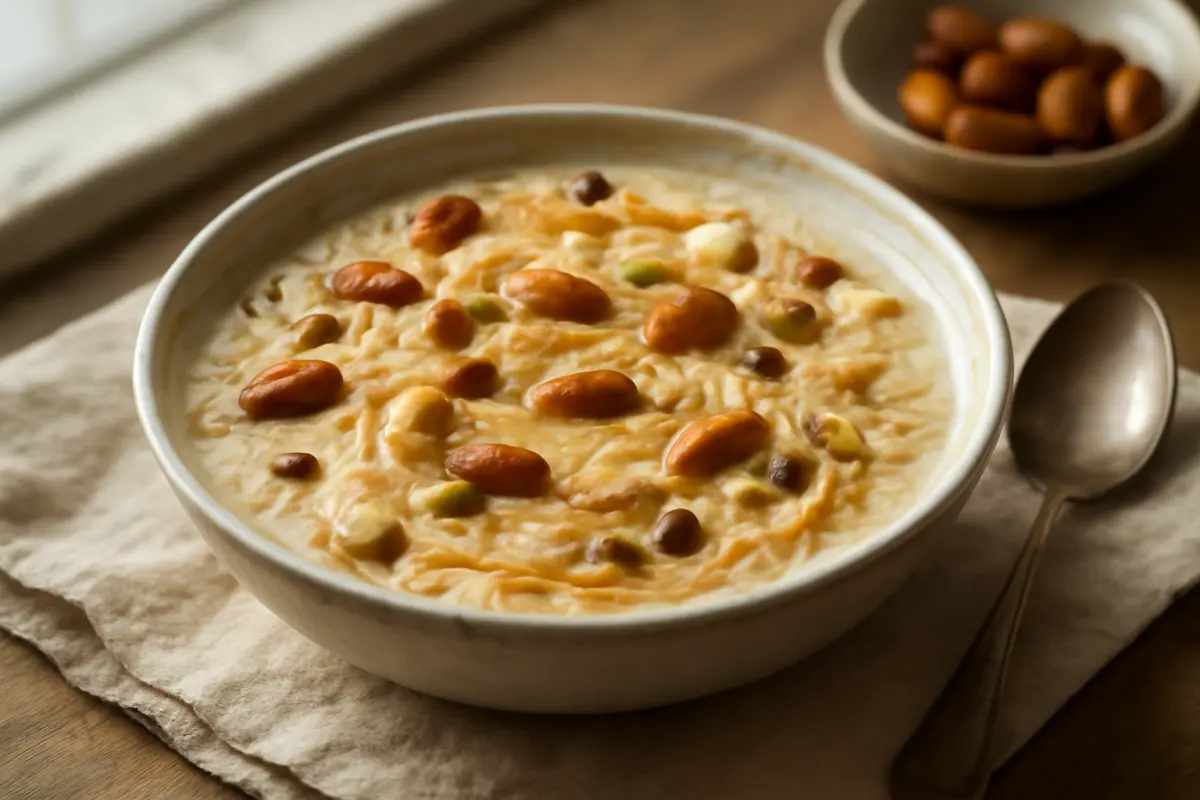
This sheer khurma recipe makes a fragrant, creamy milk dessert with toasted vermicelli, dates, raisins, nuts, and cardamom. It comes together on the stovetop and can be served warm or chilled.
Overview
Sheer khurma is a creamy milk dessert made with fine vermicelli, dates, dried fruit, nuts, and warm cardamom. Toasting the vermicelli in ghee first gives it a lightly nutty flavor and helps it keep some texture in the milk.
This version serves six small portions. It is gently sweet rather than syrupy, but you can adjust the sugar after the dates and milk have had time to flavor the pudding.
Ingredients
- 1 tablespoon ghee, plus 1 teaspoon for toasting the nuts
- 40 g blanched almonds, thinly sliced
- 30 g unsalted pistachios, thinly sliced
- 2 tablespoons golden raisins
- 100 g pitted dates, finely chopped
- 75 g fine roasted or plain vermicelli, broken into 2–3 cm pieces
- 1 litre whole milk
- 75 g granulated sugar, or to taste
- 6 green cardamom pods, seeds removed and finely ground, or 1 teaspoon ground cardamom
- 2 tablespoons heavy cream, optional
- 1 teaspoon rose water, optional
- 1 tablespoon finely sliced almonds or pistachios, for serving
How to make it
Prepare the ingredients. Remove the cardamom seeds from the pods and crush them finely. Chop the dates into small pieces so they soften evenly. If your vermicelli comes in long strands, break it before cooking.
Toast the nuts and dried fruit. Heat 1 teaspoon of ghee in a heavy-bottomed saucepan over medium-low heat. Add the sliced almonds and pistachios and cook for 1–2 minutes, stirring constantly, until lightly golden and fragrant. Add the raisins and cook for about 30 seconds, just until they begin to plump. Transfer everything to a plate so it does not continue browning in the hot pan.
Toast the vermicelli. Add 1 tablespoon of ghee to the same saucepan and return it to medium-low heat. Add the vermicelli and stir for 2–4 minutes, until it turns evenly golden and smells nutty. Watch closely: fine vermicelli can go from golden to burnt quickly. If you are using pre-roasted vermicelli, stir it in the ghee for only about 1 minute.
Heat the milk. Pour the milk into the saucepan slowly, stirring as you add it. Bring it to a gentle simmer over medium heat, then reduce the heat to medium-low. The milk should steam and form small bubbles around the edge, not boil vigorously.
Cook the vermicelli. Simmer uncovered for 6–8 minutes, stirring every minute or so to keep the strands from settling or sticking. The vermicelli is ready when it is tender but still has a little bite. It will continue softening as the sheer khurma rests.
Add the dates and sugar. Stir in the chopped dates and sugar. Simmer for another 4–5 minutes, stirring occasionally, until the dates are soft and the milk looks slightly thickened. Do not wait for it to become as thick as a custard; it should still pour easily from a spoon.
Finish the dessert. Stir in the ground cardamom, toasted nuts, raisins, and optional cream. Cook for 1 minute, then remove the pan from the heat. Stir in the rose water, if using. Taste carefully and add another 1–2 tablespoons of sugar if needed.
Rest and serve. Leave the sheer khurma to rest for 10 minutes. It will thicken as it cools. Spoon it into bowls and scatter the reserved sliced nuts over the top. Serve warm, at room temperature, or chilled.
Expert tips
- Use whole milk for the creamiest texture. Reduced-fat milk works, but the finished dessert will be lighter and less rich.
- Keep the heat moderate. A hard boil can cause milk to catch on the bottom and may make the dessert foam over.
- Control the final thickness. If it becomes too thick, stir in 2–4 tablespoons of warm milk. If it is too loose, simmer it for a few extra minutes, stirring frequently.
- Make it less sweet by starting cautiously. Dates vary in sweetness, so begin with 60 g sugar, taste after the dates soften, and add more if necessary.
- For a date-free version, replace the dates with 40 g extra raisins and add 1–2 tablespoons more sugar to taste. The flavor will be less caramel-like but the method remains the same.
- For a nut-free version, omit the almonds and pistachios and use toasted pumpkin seeds or unsweetened shredded coconut if suitable for your needs.
- If using thicker Pakistani-style vermicelli, add 2–3 extra minutes to the cooking time and check for tenderness before adding the sugar.
Serving and storage
Serve sheer khurma in small bowls because it is rich and filling. It pairs well with other South Asian sweets, such as suji halwa, but it is also satisfying on its own.
Cool leftovers promptly, then transfer them to a covered container and refrigerate within 2 hours of cooking. Use within 3 days. The vermicelli absorbs milk as it sits, so reheat individual portions gently with a splash of milk, stirring until smooth. Do not leave the dessert at room temperature for extended periods, and discard it if it develops an off smell or unusual appearance.
Frequently asked questions
Can I make sheer khurma ahead of time?
Yes. Make it up to 1 day ahead and refrigerate it covered. It will thicken considerably, so loosen it with a little milk while reheating gently on the stovetop or in short microwave intervals.
Why did my sheer khurma become too thick?
Vermicelli continues absorbing milk as the dessert rests, especially overnight. Stir in warm milk 2 tablespoons at a time until it reaches a creamy, spoonable consistency.
Can I use evaporated milk instead of whole milk?
Yes. Replace up to half of the whole milk with evaporated milk for a richer result, but do not use sweetened condensed milk as a direct substitute because it adds much more sugar and changes the consistency.
Should I rinse the vermicelli before cooking?
No. Rinsing removes surface starch and makes it harder to toast evenly. Break the dry vermicelli, toast it in ghee, and then add the milk.
Can I serve sheer khurma cold?
Yes. It is good warm, at room temperature, or chilled. If serving it cold, make it slightly looser than you want because it thickens in the refrigerator.